The driest place on Earth isn't a scorching desert — it's an icy valley in Antarctica that hasn't seen rain in two million years. The second-driest is a desert in Chile, where some stretches have recorded no precipitation at all across four hundred years of observation.
Hear the word "dry," and most people picture heat, sand, and scorched earth. But the actual records for dryness belong to places that look nothing like that — from icy Antarctica to the foggy Pacific coast. Let's break down where on the planet the least rain falls, why that happens, and how people — and in some places, bacteria — manage to survive without water.
The Absolute Record: The McMurdo Dry Valleys, Antarctica
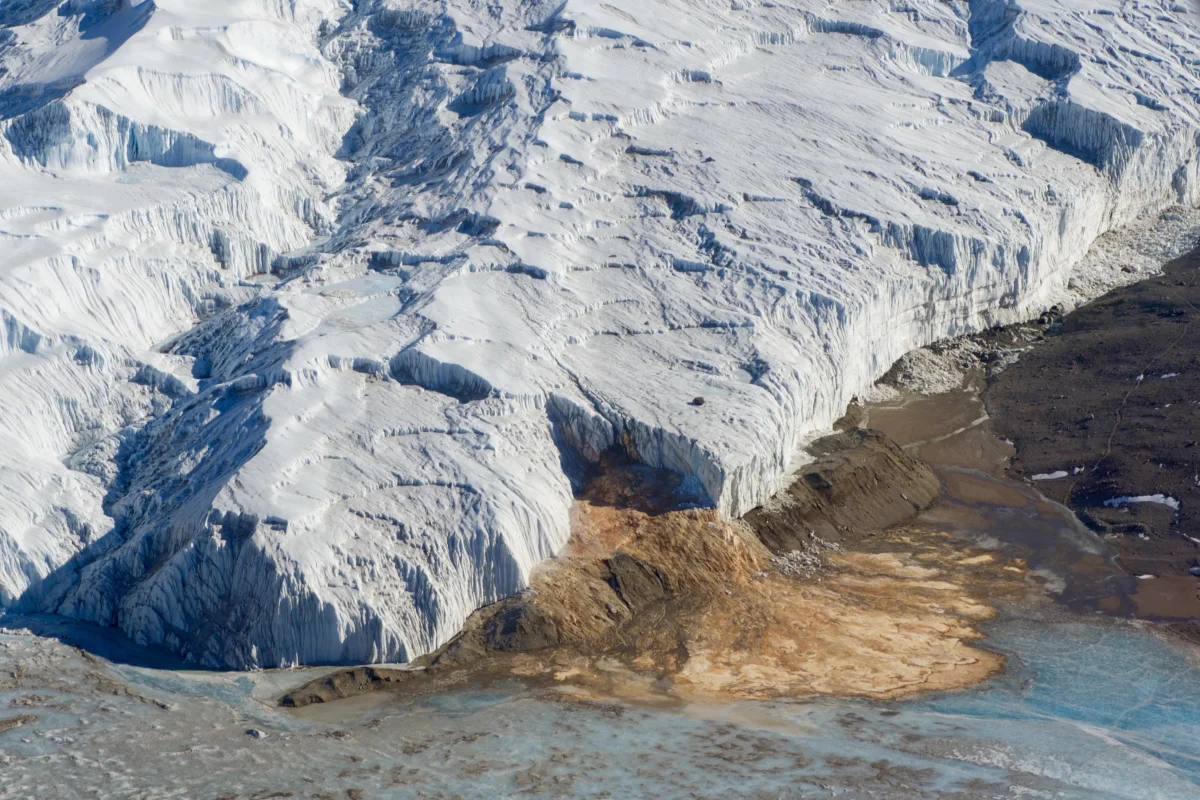
Three valleys — Victoria, Wright, and Taylor — sit west of McMurdo Sound in Victoria Land. Their combined area covers about 4,800 square kilometers. This is the only place in Antarctica with no ice or snow at all — just bare rock, sand, and dry, freezing air.
By geologists' estimates, it hasn't rained here in roughly two million years. Precipitation doesn't happen at all — zero.
The cause is katabatic wind: streams of dry air roll down off Antarctica's ice dome at speeds up to 320 km/h, warming as they descend. By the time this air reaches the valleys, it's so dry and warm (relative to the surrounding ice) that any moisture evaporates instantly.
Here's the paradox: the Dry Valleys sit on a continent holding 70% of the world's fresh water — it's just all locked up as ice. And just a few kilometers from the planet's largest ice sheet sits absolute dryness.
The Atacama Desert: The Driest Inhabited Place
If the Dry Valleys hold the uninhabited record, the Atacama holds the record among places where people actually live. This desert stretches along Chile's Pacific coast for roughly 1,000 kilometers, wedged between the Andes and the ocean.
In the Atacama's central regions, no rain has been recorded across 400 years. At the weather station in the town of Arica (in Chile's far north), average annual precipitation runs under 1 mm — not ten, not five, under one millimeter a year. For comparison: the Sahara gets 25–75 mm, Moscow gets 700 mm.
On certain days, air humidity drops to 0% — meaning there's literally no water vapor in the air at all.
Why the Atacama Is So Dry: Three Barriers
The Atacama sits boxed in by three "walls," each of which alone would reduce rainfall, and together they form a nearly absolute barrier against moisture.
- The Andes to the east
A mountain range up to 6,000 meters tall intercepts moisture flowing in from the Amazon and the Atlantic. Moist air simply never reaches the Andes' western slope — it all gets dumped on the eastern side.
- The cold Peru Current to the west
The Pacific Ocean sits nearby, but it doesn't help much: a powerful cold current runs along Chile's coast, chilling the lower air layer. Cold air doesn't rise — and without rising, it doesn't form clouds. Instead of rain, the coast gets only camanchaca — a thick morning fog that condenses on rocks and plants and evaporates quickly.
- The Pacific anticyclone overhead
A permanent high-pressure zone over the Pacific presses air down toward the surface, preventing it from rising — and without rising air, there's no condensation and no rain.
What Life Looks Like at Zero Precipitation
Central Atacama is Earth's closest analog to Mars. NASA has tested rovers and life-detection methods here specifically because the Atacama's soil, in chemical composition and lack of organic matter, closely resembles Martian soil.
But life does exist here — clinging to the one available moisture source: fog. At elevations of 400–1,000 meters, the camanchaca delivers enough condensation for lichens and specially adapted cacti to survive.
Locals have learned to harvest fog using atrapanieblas — mesh screens that moisture condenses onto. A single square meter of mesh yields 5–10 liters of water a day, enough for a small garden.
Arica and Iquique: Cities Without Rain
People genuinely live in the Atacama — not just a handful, but hundreds of thousands. The city of Arica (population 250,000) receives an average of 0.7 mm of precipitation a year. Iquique (population 200,000) gets around 2 mm. Both cities survive on groundwater flowing down from the Andes and on desalinated seawater.
When it does rain in Arica — once every few years — it becomes a genuine event: streets flood, since the city has no storm drainage system (why build something you'll never need?), and dirt roads turn into rivers.
Where in Russia It's Driest
Russia isn't a desert country, but it has its own "poles of dryness." The most arid area is the Caspian Lowland in Kalmykia and Astrakhan Oblast: 150–200 mm of precipitation a year.
The village of Utta in Kalmykia (the same spot where Russia's national temperature record of 113.7°F was set) receives around 160 mm — three times less than Moscow.
Second place goes to the steppes of Tyva and Transbaikalia: 200–250 mm, with most of it falling in summer, while winters stay dry with little snow. The climate there leans closer to Mongolia's than to central Russia's.
The Sahara: Not as Dry as It Seems
The world's most famous desert is often called "the driest" — but that's not quite accurate. Average precipitation across the Sahara runs 25–75 mm a year, noticeably more than the Atacama. Certain stations in southern Libya and eastern Algeria record under 10 mm, but never zero.
The Sahara is the largest hot desert (9.2 million km²), but not the driest. Its scale is impressive, but in absolute aridity, it falls behind both the Atacama and Antarctica's Dry Valleys.
Why Dryness and Heat Aren't the Same Thing
A common misconception holds that hotter means drier. In reality, the correlation runs the opposite way. Equatorial rainforests, where temperatures hold steady at 82–86°F (28–30°C), receive 2,000–4,000 mm of rain. Antarctica, at –58°F (–50°C), gets under 50 mm (as snow) — making it the driest continent on the planet.
What matters isn't temperature — it's air circulation.
Where air rises (the equator, windward mountain slopes), it rains. Where air sinks (subtropical anticyclones, leeward slopes, the poles), it stays dry. Temperature only determines whether that precipitation falls as rain or snow.