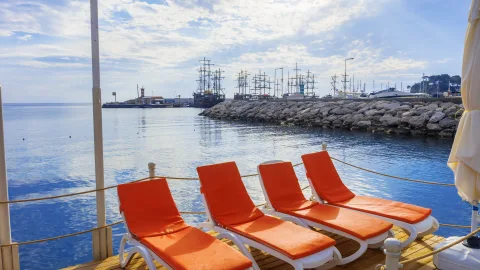
There was a downpour overnight, and in the morning it's hot and sunny again: it seems like the perfect beach day. But at that moment, the water is carrying everything the rain has washed off streets, fields and yards, and it's best not to go in until a couple of days have passed.
In May 2024, after heavy downpours, the sea off Sochi turned into a muddy brown soup: mountain rivers carried litter, sand, silt and clay into it. According to local travel agents, holidaymakers had to wait 3–4 days for the water to become clear again.
But it isn't only muddy water that's dangerous: even if it looks clean, water after rain can contain noticeably more bacteria. We look at what happens to a body of water after a downpour, and how long to wait before swimming again.
What Rain Brings Into the Water
Rainwater doesn't fall straight into a river or the sea: most of it first runs over the land.
"Rain washes various pollutants off the banks and the areas around bodies of water," explains hygienist Yulia Masyukevich.
Litter, chemicals from roads, fertilisers from fields and allotments, and animal and bird droppings all end up in the water, and with them, bacteria and viruses. Storm drains are a separate story: in cities, rainwater is discharged through pipes into rivers and the sea, often without treatment.
Why There Are More Bacteria
The worst thing about water after rain is what you can't see. Back in 2023, Alexander Sozykin, an associate professor at the State University of Education who holds a PhD in medicine, cited research showing that after storms and torrential rain, the amount of E. coli and other bacteria along the coast rises noticeably.
Where do they come from? According to Sozykin, from the shore: the water washes the contents of cesspits and toilets, muck from places where animals are kept, and soil from landfills into the sea. On top of that, waves and currents stir up silt from the bottom, and the water turns murky.
Where It's Most Dangerous
The risk is highest where rivers, streams and storm drains flow in. That's where the dirtiest water comes from in the first hours and days after rain. If there's a pipe or a ditch on the beach that carries rainwater, it's best to move well away from it.
Small ponds and lakes suffer especially badly. The water in them is hardly ever renewed, and everything washed off the banks stays inside.
In mountain rivers, there's another danger: after heavy rain they burst their banks, the current becomes fast, and the water turns icy and muddy. In the sea, the dirt is eventually diluted and carried away by currents. But after a downpour the sea is often rough too, and the water near the shore is several degrees colder than usual.
How Long to Wait
There's no single rule, but specialists give similar guidelines:
-
1–2 days after prolonged rain is how long Yulia Masyukevich advises waiting before going to a river or lake. During this time, some of the pollution settles to the bottom, and the sun's ultraviolet rays and natural processes reduce the number of bacteria.
-
3–4 days after a storm is how long Alexander Sozykin advised waiting before swimming in the sea.
-
72 hours after the rain stops is the standard recommendation of the health authorities in Los Angeles and other California counties for ocean beaches. This applies especially to stretches near storm drains, creeks and river mouths.
The heavier the downpour, the longer you should wait. After prolonged rain, floods and especially flooding disasters, doctors advise going back into the water only once the local health authorities have tested it and confirmed it's safe to swim.
What if It Was Only Light Rain?
A short summer shower, after which no streams ran down the streets and the water didn't turn murky, usually poses no danger. The main thing to look at is the colour and clarity of the water.
If the water near the shore has turned cloudy, brown or yellow, and there are branches, litter and foam floating on the surface, runoff has got into it. In that case it's better to wait, even if more than a day has passed since the rain.
And While It's Raining?
Swimming during rain is a separate risk. If the rain comes with a thunderstorm, the water is one of the most dangerous places to be: get out as soon as you hear the first rumble of thunder.
Even if the storm seems far away, lightning can strike several kilometres from its centre.
How Not to Spoil Your Holiday
-
Look not only at the sky but at the weather over the past few days. If there were heavy downpours yesterday and it's sunny today, the water hasn't had time to clear.
-
Choose official beaches. The water there is tested regularly, and after serious downpours swimming may be temporarily banned. If a red flag or a notice of a ban is displayed on the beach, respect it.
-
Move away from river mouths and pipes. A difference of a few hundred metres can make a noticeable difference to water quality.
-
Don't dive and don't swallow the water. If you do decide to swim, keep your head above water and don't let children drink it.
-
Shower after swimming. Rinse off with fresh water and soap, especially if you have grazes or scratches on your skin.
GP Daniil Trints warns: "Even a small scratch can become a 'gateway' for infection."