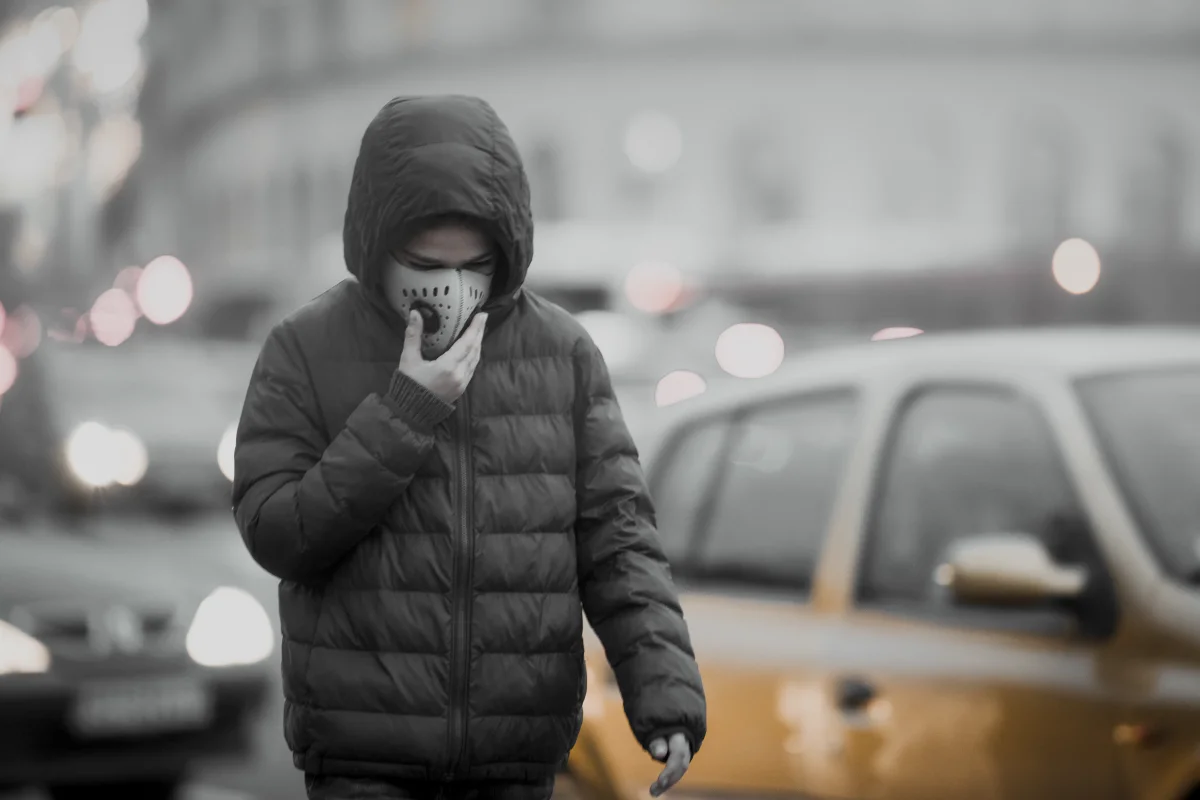
On a still winter's day, a bluish-grey haze hangs over Krasnoyarsk or Chita, and the air smells of burning. For residents of these cities, a "black sky" isn't a metaphor but an official regime declared several times a season.
Every year, Roshydromet, Russia's federal weather and environmental monitoring service, publishes a major review of what Russian cities are breathing. The figures in it look dry, but behind them lie very concrete things: the smell of burning on a frosty morning, advice to keep your windows shut, a walk with your child that gets called off.
The latest review came out in 2026 and summed up 2025. It showed that the list of the most polluted cities changes slowly: some of them make it on year after year, and almost always for the same reasons.
How Many Cities Are Breathing Dirty Air?
Roshydromet measures pollution using the air pollution index (API, known in Russian as IZA). If it's above 7, the level is considered high; at 14 or above, very high.
In 2025, high or very high pollution levels were recorded in 116 cities. They're home to 49.7 million people, or 46% of the country's urban population. Very high levels were recorded in 31 cities with a combined population of 7.5 million. That's seven fewer cities than the year before.
Four substances do most of the damage: formaldehyde, benzo[a]pyrene, particulate matter (dust) and nitrogen dioxide. These are the ones that most often exceed the annual average limits.
Who's on the 2025 Blacklist?
Roshydromet's priority list for 2025 includes 31 cities: Azov, Alchevsk, Achinsk, Beloyarsky, Biysk, Bratsk, Zima, Kansk, Komsomolsk-on-Amur, Krasnoyarsk, Kyzyl, Lesosibirsk, Luhansk, Makiivka, Novodvinsk, Novokuznetsk, Novomoskovsk, Novotroitsk, Novocherkassk, Orsk, Petrovsk-Zabaikalsky, Rostov-on-Don, Svirsk, Selenginsk, Surgut, Tula, Ulan-Ude, Cheremkhovo, Chita, Shelekhov and Yuzhno-Sakhalinsk.
Twenty of the 31 are in the Asian part of Russia. Fourteen cities dropped off the list over the year, including Abakan, Minusinsk, Chernogorsk, Tomsk, Nizhny Tagil, Kursk, Makhachkala and Izhevsk. Seven are new: Tula, Orsk, Novotroitsk, Novodvinsk, Surgut, Alchevsk and Makiivka.
Who Makes the List Year After Year?
If you compare the 2025 list with the list of the most polluted cities published by the Ministry of Natural Resources for 2018, there's a lot of overlap. Krasnoyarsk, Bratsk, Chita, Ulan-Ude, Kyzyl, Novokuznetsk, Lesosibirsk, Selenginsk, Petrovsk-Zabaikalsky, Svirsk and Shelekhov were on the blacklist then and are still on it now:
-
Krasnoyarsk. The largest city on the list and the best known for its "black sky" regime. The city lies in a basin where the air disperses poorly. In June 2026, according to environmentalist Pavel Gudovsky, the concentration of benzo[a]pyrene in the Solnechny district reached almost 12 times the maximum permissible level, and formaldehyde in the Kirovsky district up to 5.4 times.
-
Chita and Ulan-Ude. In winter, the two Transbaikal capitals suffer from a combination of hard frost, still air and a long heating season. In 2024, both were among the cities where pollutant concentrations exceeded the limit tenfold or more.
-
Kyzyl. The capital of Tuva lies in a basin among mountains, where cold air stagnates in winter, along with everything the chimneys pump out.
-
Novokuznetsk. One of the largest metallurgical and coal-mining centres in Kuzbass.
-
Bratsk, Shelekhov, Svirsk, Zima and Cheremkhovo. A whole cluster of towns in the Irkutsk region. Bratsk and Shelekhov have large aluminium smelters, and emissions from industry and power generation pile up on top of a long heating season.
-
Selenginsk. A small town in Buryatia. The main pollutants here are the same as in the big Siberian cities: benzo[a]pyrene, formaldehyde and particulate matter.
Why Are There So Many Siberian Cities on the Blacklist?
It isn't just about factories. In winter, Siberia is often under anticyclones: clear, frosty and almost windless. These conditions create a temperature inversion, where the air near the ground is colder than the air above it. The warm layer acts like a lid: smoke and emissions don't rise but build up near the surface.
Add a long heating season, coal-fired power plants and stoves in private houses, and you get the classic picture of Siberian smog.
Renad Yagudin, press secretary of the West Siberian Directorate for Hydrometeorology and Environmental Monitoring, explained back in 2019 that in still conditions, when atmospheric pressure falls, harmful substances can build up in the air of heavily industrialised cities.
Many Siberian cities stand in basins and river valleys, where the air stagnates even more. In Krasnoyarsk, according to Gudovsky, when the wind is weaker than 2 metres per second and the city's typical inversion sets in, exceedances are almost guaranteed: the emissions simply stay near the ground.
The weather can work the other way too. According to Roshydromet, the warm winter of 2024–2025, the second warmest on record, together with a reduction in coal burning in boiler houses, helped bring down benzo[a]pyrene concentrations in the Asian part of the country. But the improvement wasn't universal: in Orsk and Novotroitsk, manganese concentrations doubled, reaching four times the maximum permissible level.
What Is a "Black Sky"?
That's the popular name for a regime of adverse meteorological conditions (known in Russian by the abbreviation NMU). Roshydromet declares it when calm weather, fog or an inversion prevent emissions from dispersing. During this time, industrial plants are required to cut their emissions by 15–60%, and in the most severe cases to halt production.
The regime isn't only declared in winter.
In August 2026, a "black sky" was declared in Krasnoyarsk Krai because of heat of up to +35 °C and a complete lack of wind, and in July it was extended several times.
How to Live With Polluted Air
- Watch out for NMU announcements
Regional branches of Roshydromet and regional environment ministries announce "black sky" regimes in advance. On those days, it's best to postpone runs, walks and work at the dacha until the regime ends.
- Air your home wisely
During smog, it's best to keep the windows shut and air the flat once the wind picks up and the NMU regime is lifted.
- Look at the weather, not just the calendar
The worst days are frosty, clear and windless, especially at night and in the early morning, when the inversion is usually at its strongest. Windy weather usually brings noticeable relief, but snowfall on its own doesn't guarantee clean air.
- Use apps with sensor data
Several Siberian cities have community-run networks of air quality sensors. Their maps show where in the city the air is dirtiest right now and help you choose a route for a walk.