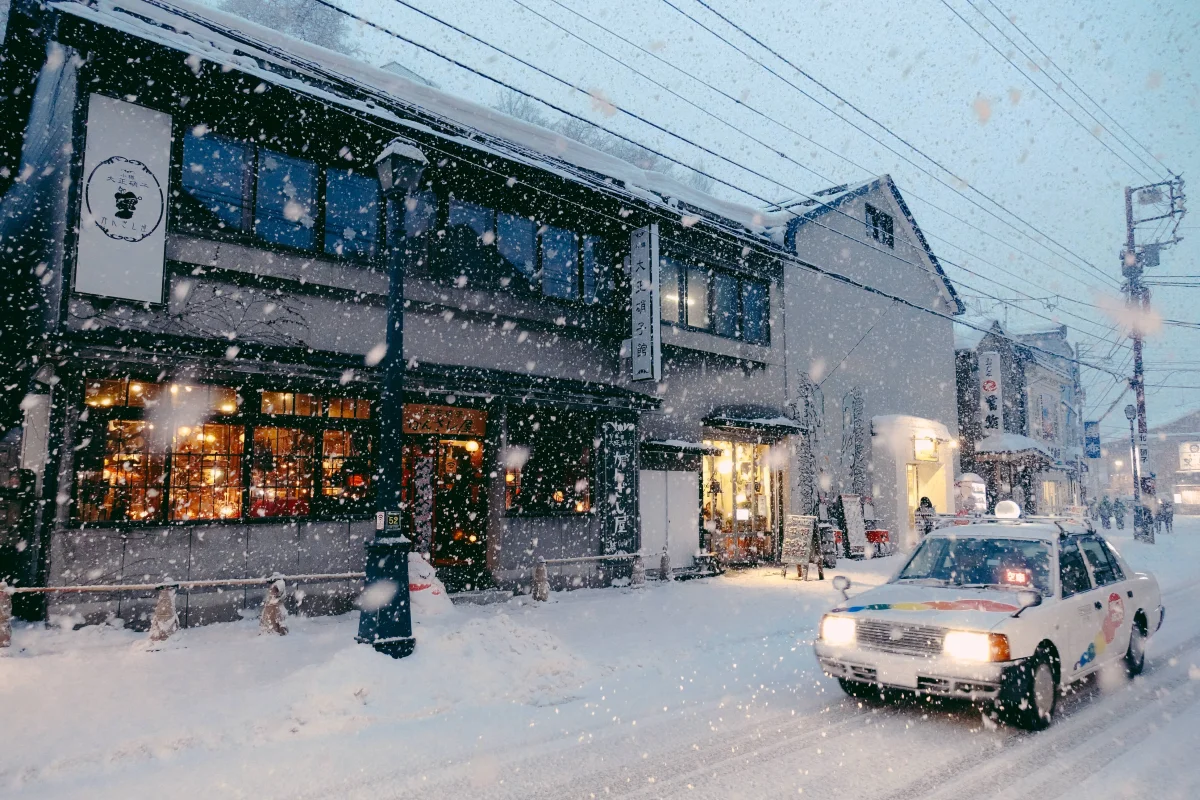
Many people associate Japan with cherry blossom and a mild climate, but in the north of the country winters can be as cold as in Siberia, and more snow falls than any Russian capital has ever seen. Why is an island on the same latitude as Sochi buried under snowdrifts taller than a person?
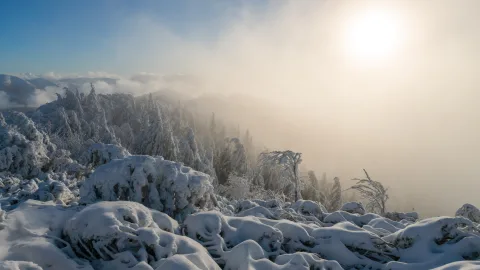
The city of Sapporo, on the island of Hokkaido, lies at roughly the same latitude as Sochi or Vladivostok. Yet over the winter it gets an average of about 479 cm of snow, more than three times as much as Moscow. Almost two million people live in Sapporo, making it one of the snowiest large cities in the world.
Where Japan Has the Coldest Climate
Japan's harshest winters are on Hokkaido, the country's northern island, and especially in its interior, far from the sea. That's where you'll find Asahikawa, the city where the lowest temperature in Japan's recorded history was measured on January 25, 1902: −41.0°C.
It also holds the record for the "coldest daytime maximum": on January 12, 1909, the temperature during the day rose no higher than −22.5°C.
Frosts of −30°C still occur on Hokkaido. In late December 2020, the temperature in the town of Horokanai dropped to −32.6°C, and in many neighbouring areas it stayed around −30°C. The average January temperature in Sapporo is about −4 to −5°C, slightly milder than in Moscow.
Where All Hokkaido's Snow Comes From
It's all down to a combination of Siberian frost and a warm sea. In winter, cold north-westerly winds blow from Siberia towards Japan. On the way, they cross the Sea of Japan, which doesn't freeze in winter because the warm Tsushima Current flows into it.
Akira Mori, a meteorologist and president of the company WEATHERMAP, explains the mechanism like this:
"This warm water heats the cold air from below and causes intense evaporation of water vapour."
The moist air rises, forming snow clouds, and when it reaches Japan's mountains, it dumps all its moisture as snow on the Sea of Japan coast.
A similar effect is familiar to people living around the Great Lakes in the US, where snowstorms also come off the water. But the lakes often partly freeze by midwinter, while the Sea of Japan stays open all season, "feeding" the snowfall right through to spring.
Why Russia Gets Less Snow Even Though It's Colder
Siberia and Yakutia are much colder than Hokkaido in winter: temperatures there drop below −40°C and even below −50°C. But they get relatively little snow. The reason is that frosty air holds almost no moisture, and without moisture there's no snow. This air reaches Siberia not from the sea but from a vast landmass.
Moscow is luckier: its snow is mostly brought by Atlantic cyclones. But even here the average snowfall over a winter is about 150 cm, and record winters bring twice as much.
In the winter of 2012/2013, for example, Moscow got 329 cm of snow, and that's still less than Sapporo gets in an ordinary year.
The snowiest Russian city is usually said to be Petropavlovsk-Kamchatsky, where moist sea air is also at work. In winter 2026 it was buried under its heaviest snowfall in 30 years.
Why Hokkaido's Snow Is So Light
Hokkaido is also famous for its powder snow, which draws skiers from all over the world. According to Akira Mori, Hokkaido is colder than the rest of Japan and the air here holds less moisture, so the snow comes out dry and powdery.
The meteorologist explains how this works at different temperatures:
-
above 0°C: snowflakes stick together into heavy, wet flakes that cling to trees and wires;
-
from −4 to −10°C: some crystals stay moist, while others dry out;
-
below −10°C: the crystals are dry and fall separately, producing light, fluffy snow.
Where There's Even More Snow Than on Hokkaido
Surprisingly, Japan's snowiest places aren't on Hokkaido but on the main island of Honshu, along the Sea of Japan coast. There, the air travels a longer path over the sea and picks up even more moisture, and the mountains are higher.
-
Sukayu in Aomori Prefecture is a hot spring in the Hakkoda Mountains that is called the snowiest inhabited place on Earth. It gets an average of about 17.6 m of snow a season, and on February 26, 2013, the snow depth reached 566 cm.
-
Mount Ibuki in Shiga Prefecture holds the record for snow depth: on February 14, 1927, 1,182 cm was measured here. The record is in the Guinness Book of Records, although measurement methods were different then.
-
Niigata Prefecture is home to eight of the fifteen places with the deepest snow cover in Japan's recorded history. The Japan Meteorological Agency calls the town of Tokamachi the country's snowiest small town, with about 11.7 m of snow a year.
But Eastern Hokkaido Gets Little Snow
Hokkaido isn't uniform. While the western coast, facing the Sea of Japan, gets buried in snow, the eastern part of the island, facing the Pacific, is often sunny with little snow in winter. The mountains take almost all the moisture in the west.
On the other hand, it's in the east and in the island's interior, in the basins, that nights get especially frosty: clear skies and the absence of snowfall let the air cool down sharply.
How to Prepare if You're Going to Hokkaido in Winter
- Choose your month
The snow season runs from December to March. The heaviest snowfalls usually come in January and February, and in March the snow tends to be heavier.
- Dress for the climate, not the latitude
Despite its southerly position, winter on Hokkaido means −5 to −10°C in Sapporo and down to −20 to −30°C in the interior of the island. You'll need the same kit as for central Russia: a warm jacket and waterproof footwear with a good grip.
- Allow extra time
Heavy snowfall on Hokkaido disrupts transport: trains and flights are cancelled, and roads are closed. It's worth building at least one spare day into your trip.
- Remember the logistics
There are currently no direct flights from Russia to Japan, so you'll have to change planes, in China, Korea or the Gulf states. Russians need a visa to visit.