Officially, the coldest place on the planet is the Russian Antarctic station Vostok. But satellites have found spots that are colder still, and beneath the station itself, under four kilometres of ice, scientists have been searching for life for decades.
Many people know Vostok's record: −89.2°C, on July 21, 1983. It's the lowest air temperature ever measured at a weather station and recognised by the World Meteorological Organization. But the story of the coldest place on Earth doesn't end there. Somewhere deep in Antarctica, the temperature drops even lower, and life manages to exist where it seemingly shouldn't be able to at all.
Vostok: The Official Pole of Cold
Vostok Station stands in the centre of East Antarctica, on an ice dome at an altitude of about 3.5 km above sea level. It opened in 1957, and since then it has been one of the harshest places where people have ever lived.
The average annual temperature here is about −55°C.
That's why the area around the station is called the Earth's Pole of Cold. In the Northern Hemisphere, the title is contested by Yakutian Oymyakon and Verkhoyansk, where winter temperatures fall below −60°C.
Where It's Colder Than at Vostok
In 2013, a team of researchers led by Ted Scambos, a senior research scientist at the US National Snow and Ice Data Center, announced that there are places on the East Antarctic Plateau that are colder than Vostok. Later, after refining their data, the scientists put the figure at around −98°C.
It wasn't measured with a thermometer but by satellite, from the infrared radiation given off by the snow. The lowest values were found in small hollows 2–3 metres deep on high ice ridges. Cold air flows down into these hollows and pools there, and on clear, still winter nights, when the dry air holds almost no heat, the snow surface cools to record levels.
An important caveat: −98°C is the temperature of the snow surface, not of the air two metres above it, as measured at weather stations. So the official record remains −89.2°C. But according to Scambos, around −98°C appears to be the limit of how cold it can get on the Earth's surface.
Is There Life on the Ice Plateau?
On the surface of central Antarctica, there's almost no life. Just a hundred or two hundred kilometres from the coast, there are no plants or animals: they have nothing to eat and nowhere to shelter from the cold. Almost all the "wildlife" inside the continent is microorganisms.
Antarctica's largest inhabitants live on the coast, where it's milder: penguins, seals and seabirds. But even there, very few species live on land all year round.
Antarctica's Only Insect
The largest animal that lives on Antarctic land all year round is the tiny Antarctic midge (Belgica antarctica). It's just 2–6 mm long and has no wings, so the wind can't blow it out to sea.
It lives on the northern islands and the Antarctic Peninsula, not deep inside the continent. To survive the winter, its larvae build up sugars that act as antifreeze, and they dehydrate themselves so that ice crystals don't form in their cells. A larva takes about two years to develop, while the adult insects live for only a few days, in which time they have to find a mate.
Lake Vostok: Life Under Kilometres of Ice
The most intriguing place of all lies beneath the station itself. Almost 4 km down under the ice lies Lake Vostok, one of the largest subglacial lakes on the planet: more than 275 km long, with an area of about 15,500 km². Scientists estimate that it has been isolated from the surface for millions of years.
In February 2012, Russian scientists drilled through the ice to the surface of the lake for the first time. In the samples, they found DNA from bacteria that couldn't be assigned to any known group. But the scientists themselves urge caution about drawing conclusions.
"Alas, the first water samples were not ideal, and external contaminants could have got into them," explained Sergei Bulat, head of the cryoastrobiology laboratory at the Petersburg Nuclear Physics Institute.
American biologists from Bowling Green State University, who studied ice that had frozen from the lake water onto the underside of the glacier, found traces of thousands of species of bacteria and fungi. But they too warned of the risk of contaminated samples. There's still no final answer to the question of whether Lake Vostok contains living organisms.
Why It Matters
Lake Vostok and Antarctica's cold deserts are a natural laboratory for the search for life beyond Earth. Subglacial lakes are seen as Earthly analogues of the oceans on the moons of Jupiter and Saturn — Europa and Enceladus. If life can survive under kilometres of Antarctic ice, it stands a chance there too.
What's more, the ice above the lake holds a record of the Earth's climate going back hundreds of thousands of years, so drilling at Vostok matters not only to biologists but to climatologists too.
Can You See the Pole of Cold for Yourself?
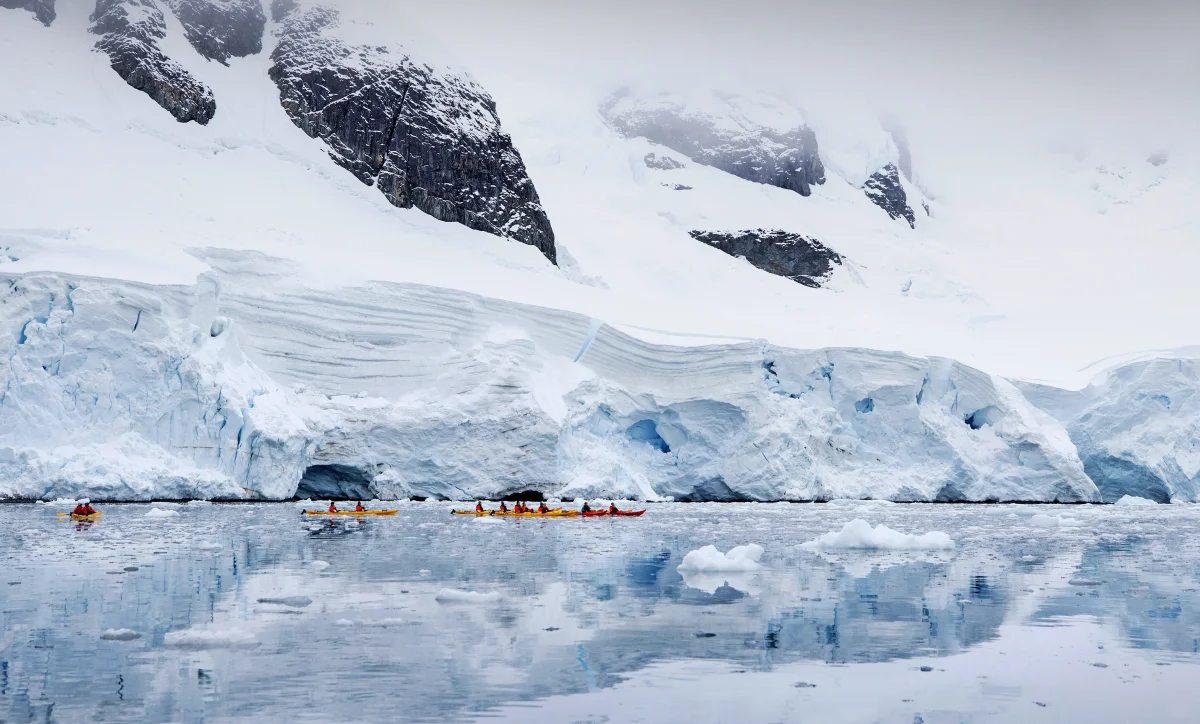
It's practically impossible to get to Vostok Station as a tourist: it's open only to members of Antarctic expeditions, and even in summer it's around −30°C there. Tourist cruises to Antarctica usually stick to the coast of the Antarctic Peninsula.
But the Northern Hemisphere's Pole of Cold is open to all. People travel to Oymyakon in winter, most often in January and February, when the frost holds at around −50°C. If you decide to go, be prepared for a long journey — about 900 km from Yakutsk along a winter road — and you'll need clothing like the locals wear: furs, felt boots and several layers.