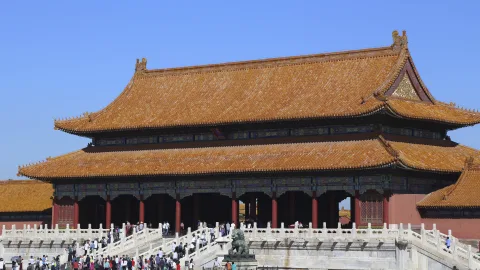
While some people treat the end of Indian summer as a signal that "the season's closed," others are already packing a suitcase. October in Russia is no worse than September — it's simply beautiful in its own way, and in different places.
Many people plan their autumn trip strictly around Indian summer, worried about missing those few warm days. But there's a flaw in that logic: Indian summer is a brief phenomenon that doesn't hit the whole country at once, while golden autumn in the mountains, along the Golden Ring, or in the south arrives later and lasts far longer than a couple of weeks.
When Indian Summer Actually Ends
Indian summer is the folk name for a stable warm anticyclone that follows the season's first cold snap — not a month-long stretch of weather. In central Russia, it traditionally begins around September 14 and lasts one to two weeks.
Alexander Ilyin, lead meteorologist at the Meteo-TV center, updates the specific dates each year — in 2025, for instance, the warm spell in Moscow and the surrounding region wrapped up by September 17–18.
That means by October, Indian summer has typically already passed almost everywhere. But that doesn't mean travel across Russia loses its appeal — the beauty simply shifts to other regions and takes on a different form.
Crimea: A Velvet Season in No Hurry to End
The southern coast of Crimea is a rare exception where warmth persists into October, just under a different name — not "Indian summer," but its own "velvet season." Early in the month, daytime air warms to 64–68°F (18–20°C), while the water in Yalta and Feodosia holds at 64–70°F (18–21°C) — comfortable enough for swimming.
By late October, temperatures drop to 59–63°F (15–17°C), but locals recommend exactly this stretch for unhurried walks along the promenades and through the vineyards, free of summer crowds. Harvest season — figs, persimmons, late grapes — falls right within these weeks.
The Golden Ring: Where October Outshines September
In Suzdal, Plyos, and Rostov Veliky, golden autumn reaches its full intensity in early October, not September.
Carved wooden architecture, merchant houses, and monastery walls set against yellow maples and birches — the classic scene that has drawn photographers and painters here since Levitan's time.
In Plyos, boat trips along the Volga continue through roughly mid-October, giving plenty of visitors the chance to catch the golden foliage from the water. And the route through Vladimir and Ivanovo on the way to Plyos turns the trip into a full multi-city journey.
Arkhyz and Dombay: The Mountains Turn Vivid Specifically in October
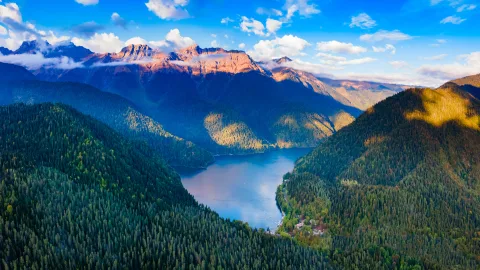
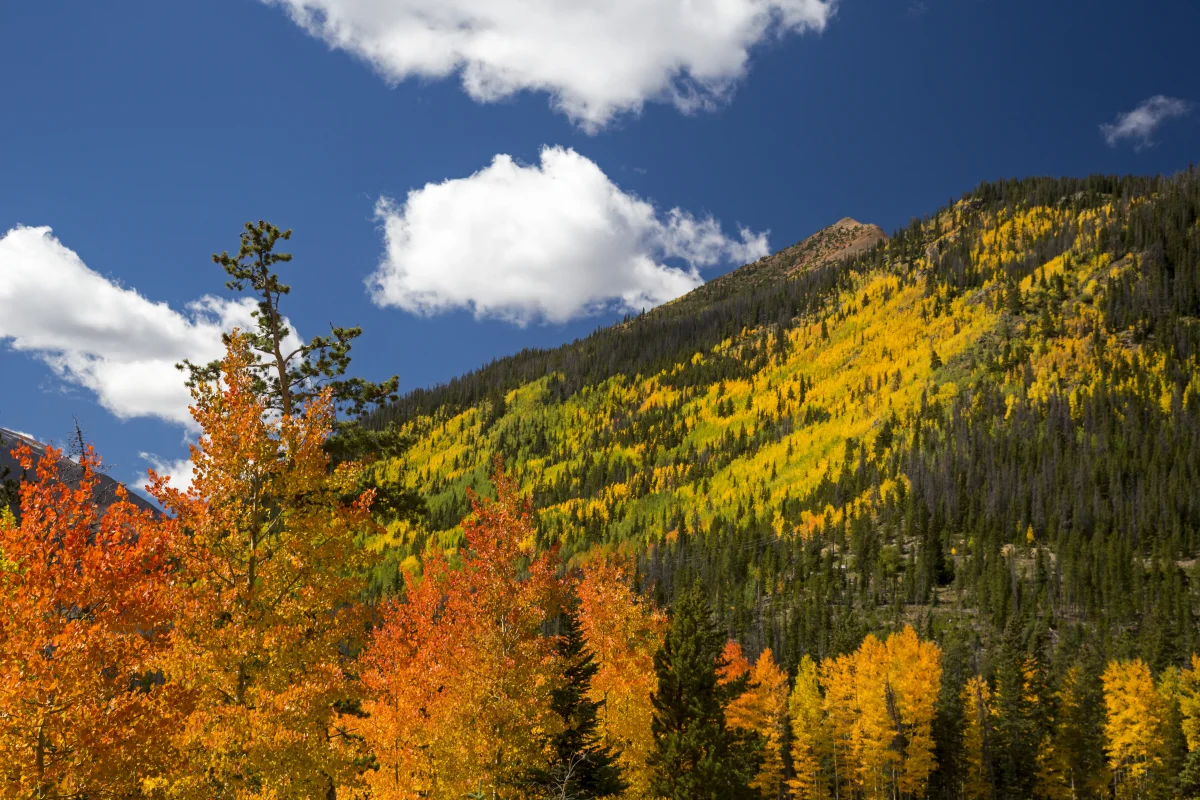
In the Caucasus, peak golden autumn falls between October 5–15 — when mountain slopes blaze yellow, orange, and crimson all at once, while the dark conifer forest holds its own as a rich green contrast. That kind of palette simply doesn't exist here in summer.
There's a practical bonus too: mountain air turns especially clear in autumn.
At Arkhyz, from the platform near the astrophysical observatory at 2,000 meters, October offers the year's sharpest panoramic views, and evenings there bring noticeably better stargazing than any other month. The waterfalls run calmer than during the busy summer season, making walks to them more comfortable too.
Karelia: Golden Autumn by the Waterfalls
The northwest also hits its peak in the first half of October, just in a different form — not sunny warmth, but a contrast of yellow foliage, dark lake water, and white waterfall spray. Ruskeala Mountain Park and the Akhinkoski waterfalls are especially photogenic during this window: the forest's crimson reflects in the marble quarries and river rapids.
The weather here runs cooler than in southern destinations, making it better suited to travelers chasing scenery and quiet rather than warmth.
How to Pick a Destination Based on What You Want
If warmth and the sea are the priority, the obvious choice is Crimea, while velvet season still holds. For classic postcard views of central Russian autumn, the Golden Ring is the better fit, and for anyone seeking contrast and scale, the Caucasus mountains or Karelia's waterfalls deliver.
Whichever of these you pick, October works in your favor: fewer tourists, lower accommodation prices, and nature that looks more striking during these exact weeks than at any other point in the year.