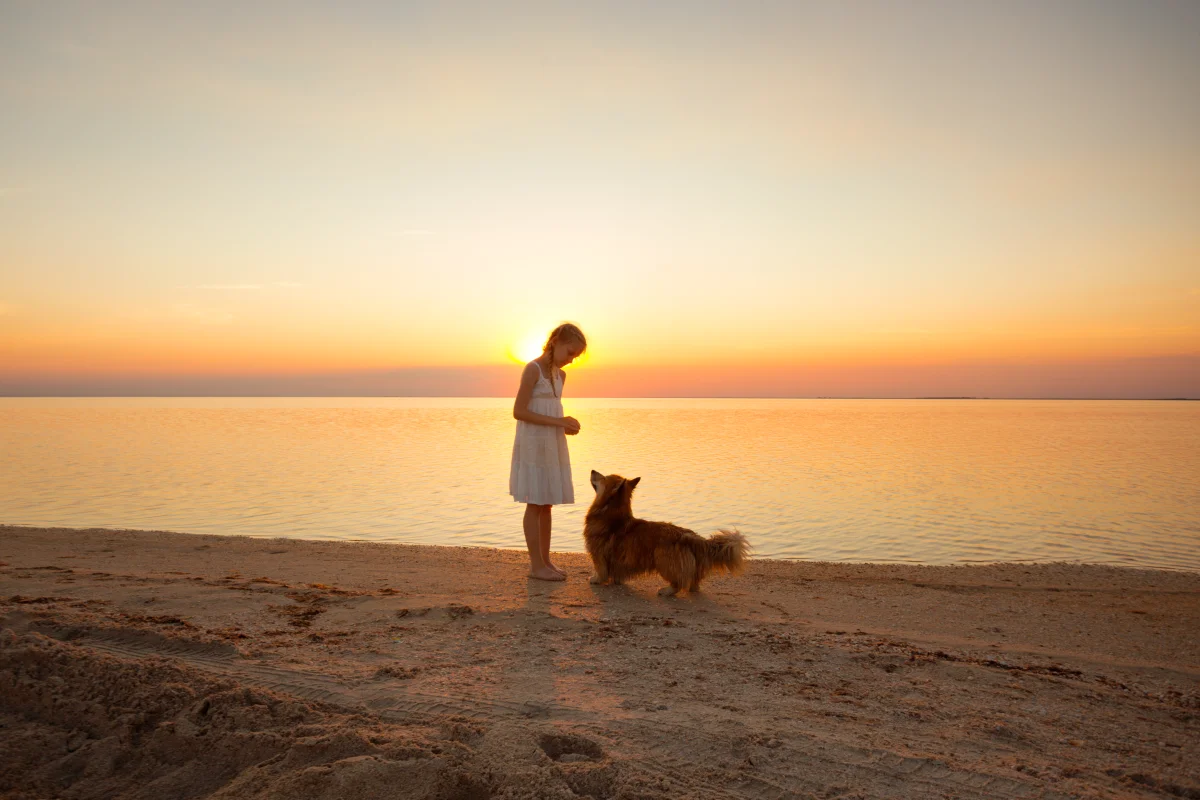
While the Black Sea in May is still only bracing enough for the occasional brave soul, the Sea of Azov has already warmed up enough to confidently bring a toddler along. Let's break down when this actually happens — and why the exact date shifts slightly every year.
Parents planning their first Azov trip with a child usually scroll through forums hunting for one specific answer: "we're going in late May — will it be too cold?" The real answer isn't a single date — it's a range that depends on the wind and weather of that particular spring. But the world's shallowest sea has a quirk that makes these predictions considerably more reliable than for the Black Sea.
Why Azov Warms Up Faster Than Any Other Southern Russian Sea
The secret is depth — or rather, the lack of it. The Sea of Azov's average depth is only about seven meters, making it the shallowest sea on the planet.
A small volume of water heats up in the sun far faster than the deeper Black or Caspian Seas — and for the same reason, cools down faster in autumn too. In summer, the surface layer easily reaches 75–82°F (24–28°C), and in especially hot seasons, climbs as high as 86°F (30°C).
When the Season Officially Opens
In early May, especially around the May holidays, the water on Azov isn't ready for swimming yet: it typically sits at 55–61°F (13–16°C) — comfortable only for hardened cold-water swimmers. By mid-May, the temperature climbs to 61–68°F (16–20°C) — swimmable, but not yet for a child.
The genuine start of the season falls around May 20–25: that's when, with consistently warm weather, the water warms to 75–77°F (24–25°C) and holds there through the rest of summer.
The year-to-year variation is easy to explain: after a windy, cool spring, the start shifts to the first ten days of June — a shallow sea cools just as quickly during a cold snap as it warms during a heat wave.
From Which Month to Confidently Bring the Kids
If you want an answer without any "maybe, maybe not" hedging, it's June. By this point, the water on Azov reliably holds above 72–75°F (22–24°C) regardless of how late May turned out, and warm weather has typically settled in for good.
Late May can work too, but with a caveat: if a prolonged northern wind or cold snap hits right before your trip, the water can cool back down within a couple of days — a shallow sea responds just as quickly to cold as it does to heat.
Swimming season overall holds through mid-to-late September, with especially dedicated swimmers continuing into October, as long as the water stays above 63°F (17°C).
What Makes the Sea of Azov Especially Convenient for Toddlers
It's not just the warm water. Most beaches feature a very gently sloping sandy entry: water reaching a child's waist typically starts only 30–50 meters from shore, rather than within a couple of steps, as at many Black Sea resorts.
- Yeysk is the go-to choice for families with young children: the Yeysk Spit offers a shallow, gently sloped bottom, with the "Nemo" water park, a dolphinarium, and an oceanarium all nearby.
- Golubitskaya combines beach time with therapeutic mud lakes and family attractions.
- Dolzhanskaya Spit offers open sea with a fresher breeze — good for anyone looking for windsurfing alongside a family beach.
- Primorsko-Akhtarsk is calmer and crowd-free, suited to travelers seeking quiet rather than entertainment.
What Parents Should Know in Advance
A shallow sea has a downside rarely mentioned in tourist brochures: the water here can literally disappear or surge within a matter of hours. This comes down to so-called wind-driven surge and setback events — because of the small water volume, a sustained wind can push it entirely from one shore to the other.
Veniamin Golubitchenko, a member of the environmental council under the governor of Krasnodar Territory, explains that a sustained northeasterly wind blowing for several days in a row can pull water away from shore — sometimes by dozens or even hundreds of meters, exposing the seabed. Conversely, a wind blowing from the sea toward land for several days straight can cause a sharp rise in water level and flood low-lying stretches of coastline.
For a family trip, this produces a simple rule: check the wind forecast for the coming days before you go, and on the beach, don't let a child play unsupervised right at the water's edge during windy weather — even if it was shallow and safe that same morning.
Jellyfish and Algal Blooms: What to Watch For at the Height of Summer
By midsummer, warm shallow water triggers active phytoplankton growth — the so-called "sea bloom": the water turns murky, sometimes taking on a greenish tint near shore along with a distinctive smell.
The peak usually falls in August, with a weaker secondary bloom occurring in late autumn. During these periods, jellyfish also become more common near shore — not dangerous for swimming with kids, but unpleasant to the touch, so it's worth being ready to explain to a child that they're best avoided rather than touched.
How to Pick Dates for a Surprise-Free Trip
The safest window for a first trip with a child is June or the first half of July: the water is already reliably warm, and peak algal bloom hasn't set in yet. If you're traveling later, in August, it's worth checking with locals or resort forums beforehand about current water conditions — a bad bloom can noticeably dampen the experience, even though swimming itself remains safe.
And whatever dates you choose, when planning a beach day, it's worth keeping half an eye on the wind forecast, not just water temperature — on Azov, that's an equally important factor.