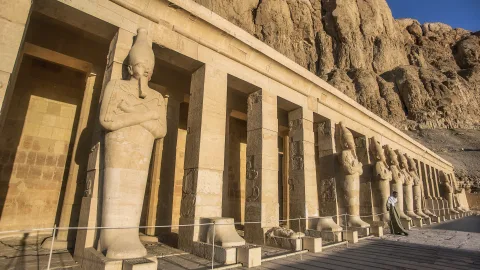
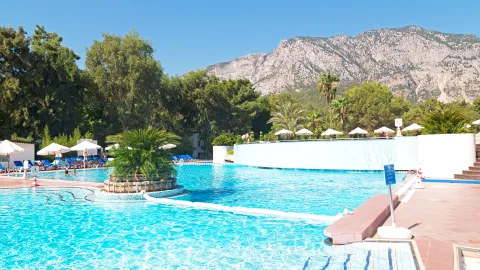
In the Altai settlement of Kosh-Agach, roughly 100 mm of precipitation falls per year — three times less than the average for the Sahara. In Kalmykia's "Black Lands," it's 170 mm. In Verkhoyansk, 180 mm. Three completely different landscapes, three different climates — and one thing in common: rain here is remembered by the date.
Russia is typically seen as a country awash in water — rivers, lakes, snow. But its territory also holds semi-deserts, genuine desert, and mountain valleys where a raindrop is an event, not routine. What's most surprising: dry regions aren't limited to the south — some sit beyond the Arctic Circle.
Kosh-Agach: The Driest Inhabited Place
The absolute record-holder is the village of Kosh-Agach in the Altai Republic: roughly 100–130 mm of precipitation a year. For comparison: Moscow gets 700 mm, St. Petersburg 660 mm, Sochi 1,700 mm. Kosh-Agach is seven times drier than the capital.
The village sits in the Chuya Steppe — an intermontane basin at 1,750 meters elevation, wedged between Altai mountain ranges.
Moist air masses from the west and south can't cross the mountains: all their moisture falls on the outer slopes, and only dry air reaches the basin. This is a classic rain shadow — the same mechanism that creates deserts on the far side of the Himalayas and the Andes.
Winter in Kosh-Agach brings –30 to –40°C under clear skies. There's almost no snow — the thin layer gets blown away by wind, leaving the steppe bare and yellow-brown. Summer brings +25–30°C and dust. Rain is a genuine celebration, after which the steppe turns green for a few days — then scorches again.
Kalmykia: Europe's Only Desert
The "Black Lands" in Kalmykia is territory officially classified by Russian geographers as desert. Precipitation: 170–200 mm per year. Vegetation is nearly absent. Sand dunes shift with the wind, just like in the Sahara — except instead of camels, there are saiga antelope, and instead of +50°C, there's winter at –25°C.
The name "Black Lands" doesn't come from the soil's color — it comes from the fact that no snow falls here in winter: the ground stays dark while the rest of Russia turns white. In summer, temperatures climb to +40–45°C, and the soil surface heats to +70°C.
The capital of Kalmykia, Elista, gets roughly 290 mm of precipitation a year. More than Kosh-Agach, but still one of the lowest figures among regional capitals. For comparison: Astrakhan gets about 220 mm (outside the Volga Delta), Volgograd about 340 mm.
Yakutia: Dryness Disguised as Snow
Verkhoyansk and Oymyakon are the poles of cold, but they're also among the driest places in the country. Verkhoyansk gets roughly 180 mm of precipitation a year — less than some African savannas.
The reason is extreme cold. Air at –50°C holds almost no moisture — it has nothing to release as precipitation. In winter, very little snow falls — the cover is thin and dry as dust. Summer brings brief rains, but the annual total is negligible.
Yet subjectively, Yakutia doesn't feel "dry": permafrost prevents meltwater from soaking downward, and in summer the tundra fills with thousands of lakes and bogs. The water is there — it just doesn't come from the sky, but from the ground.
Tuva: Steppe Between the Mountains
Kyzyl, the capital of Tuva, gets roughly 220 mm of precipitation a year. The city sits in the Tuva Basin, shielded by mountains on every side. The mechanism is the same as Kosh-Agach's: a rain shadow. Moisture stays on the outer slopes of the Sayan Mountains, and dry air arrives in the basin.
Summer brings +30–35°C and dust; winter brings –30°C and clear skies. Rain in July–August is a brief half-hour shower, after which the ground dries within a couple of hours.
The Caspian Lowlands: A Large Dry Zone
This isn't a single point but an entire region: southern Volgograd Oblast, Astrakhan Oblast (outside the delta), Kalmykia, southern Orenburg. Precipitation ranges from 150–300 mm depending on the specific area.
The lowland sits within an anticyclonic regime: descending air currents prevent clouds from forming. A dry wind from the Kazakh steppe further scorches away moisture. The result: semi-desert landscapes with wormwood, salt flats, and scarce wells.
Astrakhan, in this context, is a paradox: the city sits in the Volga Delta, surrounded by water, yet sees almost no rain. Moisture arrives with the river, not from the sky.
The Arctic Coast: Dryness From the Cold
The coastline of the Laptev Sea and the East Siberian Sea gets 200–250 mm a year. This is a "cold desert": rainfall is scarce not because of heat, but because Arctic air is too cold to carry moisture.
The tundra here receives less water than the Sahara's average. But it doesn't look like a desert — because evaporation is also minimal: at +5°C in summer, every drop stays on the surface for months.
Two Types of Drought: Hot and Cold
Russia's dry regions split into two fundamentally different types.
Hot drought — Kalmykia, the Caspian Lowlands, southern Orenburg. Low precipitation + high temperature + intense evaporation = genuine drought, water scarcity, desertification. Vegetation burns out, soil degrades, agriculture is only possible with irrigation.
Cold drought — Verkhoyansk, the Arctic coast, Kosh-Agach in winter. Low precipitation + low temperature + minimal evaporation = moisture is preserved in the permafrost. Formally little water exists, but there's no real deficit — it's simply frozen.
How People Live Without Rain
In Kosh-Agach and the Kalmyk steppes, water supply relies on artesian wells and imported water. Wells in the semi-desert are rare, and rivers dry up in summer. Livestock grazes on parcels tied to water sources and gets moved on as those sources deplete.
Agriculture in a zone of 150–200 mm of rainfall is impossible without irrigation. In Kalmykia and Astrakhan Oblast, irrigation canals fed by the Volga operate, but their reach is limited. Outside the irrigated zones, only pastoral livestock farming survives.
In Yakutia's "dry" districts, the problem is different: water is plentiful (permafrost thaws in summer), but delivering it to homes is an engineering challenge. Pipes burst in the frozen ground, wells freeze over. Water is often trucked in or hauled from rivers.
Gauging the Scale of Russia's Dry Regions
Ranking regions by precipitation:
- Kosh-Agach — ~100 mm
- "Black Lands" (Kalmykia) — ~170 mm
- Verkhoyansk — ~180 mm
- Astrakhan — ~220 mm
- Kyzyl — ~220 mm
- Elista — ~290 mm
- Volgograd — ~340 mm
- Moscow — ~700 mm
- St. Petersburg — ~660 mm
- Sochi — ~1,700 mm
- Achishkho (mountains above Sochi) — ~3,000 mm
The spread within one country is thirtyfold. From a mountain village where rain is remembered by the date, to a mountain station where it falls almost every day. No other country on Earth has climate diversity on this scale — and that too is part of what Russia is.