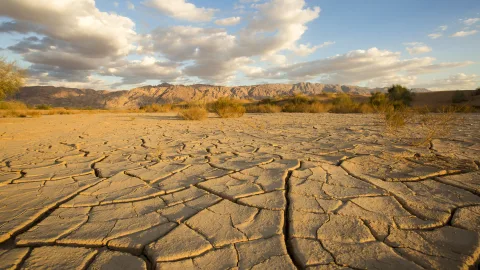
At the summit of Mount Sinai in January: minus ten. In the desert beyond Luxor: around zero. In a Hurghada hotel room: +12°C, because there's no heating and the AC's warming mode barely works. Egyptian cold isn't a fabrication — it's a reality most tourists arrive completely unprepared for.
Egypt is a country where the word "winter" doesn't conjure images of cold. But for a country where 95% of the territory is desert, temperature swings are the norm. The same mechanism that heats sand to +70°C in summer works in reverse during winter: without clouds or moisture, heat escapes into space within hours of sunset.
When Egypt Is Coldest
The coolest month is January. But "cool" is a geographic concept: the country stretches from the Mediterranean to the tropics, and the difference between regions in winter is greater than in summer.
In Cairo, daytime highs run +17–20°C, nighttime lows +8–10°C. For a city that hits +40°C in summer, that's a noticeable swing. Cairenes bundle up in jackets, scarves, and winter shoes. Tourists who fly in for the pyramids wearing shorts start shivering by four in the afternoon, when the sun goes down.
Temperature in Alexandria and along the Mediterranean coast reaches +15–18°C during the day, +8–10°C at night. This is Egypt's most "European" climate — with rain (up to 50 mm in January), sea wind, and gray skies. The only place in the country where it's genuinely overcast in winter.
Hurghada sits at +20–23°C by day, +10–12°C at night. Warm in the sun, but temperatures drop sharply after sunset. Wind off the sea amplifies the sensation: at +15°C with wind at 6–8 m/s, perceived temperature is around +10°C.
Sharm el-Sheikh warms to +22–25°C during the day, +12–14°C at night. The Sinai mountains block the wind, so Sharm subjectively feels 3–4 degrees warmer than Hurghada at the same thermometer reading.
And in Luxor and Aswan (the south), daytime temperatures reach +23–26°C — the warmest points in winter Egypt. But at night, temperatures drop to +7–10°C, and the 15–18-degree day-to-night swing feels stark.
Can You Really Freeze in the Desert?
Yes. And it's not an exaggeration. The desert isn't just "a hot place." It's territory with no thermal buffer: no water, no clouds, no vegetation to trap heat.
By day, the sun heats sand and rock to +20–25°C (in winter). After sunset, all that stored heat radiates back into the atmosphere, and by three in the morning the temperature drops to +2–5°C. In the mountain deserts of Sinai, it goes below zero.
At the summit of Mount Moses (2,285 m), January readings hit –5 to –10°C. Thousands of tourists climb overnight every year to catch the sunrise — and many underestimate the cold. The blankets Bedouin guides rent out along the trail aren't a marketing gimmick — they're a necessity. Without warm clothing at the top, hypothermia is a genuine risk.
In the Western Desert — the oases of Siwa, Bahariya, Farafra — January nights drop to 0–3°C. Camping without a sleeping bag rated for subzero temperatures isn't romantic — it's a problem.
Why the Temperature Swings Are So Dramatic
The mechanism is simple and identical across every desert in the world. Water vapor in the atmosphere acts as a blanket, trapping heat at the surface. In Egypt, winter humidity runs 30–40% on the coast and 15–20% inland. There's almost no "blanket," and heat escapes unimpeded.
No cloud cover. Clouds reflect heat back toward the ground. In Egypt during winter, cloudy days are rare (except along the Mediterranean coast). A clear night sky is an open channel for heat loss.
Sand and rock heat up fast and cool down just as fast. Unlike water, which retains heat for a long time, sand releases it within a couple of hours. By midnight, the desert surface is already cold.
Daily temperature swings in January can reach 20–25 degrees: +25°C in the sun during the day, +2°C before dawn. In no other climate type is a swing like that the norm.
How Egyptians Cope With the Cold
For a Cairo resident, +10°C at night is genuinely cold — and the reaction reflects that.
The overwhelming majority of Egyptian buildings have no central or standalone heating. Homes are built to protect against heat, not cold: thin walls, marble floors, drafty windows. On a winter night, indoor temperature can actually be colder than outside — the stone walls cool down and pull heat out of the room.
Egyptians rely on electric heaters, and winter electricity consumption spikes. At coastal hotels, air conditioners switch to "heat" mode, but older units run inefficiently, and rooms can sit at +15–16°C — not enough for a comfortable night's sleep.
In January, you'll see down jackets, hats, and scarves on Cairo's streets. For a Russian at +18°C, that looks comical. But for an Egyptian used to +35°C, it's entirely serious.
What This Means for Tourists
- At Red Sea Resorts
Daytime: T-shirt and shorts. After sunset: jeans, a sweater, closed shoes. A 10–12 degree swing between lunch and dinner is standard. A warm jacket for evening walks along the promenade isn't excessive.
- On Excursions
The pyramids, Luxor, the Valley of the Kings — winter is more comfortable than summer: +20–25°C instead of +45°C. But early morning departures (5–6 a.m.) hit +8–10°C, and without a jacket, it's chilly. Mount Sinai is climbed at night — you'll need warm pants, fleece, a hat, and gloves.
- On Desert Safaris
Overnight stays at camps are a popular excursion. Blankets are provided, but they're sometimes thin. Bringing your own sleeping bag or an extra clothing layer is the difference between a pleasant adventure and a sleepless night.
- At Your Hotel
Confirm when booking whether heating works in the room and how well. At budget hotels in winter, the main complaint isn't the food or service — it's the cold in the room.
Which Winter Month to Choose
- December. Not the coldest yet — +22–25°C during the day on the coast. Water at +23–24°C. New Year holidays mean peak prices, but the weather is good. Nights are cool but manageable.
- January. The coldest. Ideal for sightseeing: not too hot. For the beach — right at the edge: water at +20–22°C, and stepping out into the wind afterward is bracing. Prices after the holidays are at their lowest.
- February. Warming begins. By month's end: +24–26°C during the day. But February is the windiest month — Hurghada gets buffeted especially hard. Sharm is more sheltered.
For anyone wanting winter Egypt without cold surprises: the first half of December or the second half of February. And for those coming specifically for the Sinai sunrise: any winter month works — just pack a hat and gloves. It sounds absurd for Egypt — until you're standing at the summit at four in the morning at minus five.