The gap between +38°C in Alanya and +31°C in Bodrum is seven degrees — and a chasm in how it actually feels. Both cities are in Turkey, both have a sea, both are in August. But in one, you can go for a walk after lunch; in the other, the most you can manage is a dash from the air conditioning to the pool.
August is the hottest month on the Turkish coast and simultaneously the peak of Russian demand. Most tourists fly to the Mediterranean — Antalya, Kemer, Belek, Side, Alanya — and get +35–38°C with high humidity. But 200 kilometers to the west, on the Aegean coast, the same exact dates feel 5–7 degrees more comfortable. Few people are aware of this fact.
The Mediterranean Coast: Hot and Humid
The Antalya Riviera in August is a scorching frying pan.
- Alanya
The southernmost and hottest resort. Air at +35–38°C, humidity 65–70%. Water at +29–30°C — like a warm bath. The sea doesn't refresh; you emerge just as sweaty as when you went in. After sunset, it's still +28°C, and coolness doesn't arrive until deep into the night.
- Antalya and Belek
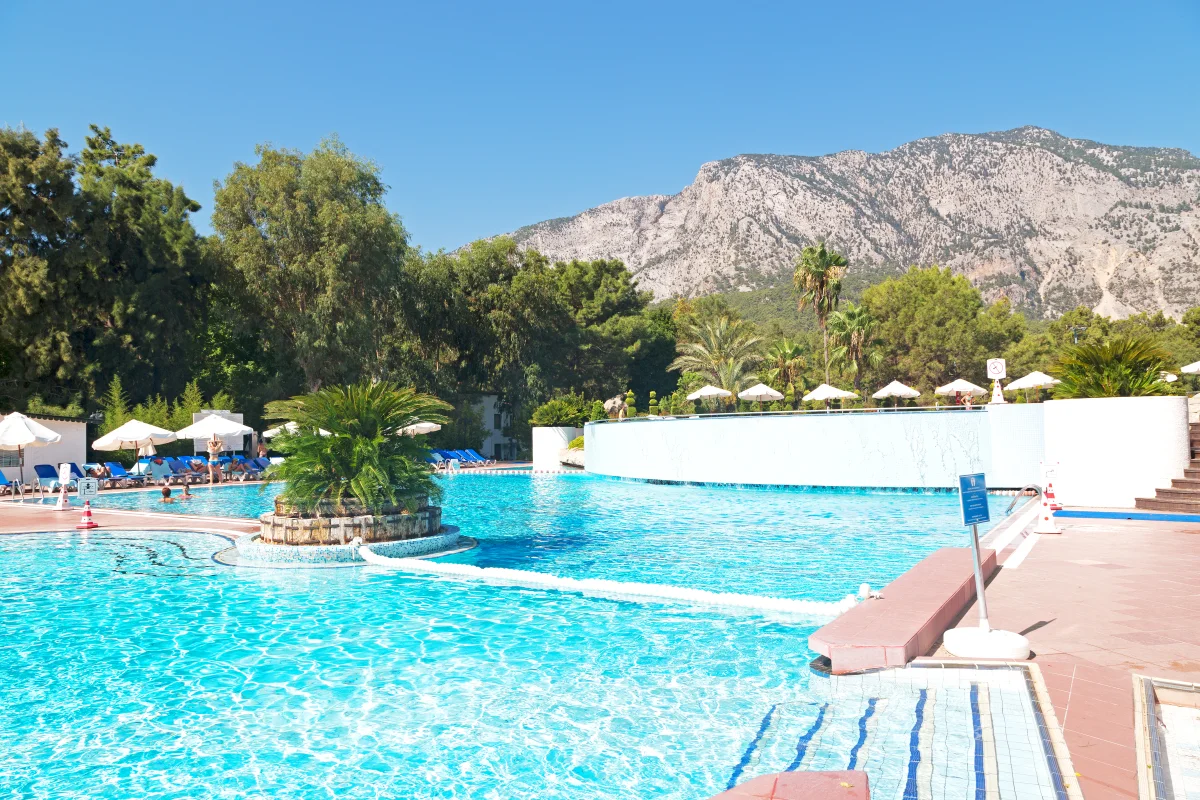
+33–36°C, humidity slightly lower. Water at +28–29°C. Large hotel complexes with extensive grounds offer relief through pools, greenery, and air conditioning. But outside the hotel — the oven.
- Side
+34–37°C. Open shoreline, weak wind. The ancient ruins are impressive, but touring them at +36°C is an ordeal.
- Kemer
Slightly cooler than Antalya — mountains meet the sea and provide shade in the afternoon. Water at +27–28°C, cooler than Alanya's because the nearshore water is deeper. For the Mediterranean coast, the most tolerable option in August.
The Aegean Coast: Same August, Different Sensation
Turkey's western coast is washed by the Aegean Sea, and the climate here differs substantially from the Mediterranean. The key difference is dry air and constant wind. The meltemi — a northwesterly wind blowing all summer — lowers the perceived temperature by 3–5 degrees.
- Bodrum
Air at +30–33°C, water at +25–27°C. The wind blows almost continuously — and that's the biggest advantage. At +32°C with a breeze, it feels like +27°C in still air. At night, temperature drops to +22–24°C — you can sleep with the window open. For anyone who handles stuffy heat poorly, Bodrum is the best choice in August Turkey.
The downside: waves. The meltemi kicks up chop, and on some of the peninsula's beaches the sea gets rough. The enclosed bays of the southern shore (Bitez, Gümbet, Turgutreis) are calmer. Akyarlar Beach is one of the most sheltered.
- Marmaris
+31–34°C, water at +26–27°C. The city sits at the meeting point of two seas — the Aegean and the Mediterranean. The bay is shielded by mountains, wind is weaker than in Bodrum, but the dry air persists. Pine forests on the slopes provide natural shade and the scent of pine — a contrast to Antalya's concrete sprawl.
- Fethiye and Ölüdeniz
+33–36°C during the day — hotter than Bodrum, because they sit farther south. But at night: down to +18–20°C, a noticeable swing that lets the air properly cool. Ölüdeniz's turquoise lagoon, one of the most photographed beaches in the world, warms to +28°C in August. Paragliding off Mount Babadağ is the region's calling card.
- Çeşme and Alaçatı
The coolest resorts on the coast — +28–31°C, water at +24–25°C. Constant wind has turned Alaçatı into Turkey's windsurfing capital. Beach vacations here lean more European in format: no all-inclusive, boutique hotels, and waterfront restaurants.
Why the Aegean Coast Is Cooler
The difference isn't coincidence — it's geography and hydrology.
1) Wind.
The meltemi is a steady wind off the Aegean Sea, blowing from June through September. On the Mediterranean coast, its influence is minimal — the Taurus Mountains block it. On the Aegean, it sweeps across the entire coastline.
2) Currents.
The Aegean Sea receives relatively cool water from the Black Sea through the straits. Nearshore water temperature runs +25–27°C instead of the Mediterranean's +28–30°C. Three degrees is the difference between "warm" and "hot."
3) Humidity.
Air on the Aegean coast is drier: 45–55% versus 60–70% on the Mediterranean. Dry heat is far easier to tolerate — sweat evaporates, and the body cools itself. Humid heat presses down, because the sweating mechanism stops working.
Who the Aegean Coast Suits Best
Families with small children. A child's body overheats faster than an adult's. +31°C in Bodrum isn't +38°C in Alanya. Acclimatization is gentler, and heatstroke is less frequent.
Older travelers. The strain on the cardiovascular system at +31°C with dry air is several times lower than at +38°C with high humidity.
Those who want more than just the beach. In Bodrum, there's the Castle of St. Peter and an underwater museum. In Marmaris, excursions to Dalyan, mud baths, and Iztuzu Turtle Beach. In Fethiye, the Lycian Way. At +31°C, all this is doable; at +38°C, it's torture.
What to Keep in Mind
- All-inclusive is rarer on the Aegean coast. Bodrum and Çeşme lean toward boutique hotels, apart-hotels, and villas. The AI format exists, but the selection is narrower than in Antalya.
If all-inclusive is non-negotiable, Marmaris and Fethiye offer more options.
- Flights. Direct flights from Russia mainly go to Antalya, Dalaman (Marmaris, Fethiye), and Bodrum. Reaching Çeşme and Alaçatı requires going through Izmir (few direct flights from Russia; usually a layover through Istanbul).
- Prices. Bodrum and Çeşme run 15–30% more expensive than Antalya. These are status resorts popular with Europeans and affluent Turks. Marmaris is comparable in price to Antalya.
Which Resort to Choose in August
- Can't handle the heat — Bodrum or Çeşme. Dry air, wind, cool nights.
- Want all-inclusive without the furnace — Marmaris or Kemer. A compromise between comfort and climate.
- Want the warmest possible sea — Alanya. +29–30°C, but brace for the mugginess.
- Traveling with kids — the Aegean coast. Bodrum, Fethiye, Marmaris — easier on both children and parents.
- Want a different Turkey — Alaçatı. Wind, windsurfing, cobblestone streets, craft restaurants. Nothing like Antalya's all-inclusive scene.
The golden rule for August Turkey: don't choose your resort by price or hotel reviews — choose it by climate. In the hottest month, the difference between coasts is felt more strongly than the difference between four and five stars.