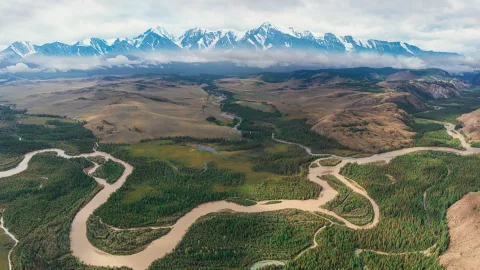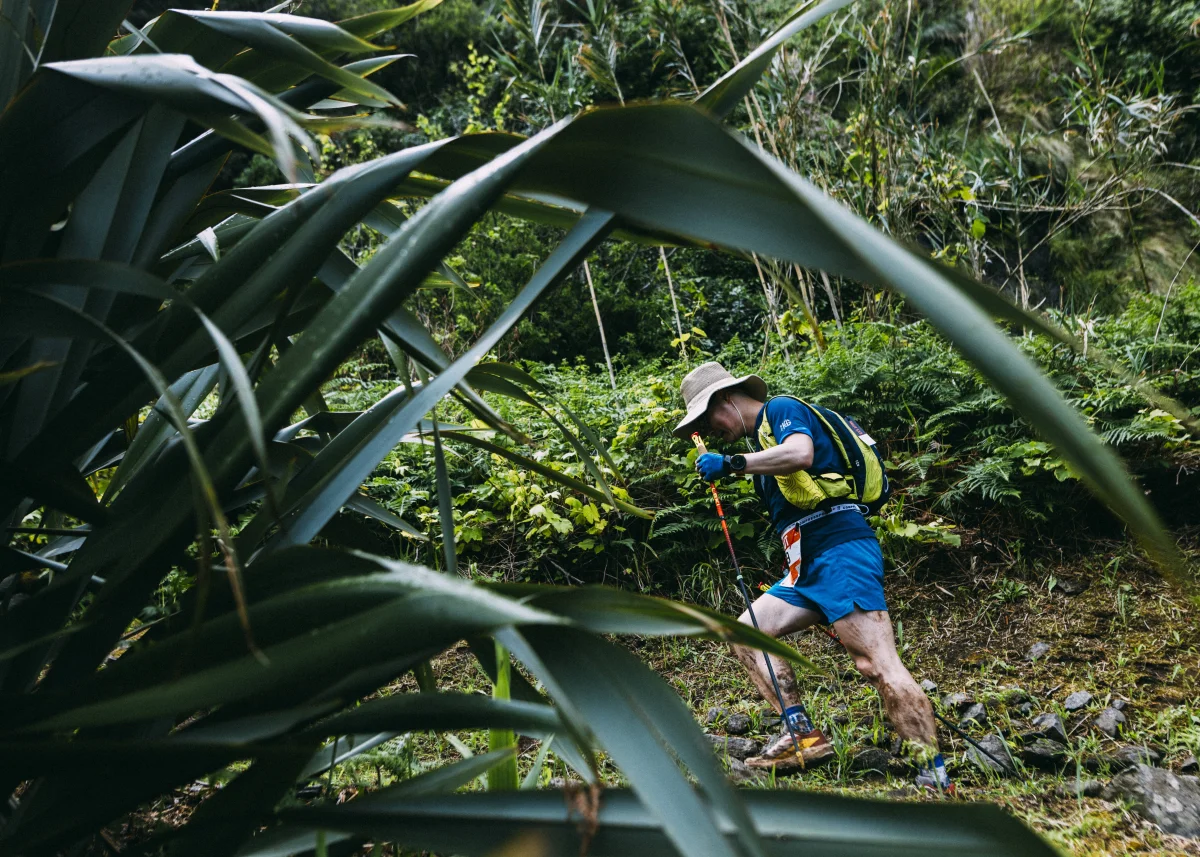
In the mountains, weather can change faster than you can pull on a rain jacket. Ten minutes ago, it was sunny; five minutes later, there is wind, heavy rain and lightning flashing over the ridge. The most dangerous mistake in that situation is to keep going because you are “just a little farther from the summit” or to try to wait out the storm under the first tree you see.
Shelter on a hike is not just a tent. It will protect you from heavy rain and offer some protection from wind and hail, but it is not a safe place during a lightning storm. If you can hear thunder, you are already in the danger zone: official guidance recommends not waiting for the storm to intensify, but immediately leaving exposed and elevated terrain.
How to Know When It's Time to Find Shelter
You don't have to wait for the first lightning strike. Several signs can signal approaching bad weather: rapidly growing towering cumulus clouds, darkening skies, a sudden increase in wind, the first rolls of thunder, and a noticeable drop in temperature. In the mountains, thunderstorms can develop very quickly and appear behind the next ridge with almost no warning.
If you can already hear thunder, don't assume the storm is “somewhere far away.” It's a signal to start descending and look for a safe place. Experts recommend treating thunder as an immediate warning: the storm is close enough for lightning to pose a danger.
Summits, passes, ridgelines, exposed plateaus and viewpoints are particularly dangerous. In these places, you may become one of the highest points in the landscape.
The right response is not to hurry toward the summit but to change direction and head down. The earlier you start descending, the more options you have for finding shelter.
Where to Wait Out Heavy Rain and a Thunderstorm
The ideal option is a substantial building or an enclosed vehicle with a metal roof. These are the only places considered full protection from lightning under official guidance. Keep the vehicle's windows closed and avoid touching metal parts inside.
But on an ordinary hike, such options are rare. The priority, therefore, is to get off dangerous terrain first and only then find the most protected location available.
If a thunderstorm catches you at altitude, descend. If a forest begins nearby, head into it and look for an area with relatively low trees rather than a single tall tree standing in the middle of a clearing.
A lone tree is a poor shelter. Lightning is more likely to strike tall objects, so standing directly beneath the tallest tree in an exposed area is one of the worst things you can do during a thunderstorm. In a forest, it is safer to stay among a group of relatively low trees.
A cave or rock overhang can protect you from rain, hail and wind, but you should not automatically assume that every rocky recess is safe from lightning. Exposed peaks, isolated rocks and open rocky ledges are particularly dangerous.
What to Do If There Is No Shelter Nearby
This is the worst-case scenario: you are on an exposed slope, the forest is far away, a thunderstorm is all around you, and the nearest building or vehicle is several kilometers away.
The first rule is to get off high ground. Do not run toward the nearest summit, pass or isolated tree. Descend into lower terrain, avoiding ridges and exposed areas.
Do not lie flat on the ground. If there is genuinely no other option, the goal is to minimize contact with the surface. In an extreme situation, guidance recommends crouching on the balls of your feet to reduce the area of contact with the ground rather than stretching out at full length. This is strictly a last resort, not a “safe position” during a thunderstorm.
The goal is not to find a magical place where lightning definitely won't strike. No such place exists in the open. You need to get off high ground as quickly as possible, move away from isolated tall objects, water and exposed areas.
If you are hiking in a large group, don't bunch everyone together. Spread out to roughly 15 meters apart. This reduces the chance that a single strike will injure several people at once and leaves enough room to help someone who is injured.
What About Your Backpack and Metal Gear?
Trekking poles, ice axes, climbing equipment and other metal objects are not “lightning magnets” by themselves, but it is still better not to hold them during a thunderstorm. If circumstances allow, put metal equipment down and move away from it.
It is particularly important not to stand on an exposed ridge with trekking poles raised above your head. The problem is not that the poles will somehow “attract” lightning; it is that you are already in an extremely dangerous location.
Water is best avoided as well. Do not cross streams or remain near lakes, waterfalls or other bodies of water during a thunderstorm. Water conducts electricity, and wet terrain only makes the situation more hazardous.
What About the Tent?
A tent is shelter from rain, not from lightning. Metal poles do not turn it into a safe place, so you cannot rely on a tent for protection from a lightning strike.
If a storm arrives at night, don't automatically rush out of the tent and stand in the open. First assess the location of your campsite. If the tent is pitched on a summit, ridge, exposed clearing or next to an isolated tall tree, it is in a poor location and, if possible, you should move the camp to lower ground.
If the campsite is in relatively low terrain and away from dangerous objects, the priority is to stay inside unless there is a reason to leave and wait out the most active phase of the storm in the most protected position available.
The ideal campsite is chosen before the storm arrives. Low ground, no isolated tall trees and plenty of distance from water matter far more than a beautiful view from your tent.
Places to Avoid During a Thunderstorm
Several types of terrain are particularly dangerous during a storm:
- Summits and ridges. The higher and more exposed the point, the worse. Leave the summit as early as possible.
- Isolated tall trees. Never use the tallest tree in an open area as your shelter.
- Open clearings and plateaus. There are few surrounding features that can reduce your exposure.
- Rock outcrops and exposed rock peaks. Especially when they rise noticeably above the surrounding terrain.
- Lakeshores and riverbanks. Water adds another source of risk during a storm.
- Metal structures and power lines. Keep as far away from them as possible.
Heavy Rain Without Lightning Is Still a Problem
Not every dangerous storm is dangerous because of lightning. Heavy rain in the mountains can turn a dry trail into a slippery slope within minutes. Rocks become slick, streams can rise rapidly, visibility drops, and wet clothing sharply increases the risk of hypothermia.
That means you don't necessarily have to keep moving during a downpour just because there is no lightning. Sometimes the right move is to stop, put on your rain gear, seal your electronics in a waterproof bag and wait for the heaviest rain to pass.
The most dangerous sentence on a hike is “we're only an hour from camp.” That hour is often spent crossing wet rocks in the dark with soaked feet, when the smarter choice would have been to stop earlier.
If the trail has turned into a stream, the water level at a crossing is rising rapidly, or rockfall has started, do not try to push on at any cost. Sometimes bad weather itself is not what causes the accident—the danger comes from the decision to keep going.
How to Prepare Before You Set Out
The best shelter from bad weather is the one you don't have to search for at the last minute. Before setting out, check the forecast not just for your starting point, but also for the elevation and area you are heading into. If severe thunderstorms are forecast, postpone the hike or plan an alternative descent route in advance.
It is particularly useful to know in advance where the exposed sections of your route end and the forest begins, as well as where shelters, roads and settlements are located. If you know that it takes 20 minutes to reach the forest from the summit, the decision to leave the summit becomes much easier.
Your backpack should contain a waterproof clothing layer, a spare warm layer, protection for your map and electronics, a flashlight, a first-aid kit, navigation equipment and an emergency shelter. A more comprehensive hiking kit will typically also include extra food and water, fire-starting supplies and a repair kit.
And always tell someone your route and expected return time. In the mountains, your phone may lose signal precisely when you need it most. For remote routes, consider carrying a satellite messenger or another emergency communication device.
When Is It Safe to Set Off Again?
The danger doesn't disappear the moment the rain stops. During a thunderstorm, the recommendation is to remain in a safe shelter for at least 30 minutes after the last sound of thunder.
This is especially important in the mountains, where a storm can move around and return. The sun has come out and the rain has stopped—but that does not necessarily mean the route is safe again.
If the last thunder was ten minutes ago, the hike is not back on yet. You're still waiting. Half an hour is a small price to pay for avoiding the risk of stepping out of shelter just as the next strike arrives.
What to Do If Lightning Strikes Nearby
If someone is struck by lightning, first assess your own safety and whether further strikes are possible. Move the victim to a safer location if necessary and call for emergency assistance. It is safe to touch someone who has been struck by lightning—they do not retain an electrical charge in their body.
If the person is unconscious and not breathing normally, begin basic CPR immediately if you know how to perform it and arrange for rescuers to be called. That is why a hiking first-aid kit should contain more than just bandages and painkillers: it should also include basic first-aid supplies.
The Golden Rule of Bad Weather
Thunderstorms in the mountains have an unpleasant habit of seeming less dangerous in the first few minutes than they turn out to be later. That's why you shouldn't wait until rain is already coming down in sheets and lightning is striking nearby.
See rapidly growing clouds? Start thinking about descending. The wind picks up? Look for lower terrain. Hear thunder? Leave exposed ground. See lightning? Don't stay on the summit for a photograph.
And above all, don't try to beat the weather. On a hike, you can shorten the route, leave the summit for another day, or simply end the day in the mountains earlier than planned. A beautiful forecast is worth nothing if following it means taking risks on an exposed ridge. A good hike doesn't end where you reach the highest point—it ends where you make it safely back home.