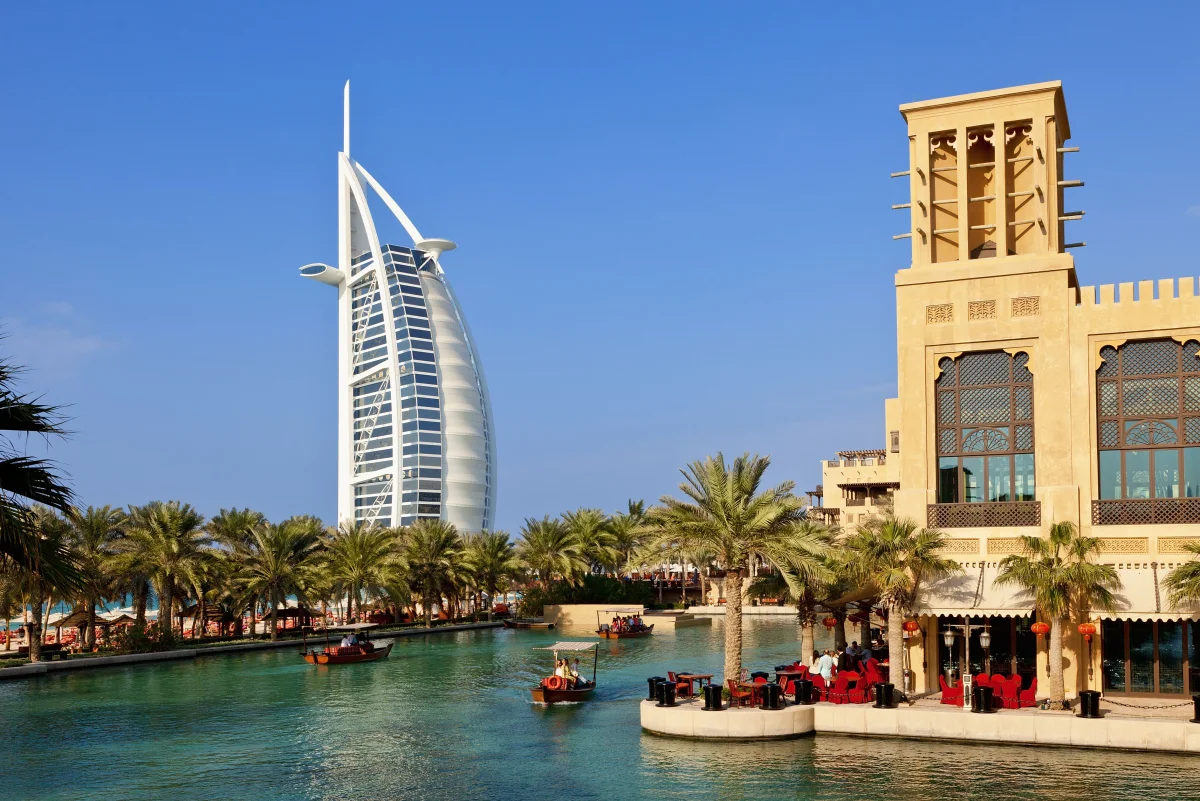
In December, while Moscow sits under a gray slush of snow and de-icing chemicals, 1.5 million people board a plane and land, five hours later, in a city with +25°C and not a cloud in sight. Dubai in winter isn't exotic — it's logical: these are exactly the months when the emirate becomes livable for ordinary human activity outdoors.
Why You Shouldn't Bother With Summer
To understand the winter rush, just picture Dubai's summer. From June through September, air temperature climbs to +43–48°C, and humidity spikes to 90%. It feels like standing inside a running sauna that nobody turned the steam off in.
Stepping from an air-conditioned space onto the street in August means breaking into a sweat instantly, and within ten minutes, seriously considering the risk of heatstroke.
The city keeps functioning, but life shifts indoors: into malls, hotels, and offices. Even Global Village — the largest open-air entertainment park — closes for summer and only reopens in October, once the heat starts retreating. In its 30th season (2025–2026), the park ran from October 15 through May 31.
When "The" Season Actually Begins
Dubai's high tourist season runs from October through April. But the peak months are November through March. During this stretch, air temperature holds at a comfortable +24–30°C during the day, dropping to +15–18°C at night, with almost no rain: across the entire year, Dubai sees no more than five rainy days.
Persian Gulf water cools to +19–22°C in winter — a bit chilly for swimming, especially in January–February. But for walks, sightseeing, shopping, and dinners on open terraces, it's ideal. Hotels compensate for the cooler sea with heated pools, so nobody misses out on water time.
If you want both warm sea and tolerable air, the best windows are October–November and March–April. Water is still (or already) at +25–28°C, and the heat falls short of summer's hellish extreme.
What the Numbers Say
The scale of the winter pilgrimage shows clearly in the statistics. In 2025, Dubai welcomed a record 19.59 million international tourists — up 5% from the year before. And this traffic is distributed very unevenly across the year.
December 2025 became the emirate's most-visited month in history: 2.04 million guests in a single month. January followed with 1.94 million. For comparison, summer months draw far fewer visitors, despite steep drops in hotel prices.
"For the third consecutive year, Dubai's tourism sector has posted record figures. Average hotel occupancy exceeded 80%," noted Helal Saeed Al Marri, Director General of Dubai's Department of Economy and Tourism.
Average hotel occupancy for 2025 came to 80.7%, and total occupied room-nights rose to 44.85 million. Dubai's airport retained its status as the world's busiest by international passenger traffic.
Russians and Dubai: Surprising Numbers
Russia consistently ranks among the top 5 countries by tourist volume to the UAE. In 2025, 2.45 million Russian travelers visited the emirates — up 23% from 2024. From St. Petersburg alone, more than 375,000 people flew to Dubai and Abu Dhabi that year.
The reasons are clear: a direct flight takes 5–6 hours, visa-free entry for 90 days, and Russian-speaking staff at most hotels and restaurants. In winter, Dubai is the nearest point for Russians guaranteed to be warm and sunny without a long transoceanic flight.
What Draws Tourists in Winter, Beyond the Weather
Dubai deliberately concentrates its major events in winter season, creating additional reasons to visit:
- Dubai Shopping Festival (DSF) — the biggest sale event in the Middle East. Runs annually from mid-December through late January. Discounts of 25–75% across over 70 malls, daily raffles for cars and gold, fireworks and concerts. The festival has existed since 1996 and draws millions of shoppers every season.
- Global Village — a multicultural park with pavilions from 90 countries, street food from around the world, shows, and rides. Operates only in the cooler season (October–May), entry from 25 dirhams (~700 rubles). Free for children under 3.
- New Year's shows at the Burj Khalifa — one of the largest laser and pyrotechnic displays in the world. Hotels raise New Year's Eve prices two to three times, and securing a spot with a tower view requires booking 3–4 months ahead.
Formula 1 in Abu Dhabi (late November–early December), yacht regattas, a marathon, and dozens of food festivals — all clustered into the winter half of the year.
What Winter Dubai Costs, and How to Save Money
High season means high prices. A night at a decent four-star hotel in December–January runs 1.5–2 times more than in July. Flights from Moscow during peak dates (New Year holidays, March 8, February 23) climb in price too.
A few ways to avoid overpaying:
- November and early December (before the 20s) offer weather-appropriate comfort, but prices haven't yet spiked to the pre-New Year peak.
- February — after the holidays, tourist flow drops, but the weather is still excellent: +24–26°C during the day, and the sea starts warming.
- Book 2–3 months out — last-minute deals to Dubai in winter are rare; early booking genuinely saves 15–20%.
- Fly on weekdays — departing Tuesday or Wednesday is often cheaper than a Friday flight.
What to Pack and What to Prepare For
Winter Dubai isn't the tropics. Daytime is comfortable in shorts and a T-shirt, but without a light jacket or cardigan in the evening, you can get cold: after sunset, temperature drops to +14–16°C, and it's even lower in the desert. Indoor air conditioning runs aggressively year-round, so a warm layer is useful even inside malls.
Sunscreen is necessary even in winter — Dubai's UV index runs high in every month. Comfortable shoes for walking the promenade, the Old Town, and the souks. And cash dirhams for small purchases at the markets: cards are accepted almost everywhere, but vendors at the Gold Souk and Spice Souk prefer to haggle in cash.
The key point: don't count on a full beach vacation in January–February if you're sensitive to water below +24°C. Winter Dubai is a city, its architecture, food, and shopping. The sea here is a pleasant bonus, not the main event.