Russia's southernmost city sits on the same latitude as Rome and Barcelona — and its climate leans closer to Mediterranean than to what most people expect from Dagestan.
Say "Dagestan," and the mental image is mountains, flocks of sheep, rugged landscapes. Derbent breaks that expectation from the first few minutes: palm trees, pomegranate trees, figs growing in courtyards, and winters so mild that snow here is an event people photograph and talk about. A city over two thousand years old lives in a climate unusual not just for Dagestan, but for Russia as a whole.
Where Derbent Actually Sits
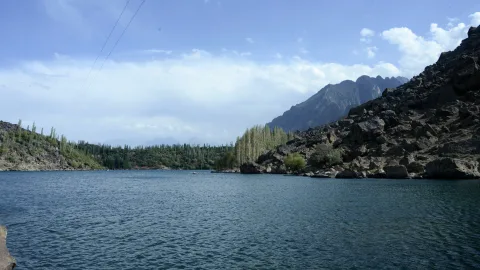
Derbent sits on the western shore of the Caspian Sea, at the foot of the Caucasus foothills, on the 42nd parallel — the same latitude as Rome, Barcelona, and Sochi. But unlike Sochi, shielded from northern winds by mountains and receiving 1,600 mm of rain a year, Derbent sits on an open slope facing the sea.
The mountains only partially shield the city — from the west — while it stays exposed to Caspian winds from the north and south.
This exact combination — southern latitude, sea, mountains on one side, open exposure on the other — produces a climate with no precise equivalent among other Russian cities.
The Climate Type: Subtropical, But Dry
Derbent's climate is classified as transitional between temperate and semi-arid subtropical. The key word is "semi-arid." This isn't Sochi's humid subtropics with its downpours and lush vegetation.
Derbent receives only around 400 mm of precipitation a year — four times less than Sochi and nearly half of Moscow's total.
Average annual temperature is 57°F (13.7°C). For comparison: Moscow sits at 44°F (6.7°C), Sochi at 58°F (14.2°C), Rome at 60°F (15.7°C). Derbent is closer to Rome than to any other major Russian city.
The city sees around 270 warm days out of 365. That's not a typo: for nearly nine months of the year, average daily temperature stays above freezing.
Winter: Snow as a Spectacle
Average January temperature is 37°F (3°C); February holds the same. Below-freezing temperatures happen, but rarely and briefly: the all-time record low is –2°F (–19°C), though temperatures below 23°F (–5°C) occur only once every few years. Snow cover lasts an average of two weeks across an entire winter — and not every year at that.
For locals, snow is something between a celebration and a minor disaster: kids get excited, while the city, unequipped for icy roads, loses its usual rhythm for a couple of days. The Caspian Sea acts like a heater: in autumn, it releases the heat it stored over summer, and in winter, it keeps temperatures from dropping sharply.
Spring: The Caspian "Brake"
Spring arrives late in Derbent — a typical trait of coastal cities. The Caspian cools to 37–41°F (3–5°C) over winter, and that cold water holds back air warming along the shore.
In March, while Krasnodar already sits at 50–54°F (10–12°C), Derbent shows 46–48°F (8–9°C) and often carries wind.
But by May, the city catches up quickly: air warms to 66–70°F (19–21°C), pomegranate and apricot trees bloom, and the first poppies appear along the old fortress walls. Many consider May the best month to visit — warm, green, and still ahead of the tourist crowds.
Summer: Hot, But With Wind
July and August bring 84–86°F (29–30°C) during the day, with an all-time record high of 101.8°F (38.8°C). It's hot, but not brutal — Caspian breezes, drifting in from the sea each morning, ease the intensity of the heat. Humidity runs noticeably lower than in Sochi too — just 60–65% in summer, so 90°F heat here is far easier to tolerate than Sochi's 86°F at 80% humidity.
Summer rainfall is minimal — 16–24 mm a month, the driest stretch of the year, with occasional brief showers. By August, the sea warms to 77–79°F (25–26°C), reaching 82°F (28°C) in shallow coastal waters.
Autumn: A Second Spring
Autumn is Derbent's best season, and that's no exaggeration. September is essentially an extension of summer: 77°F, sea at 72–73°F (22–23°C), pomegranates and persimmons ripening on the streets. October is mild and sunny, 64–66°F (18–19°C), with warm evenings and almost no rain.
The Caspian, which slowed down spring warming, plays the opposite role in autumn — holding onto heat. While Dagestan's inland regions cool down, the coast stays mild through the end of November. Locals call October "the second May" — and by feel, the two really are similar.
The rainiest month is October (around 59 mm), but that's still three to four times less than any given month in Sochi.
Why Derbent Isn't Sochi
The comparison is tempting, but the differences outweigh the similarities.
- Rainfall. Sochi gets 1,600 mm a year, Derbent gets 400 mm. In Sochi, winter rain can last for weeks; in Derbent, winter is dry and sunny.
- Vegetation. Sochi's subtropics are humid, with lush forests. Derbent's are semi-arid: instead of bamboo and Riviera-style palms, there are pomegranate groves, vineyards, almonds, figs. The landscape resembles Spain more than Krasnodar Territory.
- Wind. In Sochi, mountains block the wind. In Derbent, the Caspian wind is a constant companion — refreshing in summer, but making winter's 37°F feel considerably colder than the thermometer suggests.
- The sea itself. The Black Sea is deep and open. The Caspian off Derbent is shallow and enclosed, warming faster and cooling later.
When to Visit Derbent
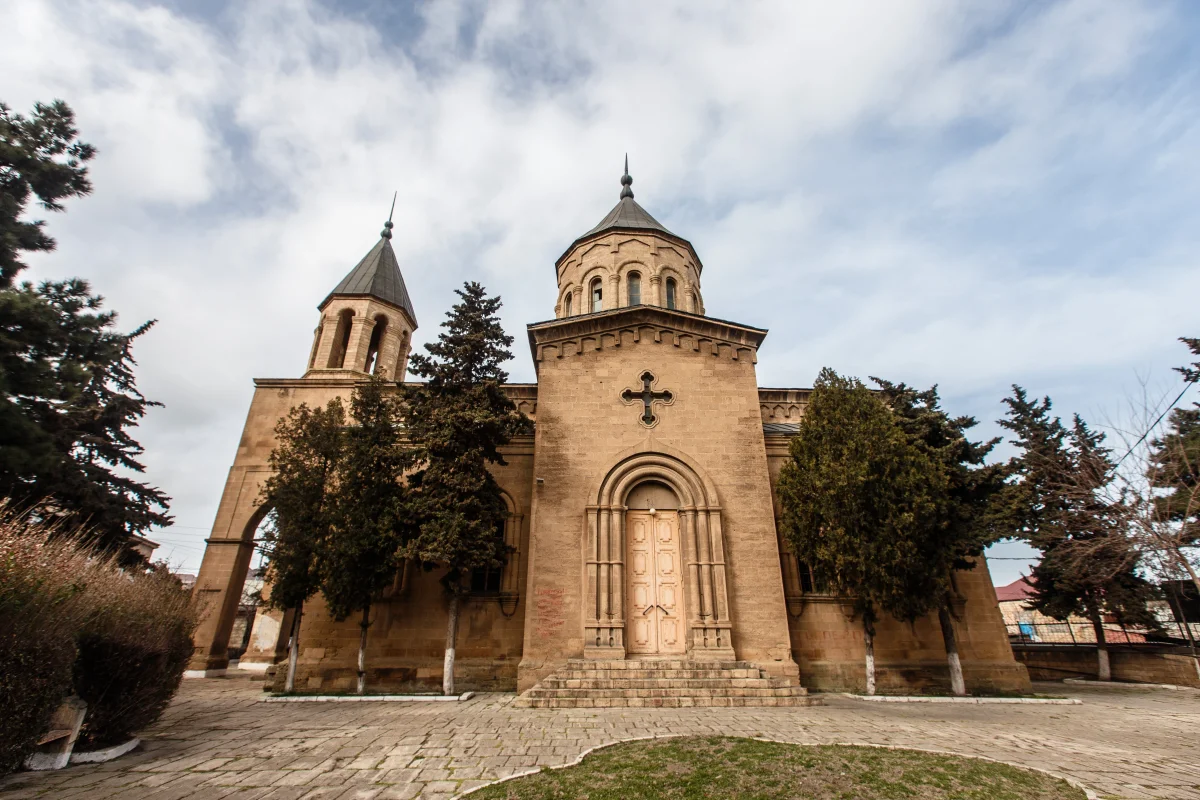
Beach season runs June through September, with water above 68°F. For walking through the Naryn-Kala fortress and the old town, May and October are best: warm but not hot, with minimal rain. In winter, Derbent suits travelers who want to see a southern city without the crowds: 41–50°F, sunshine, hot tea on the promenade, and almost no tourists at all.
And if you're lucky enough to catch one of the rare snowfalls, you'll get to watch a two-thousand-year-old city, accustomed to heat, stare at the white flakes as if seeing them for the very first time.