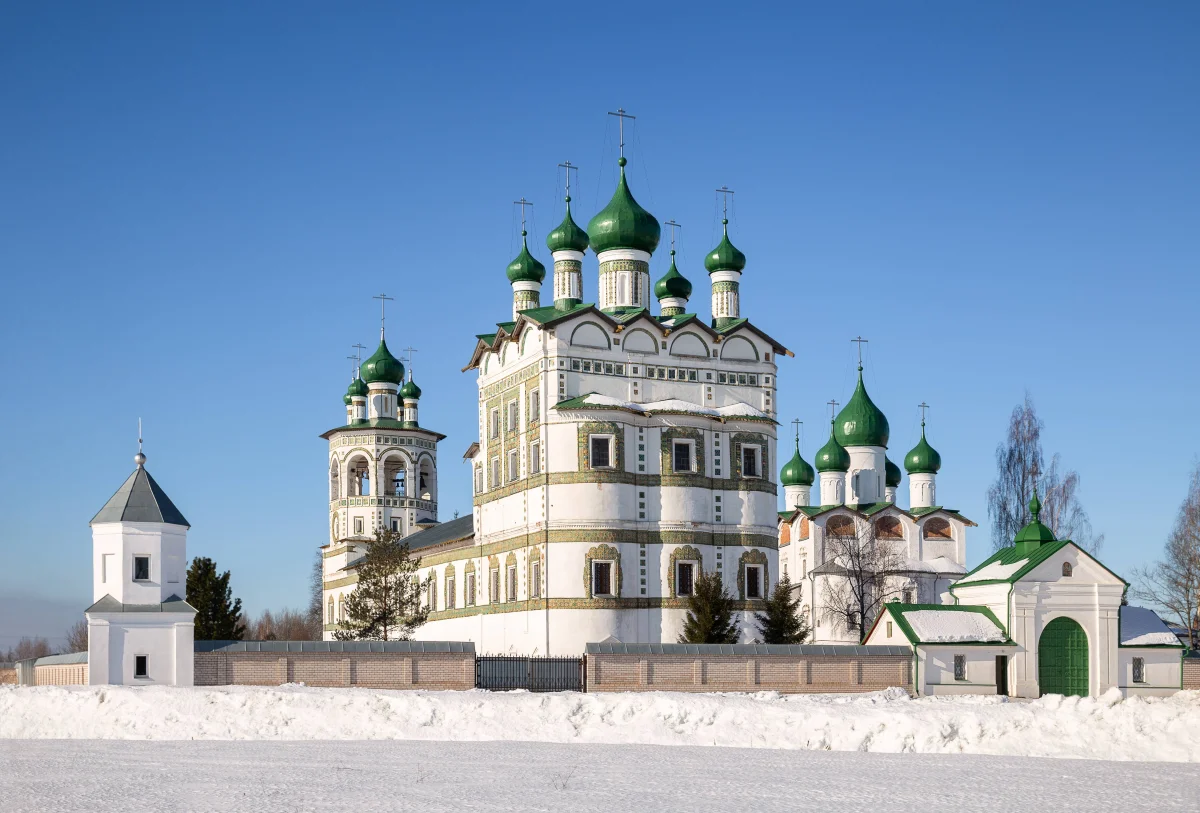
The city where Russian statehood began has stood on the banks of the Volkhov River for twelve centuries — and every season shows it from such a different angle that it can feel like an entirely different place each time.
Most tourists visit Veliky Novgorod in summer, and it's easy to see why: warmth, long daylight hours, boat trips down to Lake Ilmen. But step into the kremlin in January, when snow covers the ramparts and steam rises off St. Sophia Cathedral in the cold, and it becomes clear the summer guidebook only tells half the story. Let's break down which month to go, and what to expect from the weather.
What Veliky Novgorod's Climate Looks Like
The climate here is moderately continental, but with a noticeable Baltic influence — the sea sits close by and adds humidity across every season. All four seasons are clearly defined: cold winters, warm summers, and two in-between stretches where the weather can shift its mood several times in a single day.
The average January temperature is around 23°F (–5°C); July averages 64°F (18°C). Rainy or snowy days number 10 to 16 a month, so an umbrella or raincoat is worth packing regardless of the season.
The city sits at just 23–25 meters above sea level — one of the lowest elevations in Russia. In spring and autumn, that adds noticeable dampness: the Volkhov River and Lake Ilmen sit nearby, moisture hangs in the air, and the kremlin's cobblestone paths turn slick after rain. On the flip side, that same proximity to water keeps summer heat milder here than in nearby Moscow.
Summer: The Main Season, and Its Limits
Peak tourist traffic runs June through August, and the reasons are obvious. Air temperatures climb to 68–77°F (20–25°C), and daylight stretches long — June at this latitude brings white nights, though not as bright as St. Petersburg's. Every attraction runs without winter restrictions, and excursion boats depart from the pier by the kremlin, sailing the Volkhov down to Lake Ilmen.
But summer has its downside: these months bring the heaviest rainfall of the year — 56–71 mm a month. Rain can start in the middle of a clear day and end within half an hour, or it can settle in for a couple of days straight.
If your itinerary includes Ryurik's Hillfort or Vitoslavlitsy, where much of the route runs through open terrain, waterproof shoes are worth packing even in July.
Why May and September Are Smart Alternatives
The shoulder seasons in Veliky Novgorod are underrated. By May, the city has already turned green, air temperatures reach 59–64°F (15–18°C), and tourist numbers stay low — lines at the Palace of Facets and St. Sophia Cathedral run noticeably shorter than they will a month later. That said, in April and early May, access to Ryurik's Hillfort can be limited by spring flooding — worth checking conditions before your trip.
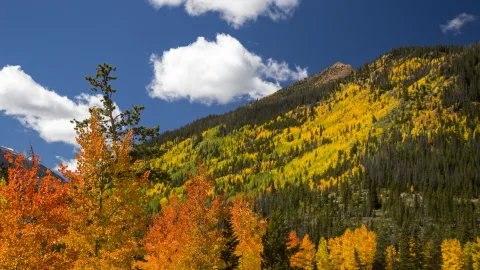
September offers another good window. Average daytime temperatures hold around 55–59°F (13–15°C), plenty comfortable for hours-long walks through the kremlin park and along the embankment. The main bonus is golden autumn: the birches and maples around St. George's Monastery and Vitoslavlitsy hit their peak color by late September — the exact palette photographers once traveled to Plyos for.
What Winter Does to the City — and Why It's Worth Seeing
Veliky Novgorod is one of those rare cities where winter doesn't get in the way of the experience — it enhances it. The kremlin ramparts under snow, frost-covered domes on St. Sophia, silence along empty streets — all of it restores a sense of the ancient city that gets drowned out by tour groups in summer.
Frosts here run milder than in Moscow: the average January temperature sits around 23°F (–5°C), though individual days can drop to 5°F to –4°F (–15 to –20°C).
Severe blizzards are rare. Snow cover typically settles in by December and holds through March, so the odds of seeing the city genuinely white, rather than gray and brown, run high.
What There Is to Do in Winter
All the major sights operate year-round: the kremlin, St. Sophia Cathedral, the Palace of Facets, the Monument to the Millennium of Russia, and Yaroslav's Court.
The Vitoslavlitsy Museum of Wooden Architecture stays fully open in winter — visitors can step inside all 34 structures, and under snow, the 16th- to 19th-century wooden houses and churches look as though time has rolled back two hundred years.
The only notable limitation: the church at Ryurik's Hillfort closes from November through March, and river cruises along the Volkhov and Ilmen naturally don't run until spring.
In late December and January, the kremlin and Vitoslavlitsy host fairs and folk festivities — hot drinks, blini, and traditional winter games. And in February, during Maslenitsa, the celebration spreads across several venues at once.
A Detail Worth Noting: The Dove on St. Sophia's Cross
One thing worth spotting specifically in winter is the lead dove perched on the cross of St. Sophia Cathedral's central dome. In summer, it's hard to make out against a bright sky, but against gray winter clouds or in contrast with snow, the figure stands out clearly.
According to legend, the dove landed on the cross during Ivan the Terrible's sack of Novgorod in 1570 and turned to stone in horror at what it witnessed. Ever since, it's been considered the guardian of the city.
How to Choose a Time for Your Kind of Trip
If you want long walks through open spaces — Ryurik's Hillfort, the shore of Lake Ilmen, the outdoor grounds of Vitoslavlitsy — May, June, or September work best, offering warmth without summer's peak crowds.
For a calm, museum-and-architecture-focused visit without the crowds, winter is ideal, especially January after the holidays or February: the city empties out, lodging prices drop, and every key attraction remains open.
From Moscow, Veliky Novgorod is about 530 km by car, or 3–4 hours on the Lastochka express from St. Petersburg's Moskovsky Station (St. Petersburg itself sits just 180 km away). The trip is short enough for a weekend getaway without eating into a full vacation — and if the weather doesn't cooperate on your chosen dates, rescheduling for the following week is far easier here than for any long-haul destination.