A hiker follows a forest trail down to the shore, takes in the pine trees, the white rotunda of a sanatorium across the water, and a lake the color of strong tea with milk — and immediately runs into a sign issuing a categorical ban on swimming. No hint of an industrial dump nearby, no obvious pollution — just murky water and a strict sign that leaves plenty of visitors puzzled.
Lake Terenkul, in Chelyabinsk Oblast, has accumulated a pile of legends precisely because of this contrast: the place looks almost resort-like, yet swimming there is strictly forbidden. Scary stories about the reason for the ban have circulated for years — everything from wartime human remains to a mythical "false bottom."
They're entertaining to dig into, but the real explanation turns out to be far more mundane, and far more scientific, than any of the campfire tales.
Where the Lake Is, and Why Its Color Looks So Unusual
Terenkul sits in the Chebarkul district of Chelyabinsk Oblast. The Utyos and Kisegach sanatoriums stand on its shores, and to the west, the lake borders the territory of the Ilmensky Nature Reserve.
It neighbors Lakes Bolshoy Kisegach, Yelovoye, and Tabankul — a cluster many tourists visit specifically for walking, rather than swimming.
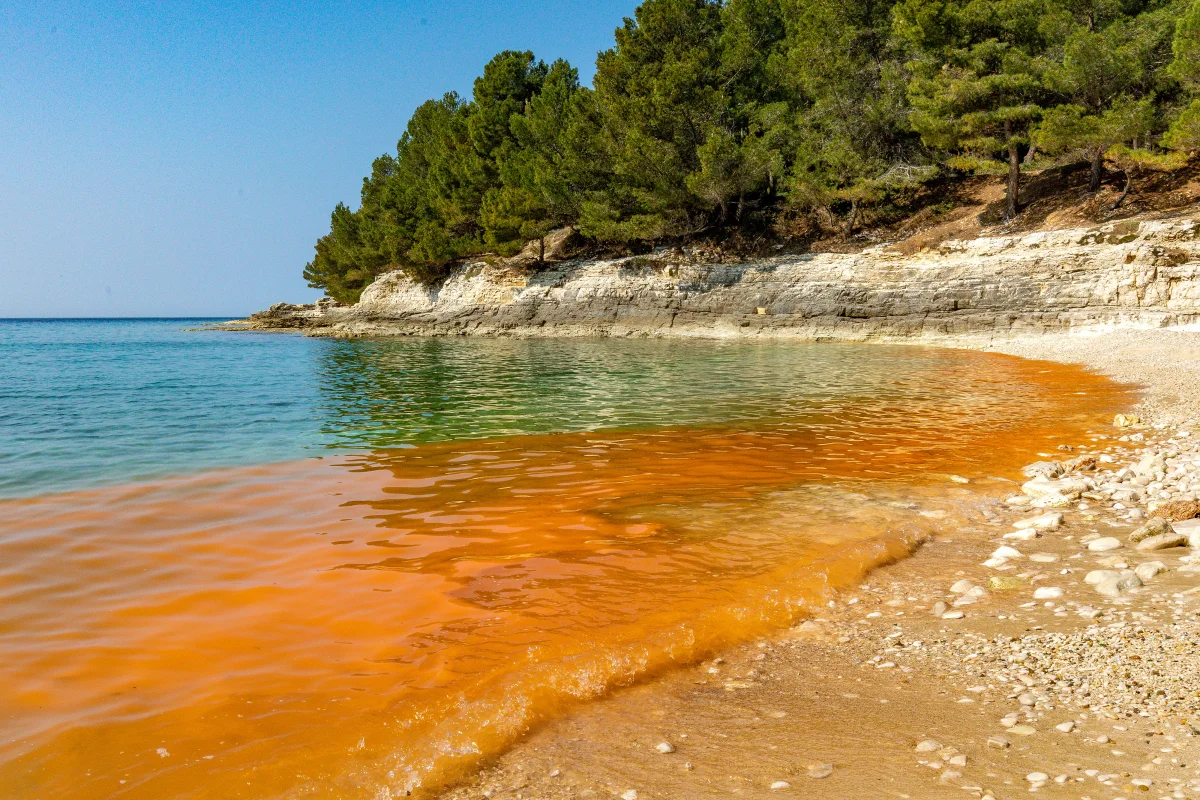
The water genuinely looks unusual — murky, with a distinctive hue people compare to tea with milk. Its depth isn't shallow either: by some estimates it reaches 18 meters, which, combined with poor underwater visibility, gives visitors an impression of something ominous.
The Myths That Scare Tourists
The most persistent theory is that swimming is banned because of sanatorium sewage. There's a grain of truth here, with a historical caveat: from 1929 to 1953, the Kisegach sanatorium's domestic wastewater genuinely was discharged into the lake.
But starting in 1953, the sewage system was rerouted to the neighboring Lake Tabankul, and by the 1980s, treatment facilities had been installed at Terenkul itself — meaning the source of the discharge was eliminated decades ago.
The second legend involves human remains from the Great Patriotic War, supposedly dumped into the lake.
The basis for this myth is real: Chebarkul did operate four military hospitals during the war years, one of them on the grounds of the Kisegach sanatorium, where soldiers with chest wounds were treated. But there's no confirmation whatsoever of remains being disposed of in the lake — it's speculation built on top of the real fact of a nearby hospital.
The third tale involves a "false bottom" and underwater caves with collapses and currents. Such structures genuinely can pose risks in some karst lakes, but as applied to Terenkul, this isn't a confirmed fact — it's local folklore explaining the lake's unsettling depth and murky water.
The Real Reason for the Ban
The genuine danger at Terenkul isn't rooted in its past — it's in what's happening in the water right now. Starting in the 1980s and 1990s, and especially intensifying in the nineties, the lake began experiencing severe algal blooms, becoming colonized by blue-green cyanobacteria, including the species Aphanizomenon flos-aquae.
Sergei Zakharov, a candidate of geographical sciences and honorary chairman of the regional branch of the Russian Geographical Society, explains what makes swimming in such water dangerous: exposure can cause not just irritation of the mucous membranes but also serous meningitis, and fatal cases have been recorded. He notes that the ban specifically applies during periods of active algal bloom.
According to him, the harm comes from substances the cyanobacteria release as part of their life cycle — algotoxins, a range of poisons of varying toxicity. Some of these can cause rapid poisoning, and the documented allergic reactions following swims in Terenkul aren't isolated incidents — they form a well-documented pattern.
How This Differs From Ordinary "Dirty" Water
An important distinction: Terenkul's murkiness and distinctive color aren't the same thing as ordinary sewage pollution. Laboratory studies conducted over the years at the initiative of the Utyos sanatorium found the water free of industrial waste or inorganic debris, with sanitary-hygienic indicators for wastewater staying within normal limits.
The real problem is organic matter — a large volume of decaying algae and fish remains, which, combined with the active cyanobacteria bloom, produces the lake's characteristic milky-tea hue. This makes the lake visually unappealing for swimming well before anyone even learns about its actual toxicological risk.
What You Can Still Do at the Lake
The full ban applies specifically to swimming — other forms of recreation at Terenkul remain allowed. Fishing and boating are both permitted, and a walking trail roughly 5.8 kilometers long circles the lake, manageable even for families with children as young as seven.
Worth remembering: the lake's western shore falls within the boundaries of the Ilmensky Nature Reserve, meaning standard reserve restrictions apply there — no campfires, no gathering mushrooms, berries, or plants in that section, even where no formal signage marks it along the trail.
What This Means for Other Lakes
Terenkul's story is useful beyond itself — it's a good reference point for assessing any unfamiliar body of water. A heavy algal bloom, murkiness with a greenish or brownish tint, and a distinctive smell are, on their own, sufficient reason to skip swimming, even if there's no official ban sign on the shore.
Cyanobacteria aren't tied to any single lake — similar bloom outbreaks happen at all sorts of bodies of water every summer. The rule in these cases is simple: if the water is blooming, stay out of it, no matter how picturesque the shoreline looks.