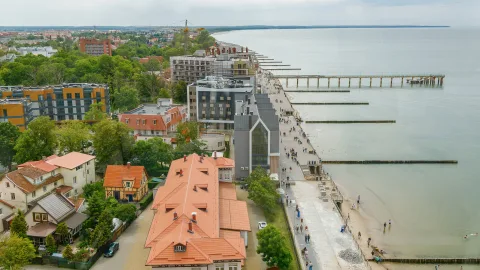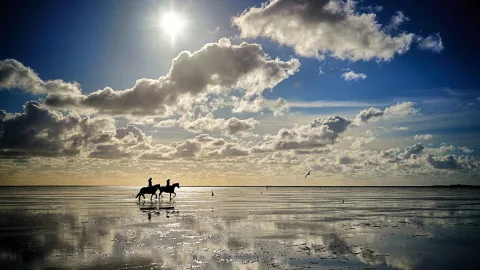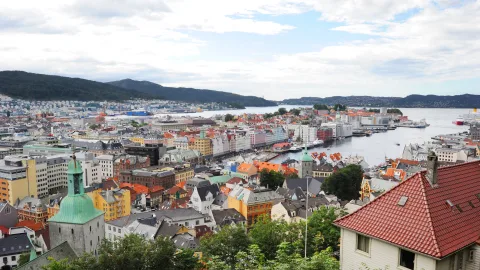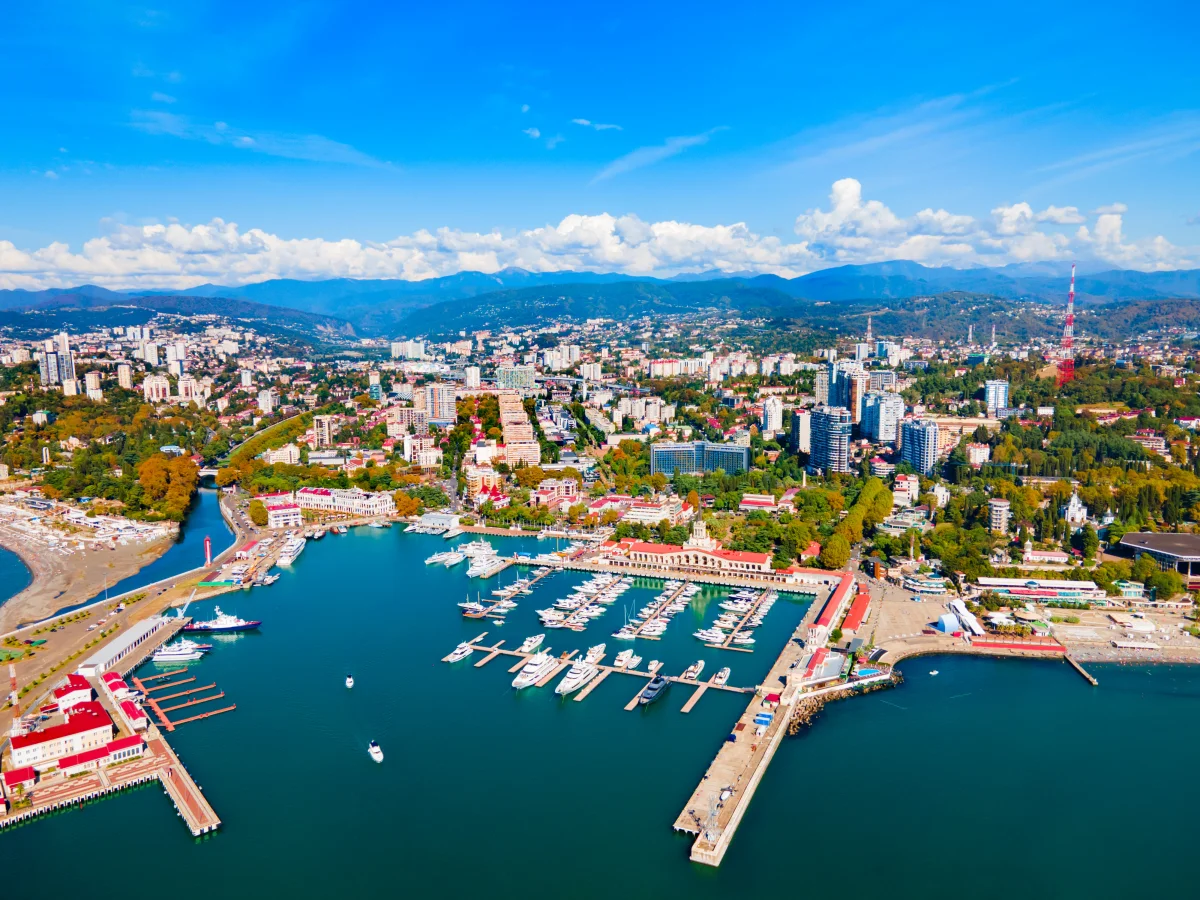
In late September, a tourist on the Baltic coast is already pulling on a sweater and steering clear of the water — the sea has cooled to 55°F (13°C), leaving swimming there to the "walruses" only. At that exact same moment, people in Sochi are wading comfortably into water at 73–77°F (23–25°C) and will keep doing so for at least another month.
Swimming season in Russia isn't a single concept — it varies dramatically depending on which sea you're headed to. The gap between "already closed" and "still perfectly comfortable" can stretch to nearly two months, and knowing those windows matters not just for a July vacation, but for catching velvet season without missing it.
Why the Sea Cools Slower Than the Air
Water warms up and cools down with a delay relative to air temperature — it stores heat all summer and then releases it slowly. That's exactly why, in September, when the air is no longer as hot as it was in July, the sea often turns out warmer than it was in early summer.
But swimming season closes almost everywhere not because of cool air, but once water temperature drops below a comfortable 64–66°F (18–19°C).
When Season Closes, Sea by Sea
- The Black Sea coast of Krasnodar Territory
The longest season in the country: officially opens in late May and closes in mid-October, with comfortable swimming running from mid-June through the end of September. Peak season falls in July and August, when the water warms to 79–84°F (26–29°C).
- Crimea
The season officially wraps up in mid-October, once the water stops climbing above 66°F (19°C), though as late as September, temperatures still hold around 75°F (24°C). The southern coast — Yalta, Gurzuf, Alupka, Foros — holds its warmth longer than the western coast, thanks to an almost subtropical climate.
- The Sea of Azov
It warms up faster than the Black Sea thanks to its shallow depth, but cools down faster too. Comfortable swimming typically wraps up by late September.
- The Caspian Sea, Dagestan
Swimming season runs from May through October, but stays genuinely comfortable only until around mid-September; it's officially closed by October 1, though in good weather the water can still hold around 72°F (22°C).
- The Baltic Sea, Kaliningrad Oblast
The shortest season among the country's coastal regions: the water warms slowly and cools just as gradually, with comfortable swimming confined to July–August, and temperatures already dropping to 59–63°F (15–17°C) by September.
Where to Find Warm Water After the Sea Has Cooled
If swimming season along the coast has ended but you still want a swim, there's a local trick: salt lakes and lagoons, which warm and cool differently than the open sea.
In Crimea, for instance, Lake Moynaki in Yevpatoria and Lake Saki stay noticeably warmer than the surrounding sea for much longer — locals recommend heading there once beach velvet season has ended but the urge to swim hasn't.
Why Sochi Holds the Record
It's not a matter of luck alone — it's a combination of factors. Sochi is the northernmost point on the planet with a humid subtropical climate, and its sea cools slower than any other Russian coastline: warm currents and its mountain-sheltered position keep the water from losing heat as quickly as it does along the open stretches of the Sea of Azov or the Caspian.
As a result, swimming season here stretches nearly five months — from June through October — making it the longest coastal season in the country.
What About People Who Don't Want to Wait for Summer
For some people, swimming season never really ends — in many Russian cities, from Murmansk to Vladivostok, winter swimming clubs operate year-round, and for their members, open water remains accessible even in January.
This is its own distinct culture, with its own safety rules and preparation — it's not simply an extension of ordinary beach swimming. It's worth starting only alongside an experienced club, never alone on a whim.
For anyone talking about ordinary seaside relaxation, though, the practical takeaway is simple: the further south and more sheltered the coastline, the longer the warmth holds — and September, almost everywhere in Russia, isn't the end of the season. It's its quietest, most enjoyable part.