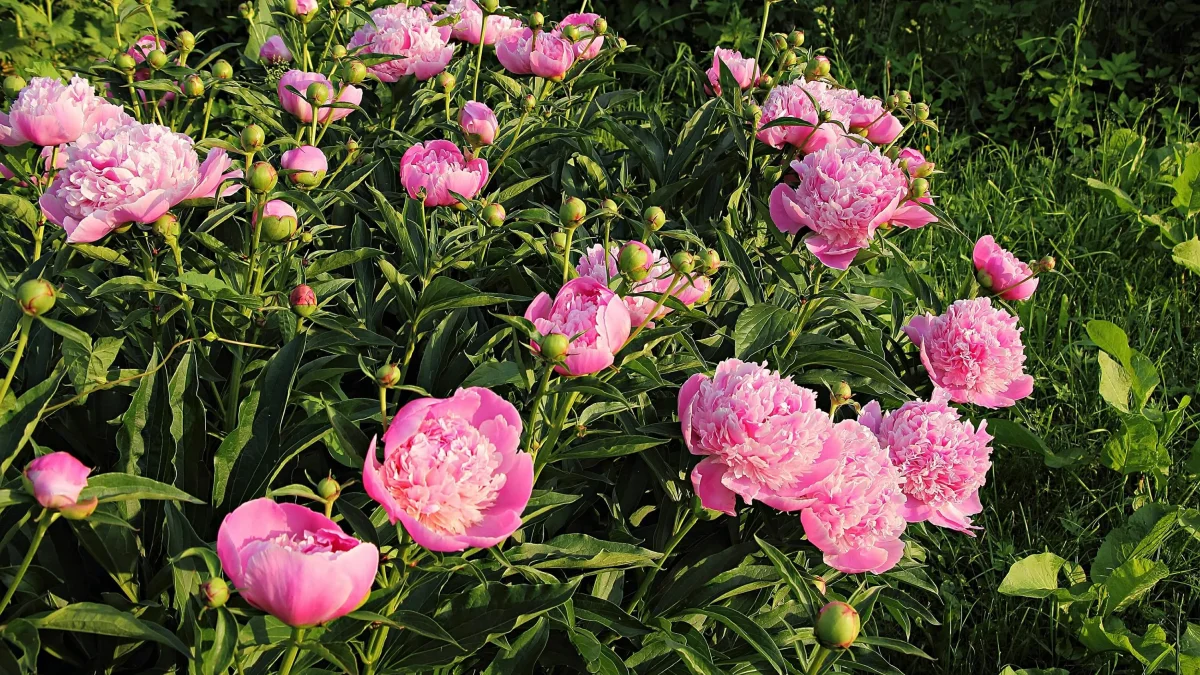
«They’ve finished blooming, and that’s fine», – that kind of attitude won’t do for refined peonies. Read our article to learn how to care for them after flowering.
Tidying up the bushes and the ground beneath them
Once the buds have finished blooming and dried out, there’s no longer any reason for them to remain on the plant. If you don’t remove them in time, the bush will look untidy. What’s more, the withered flower stalks drain the strength the peony needs to recover and to form renewal buds – it is from these that new shoots will emerge in spring. So you shouldn’t leave the dried heads on the bushes for longer than a week, unless you’re planning to collect seeds in the fall.
Using sharp, clean pruning shears, cut off the bud together with part of the stem, leaving all the living leaves. Don’t forget about the debris on the ground either: dried petals and twigs. This potential breeding ground for fungal diseases is also best removed right away.

Keep watering
After the peony has finished blooming, you mustn’t abruptly stop watering it, especially in hot, dry weather. A sudden change in conditions can cause the plant stress. Because of it, the young buds suffer – they become weak, and so next year’s flowering will no longer be as lush.
The soil around peonies should always be slightly moist. Reduce the amount of water gradually – each week you can cut it by 5 liters until you stop completely. Use warm, settled water for watering, and loosen the soil around the bush to prevent a hard crust from forming.
Keep an eye on the bushes’ health
In spring and early summer, the peonies spent a lot of energy delighting us with their magnificent blooms. Now they are weakened and can become an easy target for diseases and pests. One such affliction – is powdery mildew, which turns the leaves gray and covers them with a coating, as if they had been dusted with flour. This fungal disease is a fairly common problem, especially when rains become frequent. It looks unattractive and, on top of that, prevents the plant from getting nutrition in the necessary amount.
At the very first symptoms of powdery mildew, treat the plants with antifungal preparations: copper sulfate, Topaz, Bordeaux mixture (which can be used preventively), and others.

Feeding
For a plant that has finished blooming, feeding is especially important so it can stock up on nutrients for the following year. Apply the first feeding about 2 weeks after trimming off the withered buds. First of all, use organic fertilizers, since the nitrogen they contain promotes root growth and the formation of new buds. To prepare a cow manure solution, mix it with water in a ratio of 1 to 10 and pour 2–3 liters under each bush. It’s better to do this in small trenches dug around the perimeter.
Peonies also respond very well to feeding with herbal infusions, for example, made from nettle. The grass is finely chopped, used to fill a third of a bucket, and topped up with water. The mixture ferments for 2 weeks (it needs to be stirred daily), after which the solution can be strained and the foliage sprayed with it.
In the last month of summer, we feed the flower once more, but now we use mineral fertilizers with phosphorus and potassium – nitrogen is no longer needed before fall. You can mix superphosphate and potassium nitrate – 25 g of each per bush. Before applying, be sure to water the soil around the peonies well. An ash solution will also work; it not only feeds the plant with potassium and phosphorus but also additionally repels pests and boosts immunity. Dissolve one liter jar of ash in a bucket of water and pour it under the root: half a bucket per bush. Flowers should not be fertilized after August: this can stimulate the growth of new shoots.

Pruning
Rushing this task and cutting the peony down to the base as soon as it has finished blooming – is the wrong move. Give it the chance to keep receiving the nutrients it needs through photosynthesis, which takes place via the stems and leaves. And in a warm fall, bushes pruned too early may put out shoots, which is the last thing the plant needs on the eve of cold weather.
It’s recommended to prune no earlier than after the first frosts. Remove the stems as close to the ground as possible, leaving no more than 2–3 cm. Tree peony varieties are not pruned in the fall, and they need to be covered for winter. If you skip pruning entirely and leave the stems to rot on the ground, this will increase the risk of diseases and pests spreading.
Preparing for winter
It’s best to mulch the soil around the bushes with a layer of peat, humus, sawdust, or other materials intended for this purpose. This way we protect the plant’s root system from frosts. The harsher the climate in your region, the thicker the layer of mulch should be.