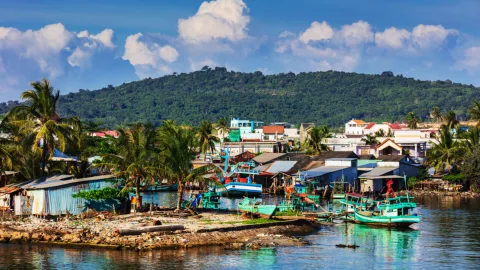
Two in the afternoon, Phuket, July. Clouds swallow the sky within a minute, and a wall of water comes down. The street turns into a river, mopeds huddle under overhangs, tourists duck under awnings. Forty minutes later, the sun's back out, the asphalt is drying before your eyes, and all that's left of the downpour is a few puddles and fresher air. That's how Phuket's "rainy season" actually works.
Phuket's low season runs from May to October. Behind that phrase is the southwest monsoon, which carries moisture in off the Indian Ocean. It sounds like a picture of nonstop flooding — the reality is 82–90°F (28–32°C), warm sea, empty beaches, and prices that make you check the math twice.
Rain isn't an obstacle here — it's part of the daily schedule. And if you know how to work around it, the low season can turn out to be the best time to actually get to know the island.
How the "Rainy Season" Actually Works
The first thing to understand: rain in Phuket's low season doesn't fall all day. The typical pattern goes: sun in the morning, clouds rolling in by 2–3 p.m., a downpour lasting 30–60 minutes by around 4 p.m., and clear skies again by evening. Sometimes it rains overnight, and you never even notice.
Statistically, the wettest months (September–October) see 15–20 rainy days in Phuket. But a "rainy day" doesn't mean a day of continuous rain — it means a day with at least one downpour, even if it only lasts half an hour. In total, precipitation accounts for roughly 3–4 hours a day, leaving the other 20 hours warm, humid, and often sunny.
There are occasional extended stretches of bad weather — two or three days straight of gray skies and drizzle. But that's the exception, not the rule. Most low-season trips end up with just a couple of short downpours and not a single lost day.
The Sea: Warm, but Temperamental
The water in the Andaman Sea off Phuket runs 82–84°F (28–29°C) in low season — warmer than the Black Sea at the height of summer. The issue isn't temperature — it's the waves.
The southwest monsoon stirs up surf along the island's western coast — the beaches of Karon, Kata, Patong, and Nai Harn. Waves can reach 2–3 meters, and most of these beaches fly red flags during this period: swimming prohibited. Rip currents are a serious danger — tourists who ignore the warnings drown here every low season.
But that applies specifically to the west coast. On the eastern side — the bays of Chalong, Rawai, Panwa — the sea stays calmer, with barely any waves. The water isn't as clear as the west coast during high season, but swimming there is safe. And Nai Yang Beach, on the northwest tip and shielded by a coral reef, often stays calm even when neighboring beaches are churning with storm surf.
Surfing: The Reason to Come Here on Purpose
What ruins swimming for the average tourist makes this prime season for surfers. The waves at Kata, Karon, and Kalim from May to October are the best they get all year. This is exactly when Phuket's surf schools operate at full tilt, competitions run, and Kata Beach turns into the island's main surf spot.
A lesson with an instructor starts at 1,500 baht (roughly 4,000 rubles) for ninety minutes. Board rental starts at 500 baht a day. Even if you've never stood on a board before, catching your first wave of whitewash is typically a one-lesson affair. Early-season waves (May–June) are gentler — ideal for beginners. By September–October, they get more powerful, better suited to advanced surfers.
Temples, Markets, and a City Without Crowds
When the rain drives you off the beach, the island offers plenty to do — under a roof and beyond it.
Old Phuket Town, the island's capital, is a place most beach tourists overlook entirely. It's a district of Sino-Portuguese architecture — colorful two-story houses, narrow streets lined with cafés and galleries, street art on the walls.
On weekend evenings, Walking Street opens up — a night market with street food, clothing, souvenirs, and live music. The market keeps running through the rain too; awnings stay up, and Thai street food only tastes better with the smell of rain in the air.
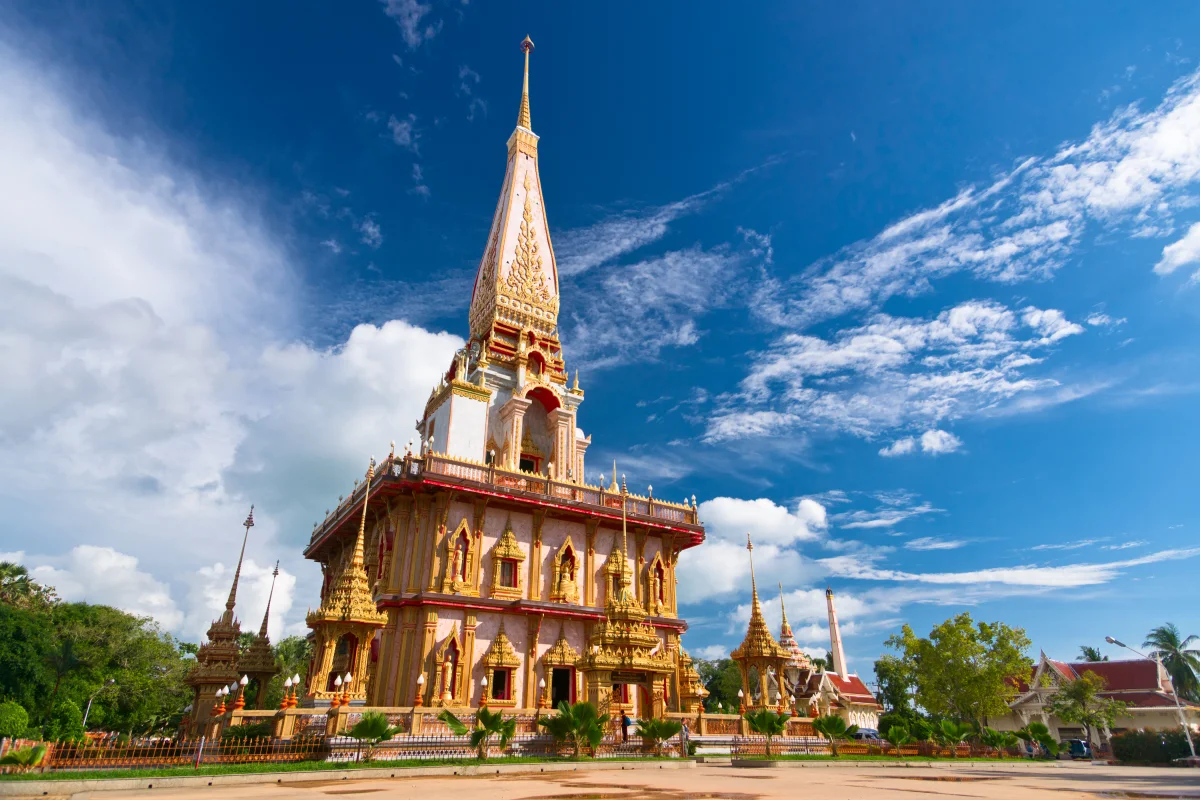
Wat Chalong is the island's main Buddhist temple: golden stupas, carved roofs, a quiet park. Admission is free, with a dress code covering shoulders and knees. In the rain, it's especially atmospheric — fewer tourists, the scent of incense, and raindrops drumming on the roof.
The Big Buddha, a 45-meter statue atop Nakkerd Hill, offers a full panorama of the island on a clear day, but the climb is worth it even under clouds: a winding road through jungle, monkeys along the roadside, and the statue itself emerging out of the mist for a striking effect.
Spas and Massage: The Thai Answer to Rain
Thai massage on Phuket isn't a luxury — it's a way of life. Massage parlors line every street corner, and during low season they're half-empty. An hour of traditional Thai massage starts at 300 baht (roughly 800 rubles). Oil massage starts at 500. A half-day spa program at a good salon starts at 2,000 baht (about 5,500 rubles).
A rainy day, plus a massage, plus Thai food at the café next door — that's a formula that turns bad weather into a reason for a different kind of relaxation, rather than a problem.
Food: Tropical Fruit Season
Low season also happens to coincide with the peak ripening of many tropical fruits.
Mangosteen (May–September) — purple on the outside, snow-white inside, sweet and refreshing. Durian, the king of fruits, banned from hotel rooms because of its smell but adored by locals (June–August). Rambutan, longan, lychee — all of it cheaper and fresher than during high season.
At the night markets of Phuket Town and from maakhaseni mobile kitchens, pad Thai starts at 60 baht, tom yum at 80, satay at 40. In low season, portions don't shrink, but the lines disappear.
Excursions: What Runs and What Doesn't
Some routes close entirely during low season. The Similan Islands, the national park with the region's best snorkeling, close from mid-May through the end of October. The Surin Islands close too. That's a genuine loss for anyone hoping to see them.
But there are alternatives. Koh Mai Ton, a private island just 20 minutes from Phuket, sits on the side sheltered from the monsoon — white sand, clear water, snorkeling, and it runs year-round. Phang Nga Bay (famous as "James Bond Island") also stays accessible: limestone karsts, mangrove forests, kayaking through sea caves. Tours start at 2,000 baht per person.
Koh Phi Phi is technically open, but the ferry crossing can get canceled in stormy weather — check the status the day before. On calm days, the trip is well worth it — without the winter crowds, the island feels completely different.
Diving: Worse Visibility, Richer Marine Life
Underwater visibility drops during low season, from 25–30 meters (winter's peak) down to 10–15 meters. That's a downside for photographers. But for anyone hoping to spot larger marine life, it's actually an upside: plankton blooms during the rainy season draw manta rays and whale sharks to dive sites around Phuket and the rock formations of Hin Daeng and Hin Muang.
Diving during low season also runs 20–30% cheaper: boats aren't packed, instructors have more availability, and there's no line waiting at the mooring buoys.
Prices: The Main Argument
Low season is when Phuket becomes genuinely affordable. Some specifics:
- Hotels: a five-star room that costs 8,000–12,000 baht a night in January drops to 3,500–6,000 baht in July–August. Three-star rooms start at 800 baht (about 2,200 rubles).
- Flights: round-trip from Moscow to Phuket during low season start at 30,000 rubles (connecting through Bangkok, Dubai, or Doha); during high season, fares start at 50,000.
- Moped rental: from 200 baht a day (about 550 rubles) — the best way to get around the island, but it requires a license and some experience; roads are wet, and traffic drives on the left.
- Excursions: run 15–25% cheaper than during peak season.
Visa and Flights
Russian citizens get visa-free entry to Thailand for up to 60 days, with a passport valid for at least 6 months. There are currently no direct flights from Moscow to Phuket. Main routes: via Bangkok (domestic connecting flight, 11–13 hours total), via Dubai (Emirates/FlyDubai, 12–14 hours), or via Doha (Qatar Airways).
From Bangkok, the domestic flight to Phuket takes 1 hour 20 minutes.
The currency is the Thai baht. Russian bank cards don't work. UnionPay is accepted at some shops and ATMs. Cash in dollars or euros is essential — exchange it locally.
What's Genuinely Worth Watching Out For
- Rip currents off the western beaches during monsoon season are the main danger. If you see a red flag, don't go in the water. If you do get caught in a current, swim parallel to the shore until you're clear of it.
- Wet roads are another risk. A scooter on wet asphalt is a gamble — better to wait out the rain or take a taxi.
- Mosquitoes thrive on the humidity. Repellent is essential, especially in the evening. Phuket does see occasional dengue fever cases — that's not a reason to skip the trip, but it is a reason to use a DEET-based repellent.
Which Month to Choose
- May–June. The monsoon begins: rain is brief and infrequent, the sea is still relatively calm. The best window to try out low season for the first time. Surfing suits beginners.
- July–August. Rain grows more frequent, waves get stronger. Prices hit their lowest point. Ideal for surfing, diving, and anyone not planning to spend the whole trip on the beach.
- September–October. The wettest months: up to 20 days with rain, the sea churning. But prices sit at their absolute floor. Best suited to experienced travelers who know how to fill their own itinerary.
Phuket during the rainy season isn't a ruined vacation — it's a different kind of vacation. Not one where you lie on the beach for eight hours straight, but one where you catch the sun at Nai Yang in the morning, duck into a massage parlor when the downpour hits at midday, eat mangosteens at the night market in the evening, and fall asleep to rain drumming on the roof — all while paying half of what you would in high season.