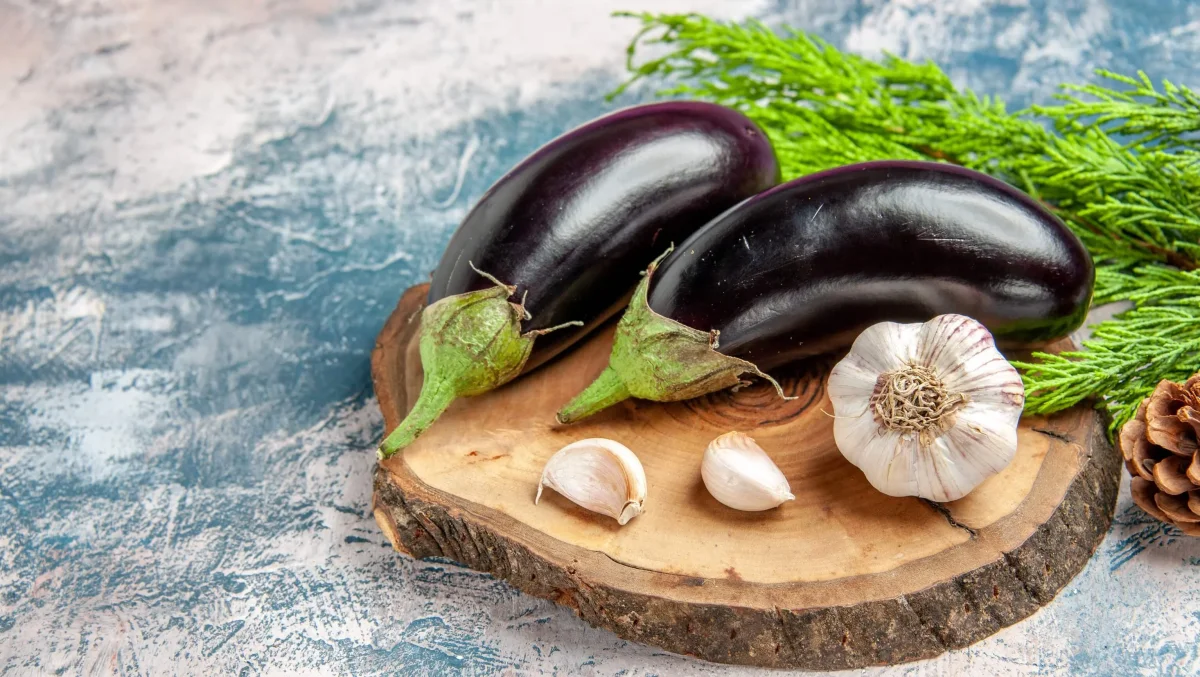
Useful tips for caring for «little blue ones»
- To produce fruit, eggplants need a lot of nutrients. It’s no wonder they have a reputation as big eaters. If you want a good harvest – devote enough time and effort to feeding.
- Alternate mineral and organic fertilizers. In reasonable doses, the plant needs both, otherwise you risk getting small and few eggplants.
- Feeding is more often done by the root method, since, having delicate leaves, the «little blue ones» tolerate spraying poorly. Apply fertilizers under the bushes in the morning or evening, and be sure to water them beforehand with plain water: this will prevent root burns.
- Maintain an interval of at least 10 days between feedings.

Prepare the sleigh in summer, and the eggplant bed – in autumn
It won’t hurt at all to prepare the soil in advance in the bed you’ve set aside for your future eggplants. During the autumn digging, work into the soil (per square meter) compost or humus: 9–10 kg, wood ash: about 300 g, nitrophoska: 40–50 g. The vegetable will be grateful to you for such care.
Feeding after transplanting seedlings to their permanent spot
During this period, eggplants will need nitrogen fertilizers in order to grow well, build up green mass, and prepare for fruit formation. Both in the open ground and in the greenhouse, we feed them as soon as the seedlings take root and their roots are ready to absorb nutrients. This usually takes at least 14 days.

First we feed the bushes with organics. This can be:
Cow manure infusion. Pour 10 liters of water over 1 liter of fresh cow manure, add half a cup of wood ash, and mix well. The mixture should ferment for several days, after which you can feed the plants, pouring 1 liter of solution under each. Using fresh manure is not recommended – it is too concentrated for vegetable crops.
Chicken droppings infusion. Combine 0.5 liters of droppings with 10 liters of water. Set it out in the sun and wait 3–4 days. Dilute it by half with water and water the plants: 1 liter per bush. As with the manure solution, it is recommended to add a cup of wood ash to the mixture.
Herbal fertilizer. Chop up weeds and fill half a bucket with them, then pour in hot water. For faster fermentation, it is recommended to add a little sugar and yeast. Stir the solution every day until it turns dark green; the process will take about a week. After that, strain it, dilute with water in a ratio of 1 to 5, and water the beds.
After 10 days you can carry out mineral feeding. It is best to use complex fertilizers for nightshade crops, following the preparation instructions: «Agricola-Forte», «Ideal», etc. Their advantage is that, in addition to nitrogen, they contain other microelements that eggplants need for development. Such mineral fertilizers as ammonium nitrate, urea, and ammonium sulfate are also effective.

Feeding during the flowering period
When flowering begins, the plants no longer need a large amount of nitrogen, but instead come to need potassium and phosphorus. However, eggplants, unlike other crops, are quite voracious, so they can be given one extra nitrogen feeding and watered with organics using the same recipe as after transplanting.
Important: before this, examine the «little blue ones» carefully. If they are full of life, with large leaves of a rich green color and sturdy stems, it means they already have enough nitrogen. And applying additional nitrogen can result in your getting huge bushes without a single fruit.
In that case, it’s enough to fertilize the eggplants with ash, which contains a large amount of potassium. To prepare the infusion, pour 0.5 liters of wood ash into a bucket of hot water and stir thoroughly. After a couple of days, strain it and water the bushes with the resulting mixture: a liter to a liter and a half per root.

After another 7–10 days, we treat the plants to mineral fertilizer: water them with a solution of potassium sulfate (1 tablespoon per 10 liters of water), then loosen the soil a little and sprinkle superphosphate granules (0.5 teaspoon under each bush), working them into the soil.
We continue applying fertilizers after the first fruits appear
We exclude nitrogen entirely and use only potassium and phosphorus. At this stage it is convenient to use a ready-made mixture for eggplants (or a universal one for vegetables), or else dissolve 20 g of potassium sulfate and 30 g of superphosphate in 10 liters of water and pour 1 liter under each bush. To prolong fruiting, you can continue feeding every 14 days.