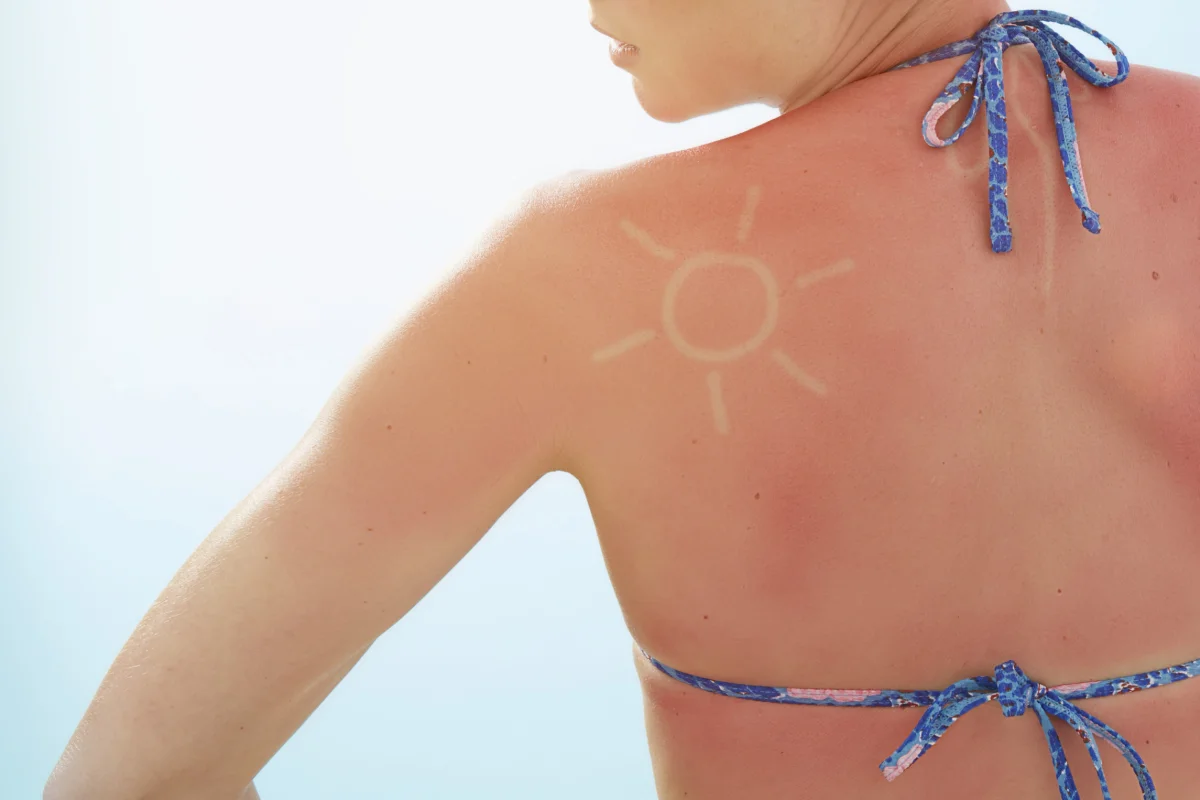
Skin turns red a couple of hours after the beach, and by evening, even a t-shirt brushing against it feels like torture. Almost everyone's been through this, but not everyone knows exactly where the line sits between "it'll pass on its own" and "time to call a doctor."
A sunburn is deceptive because it doesn't show up right away. On the beach, skin looks normal — maybe slightly pink at most. The real picture develops over the next 2–6 hours, with redness and pain peaking somewhere between 8 and 24 hours after the UV exposure has already done its damage.
That's exactly why so many people get burned twice in a row: in the morning, yesterday's color looks like an ordinary tan, and by evening it's clear it was actually a burn.
Why Sunburn Has Nothing to Do With Heat
One of the most persistent myths is that you can only get sunburned in hot weather. In reality, air temperature and UV intensity are two entirely separate measurements. The UV index shows how aggressively the sun is hitting your skin, and it can run high even at 72°F, as long as the sky is clear and the sun sits high.
At a UV index of 3–5 (moderate), fair skin can burn within 20–40 minutes unprotected. At 8–10 (very high), it can happen in under 10 minutes. Clouds only partially reduce UV exposure, while reflection off water and sand actually intensifies it.
UV index forecasts are available in most weather apps now — worth checking before heading outside just as routinely as checking the temperature.
The First Thing to Do
The protocol for a mild burn is simple and doesn't require a pharmacy trip:
- Get out of the sun — not just under a beach umbrella, but indoors: an umbrella doesn't block reflected UV rays.
- Cool the skin with cool (not ice-cold) water or a damp compress — this reduces the heat and eases the pain slightly.
- Drink water — burned skin loses moisture faster than normal, and dehydration after a day in the sun makes everything worse.
Once cooled, apply a product containing dexpanthenol (panthenol) to the damaged skin, either as a spray or cream. A spray is more practical — no need to rub it in or touch the sore area with your hands.
What Definitely Not to Put on It
Sour cream, kefir, and vegetable oil are the trio of "folk remedies" dermatologists ask people to avoid entirely.
Inna Ilyina, associate professor at the department of skin and venereal diseases at ROSBIOTECH University, explains that a greasy film on burned skin traps heat inside and prevents the surface from cooling down, effectively prolonging the damage. Fermented dairy products also carry bacteria that can trigger inflammation on already-damaged skin.
The only genuine benefit of cold sour cream is the cold itself — and an ordinary cool compress accomplishes the same thing.
How to Tell a Mild Burn From a Serious One
A mild burn means redness, moderate pain, and slight swelling. The skin might itch, and after 3–4 days, it will start to peel. All of this resolves on its own within about a week, without a doctor's visit.
Moderate-to-severe burns look different:
- Skin turns dark red and painful at the slightest touch.
- Blisters appear — small or large, filled with fluid.
- The burn covers a large area — the entire back, both shoulders, the chest.
- Fever develops, along with chills, nausea, headache, or sudden weakness.
When the Pharmacy Can No Longer Help
Blisters mark the point where self-treatment ends. Never pop them — beneath the blister's surface, the skin is exposed and extremely vulnerable to infection. If blisters appear, see a dermatologist or general practitioner — with proper treatment, healing takes one to two weeks.
Situations that require an ambulance rather than a clinic visit: a fever above 102°F, confusion, severe vomiting, or a sharp drop in blood pressure. These are signs of heat stroke, which often accompanies extensive burns and requires emergency care.
How Long Recovery Takes
For mild redness: 3–7 days — the redness fades, and the skin peels and renews itself. For a burn with blisters: 7–14 days, during which the damaged areas need to be shielded from the sun — a second burn on already-damaged skin hits even harder.
An important detail: don't pick at peeling skin. It will shed on its own, and removing it prematurely exposes an immature layer underneath that can burn again within minutes.
How to Avoid Repeating the Mistake
The most common path to a repeat sunburn is thinking, "I'll just be more careful this time." In practice, what actually works isn't carefulness — it's the habit of checking the UV index in the forecast and acting on it. At a reading of 3 or higher, fair skin needs protection: SPF cream, clothing, a hat.
UV peaks in central Russia typically fall between 11 a.m. and 4 p.m., and at southern resorts, between 10 a.m. and 5 p.m.
An overcast day feels deceptively safe, but clouds let through up to 80% of UV radiation, and coastal wind cools the skin while masking the sensation of overheating — which is exactly how people end up "burned even though it didn't feel hot." Checking the UV index before leaving the hotel takes about ten seconds and can save you a week of misery.