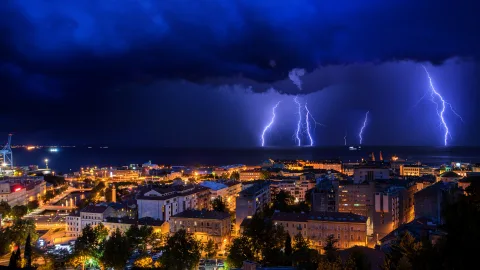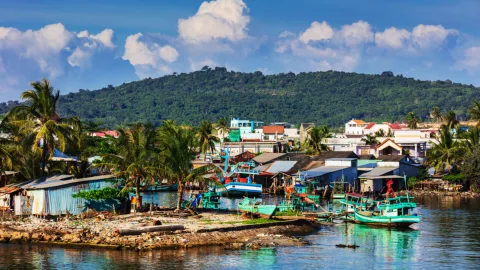
Morning: clear sky and calm air. By noon: a wall of rain, wind bending palm trees to the ground, and a phone notification: "Typhoon warning. Stay indoors." And there you are, standing in a hotel room in Phu Quoc or an apartment in Vladivostok, unsure what to do next or how serious this actually is.
A typhoon is the same thing as a hurricane, just in the Pacific Ocean. A tropical cyclone with winds starting at 118 km/h, torrential rain, and storm surge. For residents of Primorsky Krai, Sakhalin, and Kamchatka, typhoons aren't exotic — they're a seasonal reality.
For Russian tourists in Southeast Asia, it's a potential surprise that can coincide with a vacation. In both cases, the difference between "weathered it without a problem" and "got caught in trouble" comes down to preparation, not luck.
Before the Typhoon: While There's Still Time
Typhoon warnings usually arrive 24–72 hours ahead of impact — modern weather services track cyclones as they form. Use that window instead of spending it hoping it'll pass you by.
Pack an emergency kit. Not a survivalist bag — just a simple set: documents (passport, insurance, copies — in a waterproof bag), cash, a charged phone plus power bank, a flashlight, a first aid kit with your usual medications, a water supply calculated at 2 liters per person for 48 hours, food that needs no cooking (canned goods, crackers, nuts, chocolate).
Belongings — keep it minimal: a change of clothes, a raincoat, closed-toe shoes.
Reinforce your space. If you're in your own accommodation, tape windows in an X pattern with wide tape or masking tape (so glass doesn't shatter into shards on impact), and clear the balcony and windowsills of anything that could blow away. A flower pot knocked off a second-floor balcony by 150 km/h winds becomes a projectile.
If you're at a hotel, ask staff about their protocol. Major hotels in typhoon-prone regions (Vietnam, the Philippines, Japan, China) have established procedures: relocating guests to lower floors, closing pools and terrace restaurants, distributing water and flashlights. Your job is to follow staff instructions, not make independent decisions.
Charge everything that charges. Power will likely go out — sometimes for hours, sometimes for a day or more. A fully charged phone and power bank are your primary lifeline to the outside world.
Memorize emergency numbers. In Russia: 112. In Vietnam: 113 (police), 114 (fire), 115 (ambulance). In Thailand: 1669 (ambulance), 191 (police). In Japan: 110 (police), 119 (ambulance and fire).
During the Typhoon: The Main Rule Is Don't Go Outside
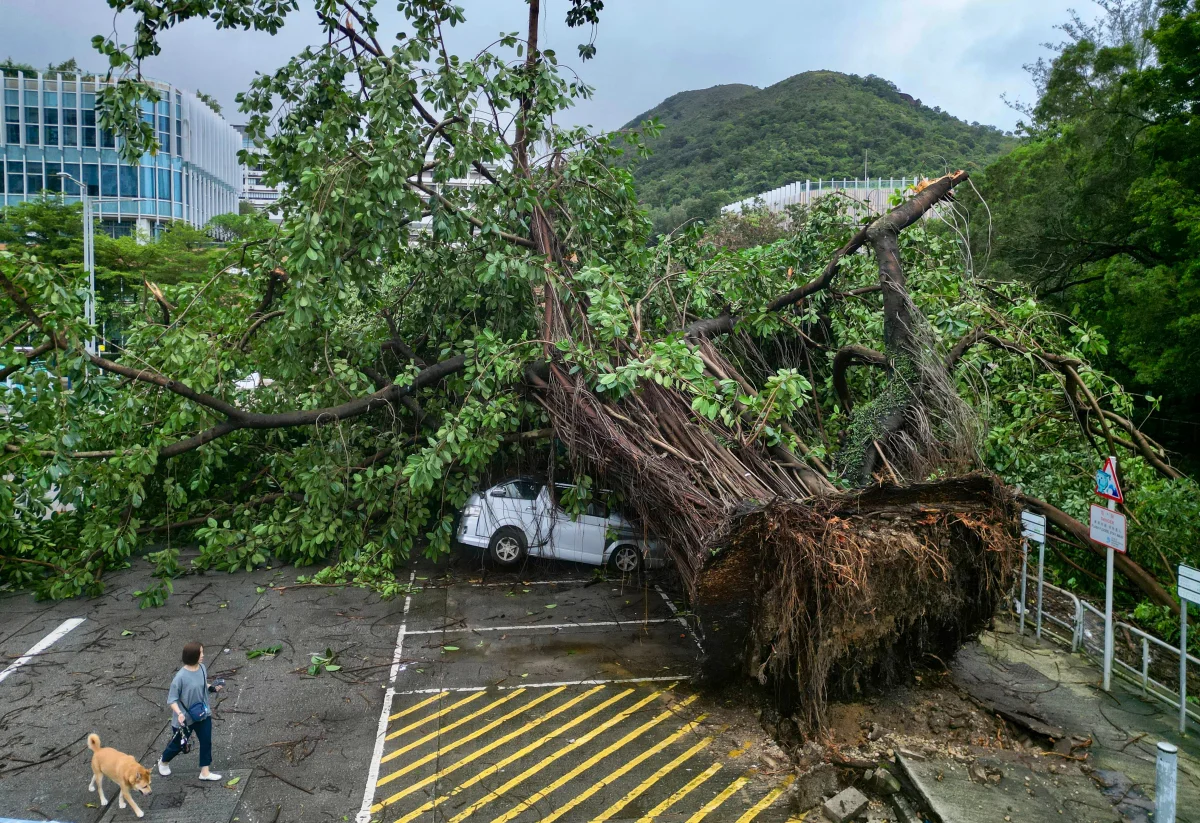
Sounds obvious, but most typhoon injuries and deaths result from people going outside — filming for social media, trying to relocate, "just checking things out." Winds of 150–200 km/h send signs, roofing sheets, branches, and trash cans flying through the air. Any of these at that speed is lethal.
Stay inside the building. Move away from windows — even taped ones. Position yourself against interior walls: a hallway, bathroom, or storage room. These spaces offer the best protection from debris and shattered glass. Don't hide on upper floors — wind is stronger there.
Don't open windows or doors. The old myth about cracking a window "to equalize pressure" is false. An open window lets wind inside, and air pressure can tear off the roof. Everything should stay sealed.
If the power goes out, don't light candles. Use a flashlight. Gas leaks are possible during a typhoon, and an open flame is a direct path to fire.
Listen to the radio or monitor alerts. Weather apps (Windy, EMERCOM's Russian app, local meteorological services) publish updates on cyclone trajectories. Don't disable notifications.
The "Eye of the Storm" Trap
A typhoon is a spiral of wind circling a center called the eye. When the eye passes over your location, wind suddenly dies down, skies can clear, and a deceptive calm settles in. This lasts anywhere from a few minutes to half an hour.
This isn't the end of the typhoon — it's the middle. After the eye passes, wind slams back with equal force, but from the opposite direction. People who step outside during this lull get caught in the second wall of wind with no shelter — one of the most common causes of typhoon fatalities.
The rule is simple: don't go outside until you receive official confirmation that the typhoon has passed. Silence isn't a signal. A message from a weather service or emergency authority is.
Flooding: The Primary Danger
Wind is the dramatic part of a typhoon, but water kills more often. Torrential rain causes flooding, storm surge raises sea level by several meters at the coast, and rivers overflow their banks. Statistics show most typhoon deaths come from flooding, not wind.
If you see water starting to rise:
- Move upward. Second floor, attic, roof — if water floods the ground floor, go up, not outside.
- Never try to cross or drive through a flooded road. A 15-cm-deep current can knock an adult off their feet. A 60-cm-deep current can sweep away a car. Water in a flood carries debris, wreckage, and may be electrically live from downed wires.
- Don't go down into basements or underpasses. They flood instantly and without warning.
If a Typhoon Catches You Outdoors
It happens. You didn't make it to shelter in time — or the warning came too late.
- Find the nearest solid building — a mall, a concrete structure, an administrative building. Wooden structures, awnings, and light-frame buildings aren't shelter — they get destroyed.
- Don't hide under trees. Trees are the first thing wind breaks. A falling trunk or large branch is a frequent cause of injury.
- If there's no shelter, lie in any natural depression — a ditch, a gully, a low spot in the terrain. Cover your head with your arms. Stay away from rivers, streams, and any waterway — they're the first to overflow.
- Don't try to shelter under a bridge. It works in movies, not in reality. Under a bridge, wind accelerates from a wind-tunnel effect.
After the Typhoon: The Danger Isn't Over
Once the wind dies down and the rain stops, you'll want to go outside and assess things. But the first hours after a typhoon are just as dangerous as the storm itself.
- Downed power lines. Broken electrical cables can lie in puddles and on the ground. Water conducts electricity — don't step in puddles near poles and damaged buildings, and don't touch downed wires.
- Flooded buildings. Before entering, confirm the structure isn't damaged: no cracks in the walls, no foundation shifting, no roof collapse. If you see damage, don't go in.
- Don't turn on electricity right away. Wait until specialists inspect the wiring. If you smell gas, don't turn on lights or strike a flame — open windows and leave the building.
- Tap water after a typhoon may be unsafe: floodwater can contaminate treatment plants and pipelines. Use bottled water until official confirmation that water supply is safe.
If You're a Tourist
For Russian travelers in Southeast Asia, a typhoon is a situation many aren't prepared for. A few specific points:
- Insurance
Check before your trip whether your policy covers natural disasters. Not all travel insurance includes typhoon-related evacuation. Verify this in advance — not when the wind is already howling outside.
- Flights
Airports close during typhoons. Flights get canceled or rescheduled. Airlines usually offer penalty-free rebooking. Don't try to reach the airport in the middle of the storm — roads may be flooded or blocked.
- Communication
Mobile service can drop during a typhoon — towers get damaged, power outages occur. Download an offline map of the region in advance (Google Maps or Maps.me), and save your hotel address and emergency numbers in a notes app, not just in messaging apps.
- Don't ignore local warnings
If authorities announce an evacuation, evacuate. Staying "because the room's already paid for" can cost far more in the end.
Where and When to Expect Them
Western Pacific typhoons form from May through November, peaking August–October. The primary impact zones: the Philippines, Vietnam, Taiwan, southern Japan, southeastern China.
Primorsky Krai and southern Russia's Far East fall under the tail ends of typhoons, usually in August–September. By the time cyclones reach Vladivostok, they're weakened, but still bring heavy rain, flooding, and gusting wind.
If planning a vacation in a typhoon-prone region, check the statistics: monsoon season in Phu Quoc isn't the same as monsoon season in Da Nang. Apps like Windy or Zoom Earth show current satellite imagery and real-time forecasts of tropical cyclone trajectories.