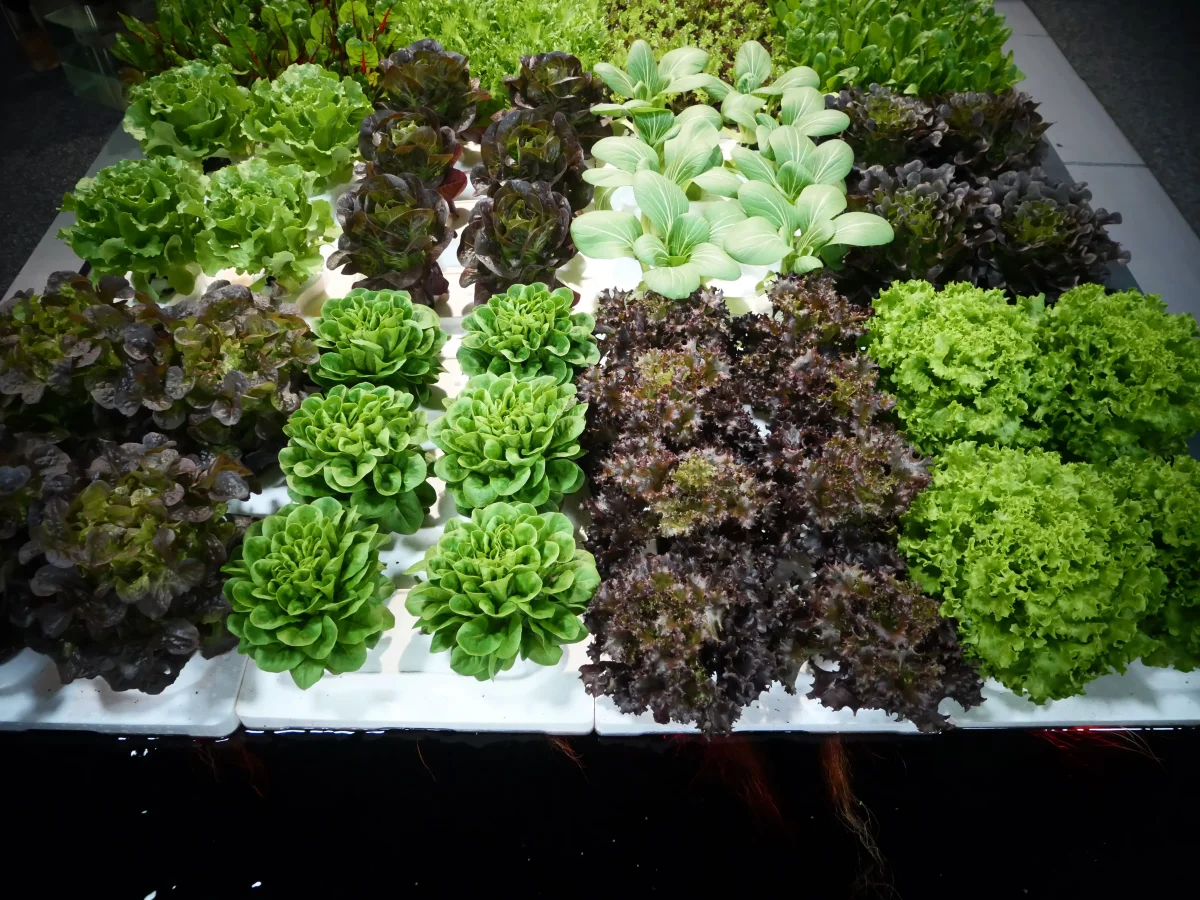
Curiously, it turns out that by following certain rules, it is possible to grow houseplants from a special solution. And, what's more, in their beauty and flowering they will be in no way inferior to plants grown by the traditional method.
How the hydroponic method works
The main thing in this science is the study of plants' root systems and how nutrition takes place.
Scientists faced the task of finding out what exactly a plant draws that is useful from ordinary soil. After several decades of scientific work and experiments, it turned out that placing a plant in ordinary water and adding certain nutrient elements is quite sufficient for its successful growth.
So, to ordinary water it is necessary to add potassium, sulfur, iron, magnesium, calcium, nitrogen and phosphorus. At the same time, the exclusion of any one of these elements will have a ruinous effect on the plant's growth.

At first, the hydroponic method implied growing plants in water, without adding a substrate. A little later, scientists came to the conclusion that it is simply necessary for even development and abundant growth.
Hydroponic methods
- Aggregate hydroponics – is a peculiar method in which the substrate is expanded clay, crushed stone or sand;
- Chemoponics – moss, sawdust, peat and other organic materials serve as the nutrient medium;
- Ionitoponics – the substrate is created from ion-exchange materials;
- Aeroponics – the substrate is not solid, so the plant's roots hang freely.
How to grow a pomegranate from a seed at home
Advantages of hydroponics
The hydroponic method has a number of advantages.
- The yield of fruit-bearing plants increases. At the same time, ornamental plants can delight their owners with prolonged flowering, which makes this method one of the most progressive;
- The hydroponic method consists in plants absorbing exclusively nutrients. Thus, they contain no nitrates or other harmful elements – and this is beneficial, first and foremost, for fruit-bearing plants;
- There is no need to water the plant daily. It is enough to top up the water once every three days – but it is all individual;
- Transplanting plants is greatly simplified. After all, when planting them in soil, the roots are in any case somewhat damaged;
- The absence of pests often found in soil.

Disadvantages of hydroponics
- Be prepared that you will have to invest a lot of effort and attention;
- Assembling the system is a labor-intensive task. And buying a ready-made one is rather expensive.
Which plants can be grown by the hydroponic method
The most undemanding plant that can be grown hydroponically is practically all greens. This includes: parsley, dill, basil, cilantro, rosemary, etc.
The abundance of houseplants that grow successfully in water is simply astonishing: dieffenbachia, kentia palm, ficus, ivy, asparagus fern and many others.
Among vegetables, eggplants, broccoli, green beans, bell pepper, onions and tomatoes feel wonderful without soil. Among berries and fruits: banana, wild strawberry, garden strawberry, raspberry and much more.
How to transplant a plant into a hydroponic system
- You need to take the plant so that its root remains in the soil ball. After that it should be moved into a bucket and soaked in water for several hours. The water should be at room temperature;
- Then, under the water, separate the pieces of soil from the plants' roots;
- Carefully spread out the roots and cover them with the chosen substrate. By the way, it is not at all necessary for the roots to touch the water; the solution will rise up to them in any case;
- The substrate should be watered. And after that – pour water into the vessel up to the required level. In this position the plant needs to adapt over the course of a week. Then you can add suitable fertilizers.