In Dikson, the average July temperature is +5°C. That's colder than Moscow in November. When the thermometer climbs to +15°C, locals call it "scorching," throw open the windows, and complain about the heat. Meanwhile, for the rest of the country, +15°C is a reason to put on a jacket.
Russia is a country where summer differs not just by degrees but by entire climatic eras. While Krasnodar bakes at +35°C and people hide from the sun, settlements on the Far North sit at +5°C with fog and icy wind off the sea. Technically the same season — but by feel, different planets.
Dikson: The Coldest Summer of Any Inhabited Settlement
The absolute leader is the settlement of Dikson on the shore of the Kara Sea, the northernmost inhabited point in Krasnoyarsk Krai. The average temperature of the warmest month — July — is +5.2°C. Winter here means –25 to –30°C, and summer feels like Moscow in November.
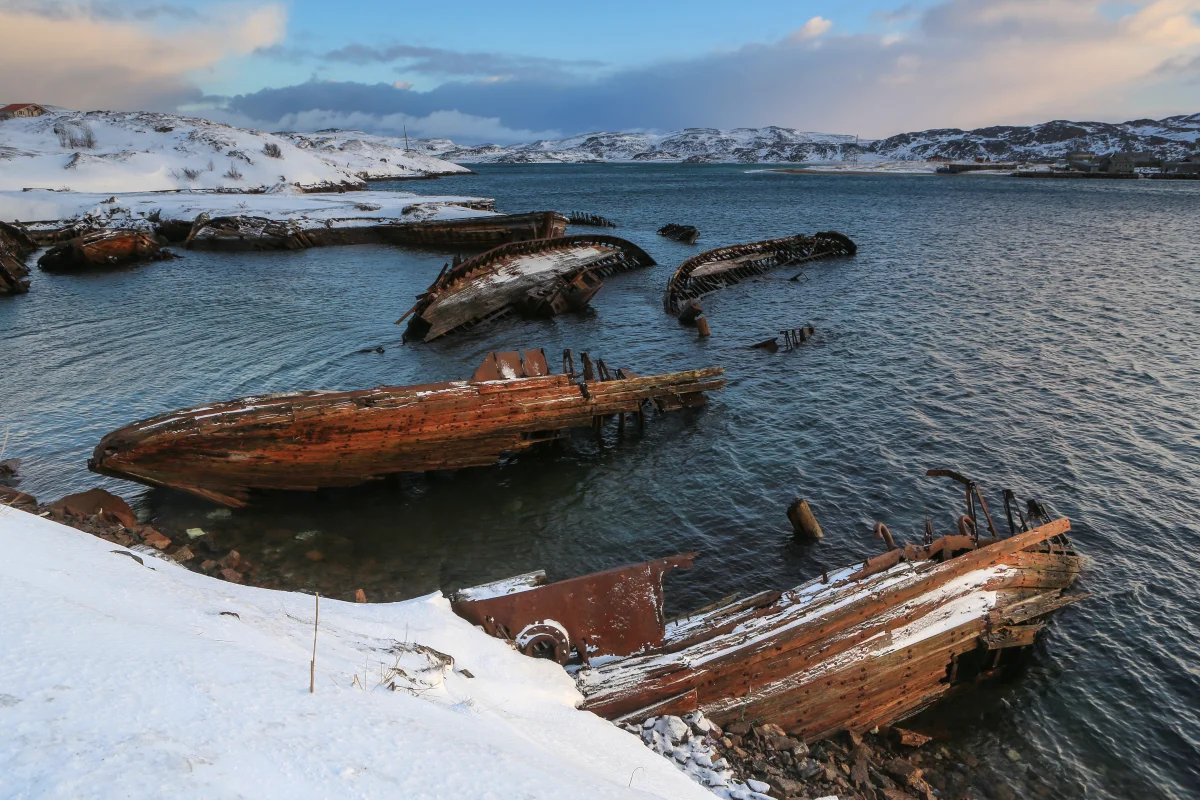
Dikson is home to roughly 500 people — meteorologists, border guards, port workers. Snow covers the ground from September through June. The nearby sea is locked under ice for most of the year. The polar day in summer lasts two months — the sun doesn't set, but it doesn't warm either: it sits low, its rays grazing the surface.
When the temperature in Dikson reaches +12–15°C — which happens a few times each summer — residents treat it as genuine heat. They open windows, walk to the shore without jackets, cook outside. For a Muscovite, +15°C signals the start of heating season. For Dikson, it's the peak of summer.
Pevek: The Coldest City
If Dikson is a settlement, then Pevek on Chukotka is the northernmost city in Russia, with a population of about 4,000. Average July temperature: +7 to +9°C. Wind from the East Siberian Sea blows almost without pause and amplifies the chill.
Summer in Pevek is a relative concept: the frost-free period lasts 40–50 days, from late June to early August. But even during those days, nighttime frost is not unusual. Snow can fall in any summer month.
Locals joke: "We have two seasons — winter and July. And in July it's sometimes winter too."
Tiksi: Permafrost on the Laptev Sea
Tiksi in Yakutia is another contender for the coldest summer title. Average July temperature: +8°C. The settlement sits on the shore of the Laptev Sea, which even in August remains ice-covered near the coast. Water warming above +3–5°C is the exception.
That said, on individual days the temperature can spike to +25°C and higher — the sharply continental climate produces extreme swings. But the average stays firmly in the "jacket required" zone.
Cold Summers in Larger Cities
You don't have to venture into Arctic settlements to find a cool summer. Among cities with populations over 10,000, the coldest summers belong to the north and northeast.
Norilsk (170,000 residents). Average July temperature: +14°C. Sounds bearable, but wind and humidity make it feel closer to +8°C. Snow can fall in June and August. When the temperature hits +20°C, Norilsk residents flock outdoors en masse — this is their "tropics."
There have been cases of people sunbathing at +18°C, stretched out on rocks by a lake.
Murmansk (270,000 residents). Average July temperature: +13°C. The polar day runs from late May through late July, but it delivers little warmth. The Barents Sea, kept ice-free by the Gulf Stream, still stays cold — summer water at +7–9°C. When Murmansk hits +20°C, it's an event: people hit the waterfront in T-shirts, picnic blankets appear in the parks.
Anadyr (15,000 residents). The capital of Chukotka. Average July temperature: +11°C. Permafrost, wind off the Bering Sea, fog. The frost-free period lasts roughly 60 days. A heat wave here means +18–20°C, and those days can be counted on one hand.
Vorkuta (50,000 residents). Average July temperature: +13°C. The city sits above the Arctic Circle, in the tundra zone. Summer means two months of white nights and mosquitoes. Vorkutians say: "We have nine months of winter, and three months of waiting for winter."
What Counts as "Hot" in the Far North
The concept of "hot" in the north is shifted 15–20 degrees relative to central Russia. A rough scale:
- In Dikson and Pevek, heat means +12–15°C. At those temperatures, permafrost melts, asphalt (where it exists) softens, and indoor spaces turn stuffy — they're built for cold, not for warmth.
- In Norilsk and Murmansk, heat means +20–25°C. It happens a few times per summer. Apartments have no air conditioning — nobody ever thought to install it. On those days, the thick-walled panel buildings designed for Arctic frost become impossible to sleep in: the heat doesn't escape.
- In Vorkuta and Anadyr, heat means +18–22°C. At +22°C, people fire up barbecues and swim in ice-cold rivers — because there may not be another chance all summer.
The Paradox of the Northern Summer
The cold northern summer has an unexpected advantage — the polar day. The sun doesn't set for two or three months, and even at +10°C the light levels match midday in central Russia. This creates a strange contrast: by light, it's high noon; by temperature, it's early spring.
Plants exploit the polar day to the fullest: within a few weeks the tundra erupts with flowers, berries, and mushrooms. Midges and mosquitoes are also products of this short but intense warmth. Nature is racing to live an entire summer in six to eight weeks.
Residents of northern cities approach their summer without drama.
They know that heat is a temporary anomaly that will end in a couple of days. That snow can fall in any month. And that a real vacation doesn't mean sunbathing by the local river at +15°C — it means flying to Turkey for two weeks. Then coming home and being grateful that the polar summer hasn't ended yet.