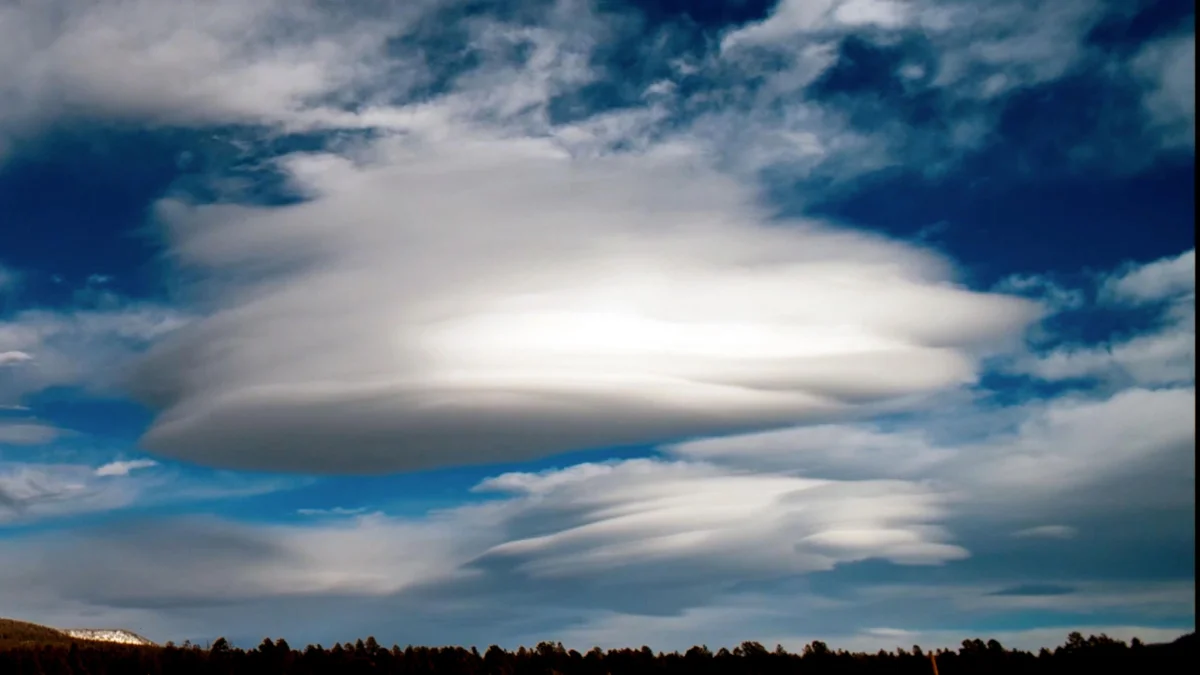
St. Petersburg residents like to think of themselves as champions of gray skies, but the statistics say otherwise: the city on the Neva ranks only fifth among the country's cloudiest places. First place goes to a city few would expect: Yakutsk.
Gray skies overhead feel subjective — you'd swear your own city gets the least sun of all. But Roshydromet tracks hours and days, not feelings — specifically, when the sky is covered by clouds of a certain layer. And once you look at the numbers, the familiar picture falls apart.
It turns out Yakutsk — a city with a reputation for being cold but clear — has more overcast days than St. Petersburg. Murmansk loses sunlight not just to the polar night but to year-round cloud cover. And Moscow, rarely pitied on this front, actually ranks among the country's six gloomiest cities. Let's find out why some places get 300 clear days a year while others barely see a hundred.
How Cloudiness Is Measured
Before comparing, it's worth agreeing on terms. Meteorologists rate cloud cover on a 10-point scale: 0 means completely clear sky, 10 means solid overcast.
A day is considered overcast if average daily cloud cover reaches 8 points or higher. Clear means 2 points or lower. Everything between is "cloudy with clearings."
There's also a distinction between total cloud cover (all layers, including high cirrus clouds) and low cloud cover (dense clouds in the lower layer — the ones that fully block the sun). Rankings are usually built on low cloud cover, since it's responsible for that "leaden sky" feeling.
Ranking Russia's Cloudiest Cities
According to the Russian State Hydrometeorological University, the ranking looks like this:
Yakutsk — 223 overcast days a year
The absolute record-holder — more than anywhere else in the country. It's a paradox: Yakutsk sits in a sharply continental climate zone, where you'd expect plenty of clear days. And in summer, that's exactly the case — from May through August, the sky over Yakutsk is often cloudless.
But in winter, the city sinks into ice fog. At temperatures below –37°C, all moisture in the air turns into microscopic ice crystals, blanketing the city in a dense, whitish haze. Meteorologists log this fog as low-layer cloud cover — technically "overcast," even though the sun may be shining above the fog.
Murmansk — 209 overcast days
Different causes here. First, the polar night — from December 1 through January 11 (over 40 days), the sun never rises above the horizon at all. But even when it's technically present, dense clouds block it: the Kola Peninsula sits in the path of Atlantic cyclones carrying moisture from the ice-free Barents Sea.
The result: cloud cover shrouds the sky both in summer and during months when the sun could technically shine.
Sunshine duration in Murmansk runs around 1,100 hours a year (for comparison, Ulan-Ude gets over 2,600).
Yuzhno-Kurilsk — 194 overcast days
The Kuril Islands sit at the junction of the Pacific Ocean and the Sea of Okhotsk. Cold and warm currents collide, producing constant fog and low cloud cover. Summer brings a monsoon from the south; winter brings cyclones from the ocean. Sunshine here is a rare visitor, in any season.
Nizhny Novgorod — 182 overcast days
An unexpectedly high placement for a city in central Russia. The Atlantic's influence shows: western cyclones bring humid air that condenses into stratiform clouds. In winter, Nizhny Novgorod sinks into a gray haze that doesn't clear for weeks.
St. Petersburg — 180 overcast days
"Only" fifth place — though by reputation, Petersburg should top the list. Sunshine duration runs roughly 1,600–1,700 hours a year. December and January are the darkest months: in December, the sun shines an average of 18–20 hours for the entire month — less than an hour a day.
But summer compensates: white nights provide 18–19 hours of daylight, and June–July see the city genuinely sunny.
Moscow — 172 overcast days
The capital ranks in the top six. Its gloomiest month is December: in 1968, Moscow meteorologists recorded an all-time low — not a single minute of sunshine for the entire month. Absolute zero. Clouds never parted, not for a second, across 31 days.
Further down the ranking come Ufa, Perm, Novosibirsk, and Petropavlovsk-Kamchatsky — around 168 overcast days. Kazan and Khatanga follow at 157, Kaliningrad and Saratov around 140.
Why the Sky Turns Gray Differently in Different Regions
Cloudiness isn't a single phenomenon — it's the result of several different mechanisms.
Atlantic cyclones are the primary cloud source for all of European Russia. Moist Atlantic air travels east, cools, and condenses into stratiform clouds. That's exactly why St. Petersburg, Moscow, Nizhny Novgorod, and Kaliningrad are all consistently overcast in winter — cyclones arrive one after another, like train cars.
The polar front — the zone where cold Arctic air collides with warm air. Along Russia's northern coast (Murmansk, Arkhangelsk, Naryan-Mar), cloud cover intensifies especially in summer, when cyclonic activity along the polar front peaks.
The monsoon — in the east of the country. In summer, the Pacific monsoon brings humid air to the coasts of Primorye, Sakhalin, and the Kurils. Clouds, fog, drizzle — the Southern Kurils get little sun even in July.
Ice fog — a uniquely Yakutian phenomenon. Under an anticyclone (theoretically clear weather!), frost below –37°C turns moisture from exhaust, breath, and heating systems into ice crystals suspended in the air. The city gets wrapped in a matte haze, and the weather station logs "overcast," even though the sky above the fog is clear.
River valleys and basins — intensify air stagnation. Yakutsk sits in the Lena River valley; Nizhny Novgorod at the confluence of the Oka and Volga; Perm in the Kama valley. Cold air sinks, forming an inversion (a warm layer above traps the cold below), and cloud cover doesn't clear for days.
Where the Most Sunshine Is Found
For contrast — the opposite end of the scale.
Ulan-Ude, capital of Buryatia, is Russia's sunniest city according to Roshydromet: over 2,600 hours of sunshine a year. A sharply continental climate: clear, frosty winters under the Siberian anticyclone, dry, hot summers. Cloud cover simply doesn't form here — moist Atlantic air never reaches this far, and local moisture is scarce.
Chita — 244 clear days a year. Transbaikalia is a zone of dry, transparent air, through which the sun shines even at –30°C.
Khabarovsk — 2,449 sunshine hours. In winter, the Far East falls under the powerful Siberian anticyclone: clear skies, light wind, frost and sunshine.
Sevastopol — 2,342 hours. Crimea's southern coast is shielded by mountains from northern clouds, rainfall is scarce, and the sun often shines even in winter.
The gap between the extremes is striking: between Murmansk (~1,100 sunshine hours) and Ulan-Ude (~2,600 hours) is a 2.5-fold difference. Ulan-Ude residents get more annual sunshine than Rome or Madrid.
How Gray Skies Affect Daily Life
A shortage of sunlight isn't just a reason to complain — it has measurable consequences.
- Vitamin D
Synthesized in skin only under ultraviolet exposure. In Murmansk and St. Petersburg during winter, the UV index sits at effectively zero for 3–4 months. Various studies show vitamin D deficiency affects up to 80% of residents in northwestern Russia.
- Circadian rhythms
Short daylight and a lack of bright light disrupt melatonin and serotonin production. The result: drowsiness, lower mood, reduced productivity. It's no accident that Scandinavian countries, facing the same problem, treat full-spectrum light lamps (10,000 lux) as ordinary household and office fixtures.
- Energy
In Murmansk, electricity consumption during the polar night rises by 10,000 MWh a day compared to summer — the city compensates for the missing sun with artificial lighting.
How Residents of the Cloudiest Cities Cope
People adapt — each in their own way.
In Murmansk, the polar night has become a tourism product: hunting for the northern lights has turned into one of the region's biggest draws. Auroras are most visible precisely during total darkness, and tours to the Kola Peninsula in December–January book out months in advance.
In St. Petersburg, residents have learned to cherish every sunny day: the moment clouds part, promenades, parks, and rooftops fill with people. Summer white nights become a collective compensation for winter darkness.
In Yakutsk, ice fog is fought with engineering: buildings are designed with ventilation corridors so wind can sweep through the streets. Residents have grown accustomed to winter sun as a dim disk behind a matte haze, calling it "Yakut milk."
In Norilsk (not included in the large-city rankings, but rivaling Murmansk in cloudiness), workplaces use ultraviolet rooms during the polar night — employees get a dose of artificial sunlight right during their shift.
Is the Situation Changing Over the Years?
There's no clear-cut trend. According to observational data, cloud cover across central Russia hasn't changed significantly over recent decades — year-to-year swings are large, but the average stays roughly the same.
Moscow and St. Petersburg winters feel gloomier than they used to, but meteorologists chalk this up to selective memory: the record-dark December of 1968 was darker than any recent one — it just wasn't discussed on social media.
What's genuinely changing is that the polar night at the far southern edge of its zone is becoming slightly milder. The warming Barents Sea shifts cloud masses, and Murmansk now sees more winter thaws with clearings. But this remains more of a nuance than a trend.
For those tired of gray skies and wanting a change of scenery: from Moscow to Ulan-Ude is a 5-hour flight. From 20 winter sunshine hours a month to Buryatia's 200. The difference in mood is roughly the same magnitude.