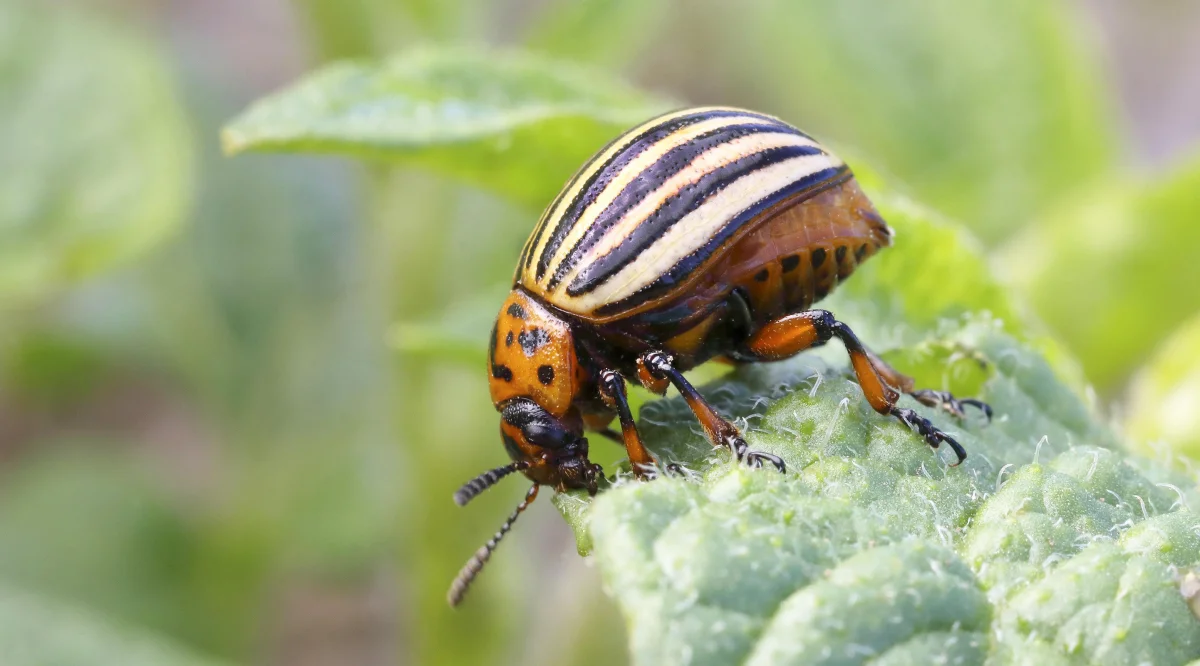
The beetle got its name from its origin. The first invasions of the pest were recorded in the state of Colorado, in America. Back then it ate up several hectares of potato fields and threw the local farmers into desperate bewilderment. And it made its way to Russia along with overseas varieties of potatoes. And as early as the 1950s, it firmly established itself on Russian potatoes too. Nowadays the Colorado potato beetle surprises no one, but in Soviet times quite a few agronomists studied how to exterminate it by non-toxic means.
After all, the beetle turned out to be remarkably hardy and prolific. By the way, the adult Colorado potato beetle is an insect with a striped coloring, while the red and pinkish ones are its larvae. You must not crush the beetles and larvae, since dozens of new ones spawn from them. So you have to look for other methods, which we will share with you.
Of course, there are also chemical preparations that deal with the striped pest, but they can also cause toxic harm to the potatoes. And then to our health. So study the composition of the products carefully, or better yet use tried-and-true folk methods.
Picking them off by hand
An unpleasant but most effective method, known to us since childhood. Who wasn't handed a jar of kerosene by their grandmother and sent out to the potato patches? For Soviet children it was even a kind of entertainment – who could collect the beetles faster and in greater numbers.
Bear in mind that adult Colorado potato beetles can fly, so the especially nimble ones will not always be easy to catch. You need to collect not only the striped pests but also their larvae. Inspect not only the tops; look under the lower leaves as well. And you need to collect them precisely in the morning, when the pests show the most activity.
A trap

You can lure Colorado potato beetles into a trap using a simple method. Place chopped potato into any small container (no more than a liter). Bury it in the ground so that the neck is on the outside. The pests will crawl toward the smell of the potato and fall into the jar.
Onion-garlic decoction
Brew onion peel with boiling water and toss in a few cloves of chopped garlic. Add a little dishwashing detergent or laundry soap so that the solution sticks to the stems and leaves. Pour the decoction into a spray bottle and spray it onto the potatoes.
Helper plants
.jpg)
Plant garlic and marigold flowers between the rows of potatoes – Colorado potato beetles cannot stand their smell. However, this method has a temporary effect; the pests will get to the sweet potatoes anyway. But you have time to take measures.
Mustard solution
It has an especially destructive effect on the larvae. Dissolve 100-150 g of dry mustard in 10 liters of water, add about 80 ml of vinegar and a little laundry soap. Spray the resulting solution onto the crops.