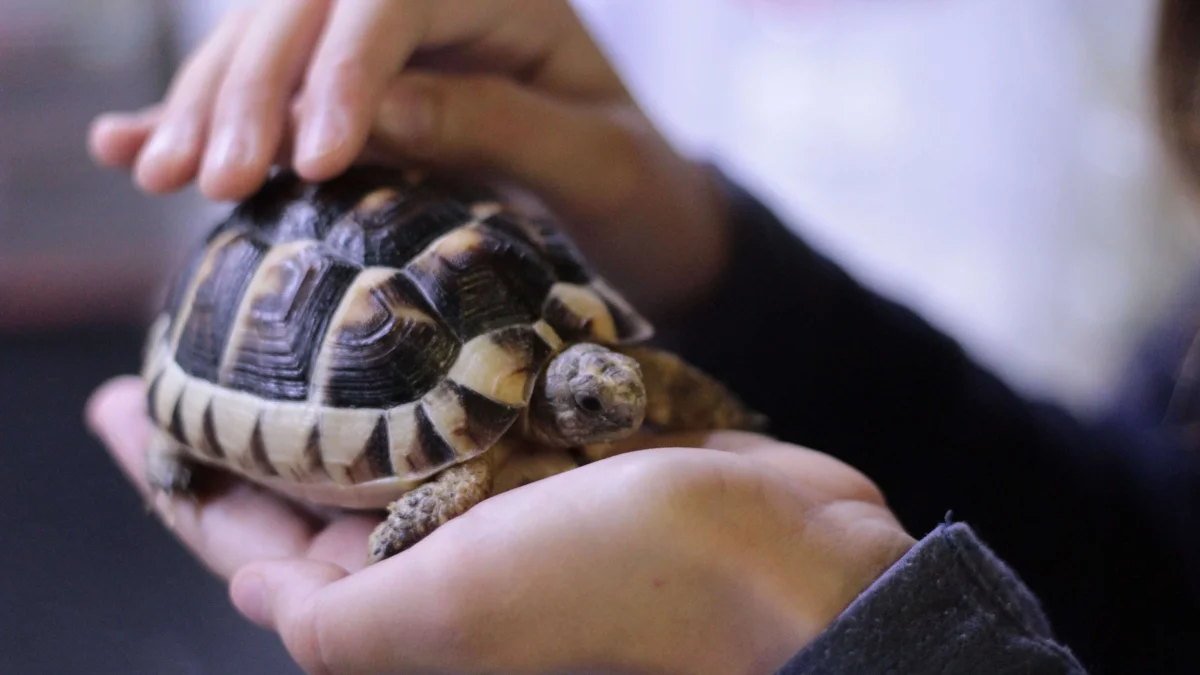
Many people mistakenly believe that caring for these animals is as easy as pie. The idea is that they are the most undemanding – you toss some cabbage into a box and that's that. Unfortunately, because of judgments like this, the poor tortoises do not live long – and this despite the fact that they are considered long-livers. Like any living creature, they require attention, care, concern, and affection.
What to Keep a Land Tortoise In
Any cardboard box (and some people manage to set up a «home» for the animal even in a shoebox!) is definitely not suitable. First, the tortoise will chew through the paper walls, and second, its waste will seep through the paper bottom.
Some people allow tortoises to roam freely around the apartment, on par with cats and dogs. The animal does, of course, need to be let out for a walk periodically. But it cannot be let out for free roaming, so to speak. This carries the risk that the tortoise might eat something – any foreign object. You could also accidentally step on it, or the tortoise might crawl into such a secluded spot that you will only find it when you begin either a thorough cleaning or a renovation.
For a land tortoise, an equipped terrarium in the form of a glass box is essential. Ventilation is also important for the animal, so make sure the box has appropriate openings.
.jpg)
What the terrarium should contain:
- A feeder and a water bowl. Tortoises are very clumsy and awkward, so secure the bowls firmly.
- A house or a secluded spot. Yes, tortoises also need rest, and they prefer to sleep hidden from prying eyes.
- An ultraviolet lamp, so that the animal gets enough light.
- Decorative stones – preferably made of mineral, so the tortoise can clean its beak. This is exactly how they wash themselves.
Also monitor the temperature in the terrarium; if you realize that it is cool at home and the animal might get cold, then install a special reflector lamp.
The bottom of the terrarium needs to be lined with bedding. The most convenient and optimal option – is sand. It is soft for the tortoise and convenient for you to clean up its mess. But, of course, the sand should be bought at a pet store, and not gathered from the nearest sandbox. You can lay down a little hay; tortoises adore lolling about and resting on it.
As for newspaper, cat litter fillers, and wood shavings – forget about them. They are harmful to the animal.
How to Care for a Land Tortoise
Despite their name, land tortoises adore bathing. But they must be bathed very gently and carefully. At pet stores, by the way, they sell special water – it contains additives that ensure hygiene and gently disinfect the shell. Pour enough of it into a container (the water should be warm, no lower and no higher than 30 degrees) so that the tortoise can comfortably hold its head up without trying to raise it higher. Gently wipe the shell itself with your hand or a soft sponge, then the paws, and very carefully the little face – it is better to wash it with your hand, so as not to get water in the eyes. After the water procedures are finished, dry the tortoise with a towel and send it to its house. By the way, one bath a week is enough. But keep an eye on the degree of dirtiness.
It is also important to monitor the condition of the tortoise's claws; they need to be trimmed periodically with special tortoise nail clippers. We trim only the white edges; the dark parts – are already the blood vessels.
What to Feed a Land Tortoise

Most of its diet consists of plant food – this is fresh grass (however, veterinarians recommend buying it rather than picking it on the street – you risk feeding the animal infected grass), greens, some vegetables and fruits. You can give:
- vegetables: cabbage, cucumber, carrot, lettuce, zucchini;
- fruits: melon, apple, watermelon;
- berries: strawberry and raspberry;
- animal protein: minced meat – meat and fish, seafood, worms, bloodworms.
To vary the diet, it is also recommended to add oatmeal or buckwheat porridge and, importantly, products containing calcium – these are hard-boiled eggs and raw minced meat.
You should feed it once every 2-3 days.
What Tortoises Get Sick With
.jpg)
Tortoises, like all animals, unfortunately, are subject to various diseases. But more often the blame for this lies with a careless owner who failed to keep an eye on the pet.
The most frequent health problems – are the results of injuries. For this reason you should not place the tortoise on a sofa or bed. It is like a small child – lose sight of it, and the tortoise has already fallen off the bed. Their inquisitiveness and excessive curiosity lead to various sad consequences. For example, broken paws or even necrosis of the shell.
A disruption in the diet – also through the owner's careless hand – can lead to a gastrointestinal disorder. Drafts – to a runny nose and a cold.
Another common disease of tortoises – is rickets. It afflicts tortoises whose home is located too far from light, for example, in a dark corner. Rickets, in turn, develops precisely because of a lack of vitamin D and calcium. It manifests itself in a curvature or softness of the shell.
It is also important to periodically carry out preventive measures against parasites for tortoises, especially if you walk the animal on an outdoor lawn in the summer.
By the Way
In the wild, tortoises hibernate twice a year. But in this way they save themselves from unfavorable weather conditions. In the comfort of home they are usually awake.
On average, with excellent care conditions, a tortoise can live up to 50 years!
Once a year tortoises molt. This can be noticed when their paws begin to peel. Do nothing, the dry skin will come off on its own – under no circumstances should you peel it off!
The animal can be taken out for a walk outside in dry, windless weather. It is better to arrange walks out of town or at the dacha. But do not let the tortoise out of your sight; it actually knows how to move quickly. Especially upon spotting an appetizing clover flower or a dandelion.