Strangely enough, there are quite a few examples showing that a garden bed can be laid out anywhere – even in waterless terrain.
Jordan
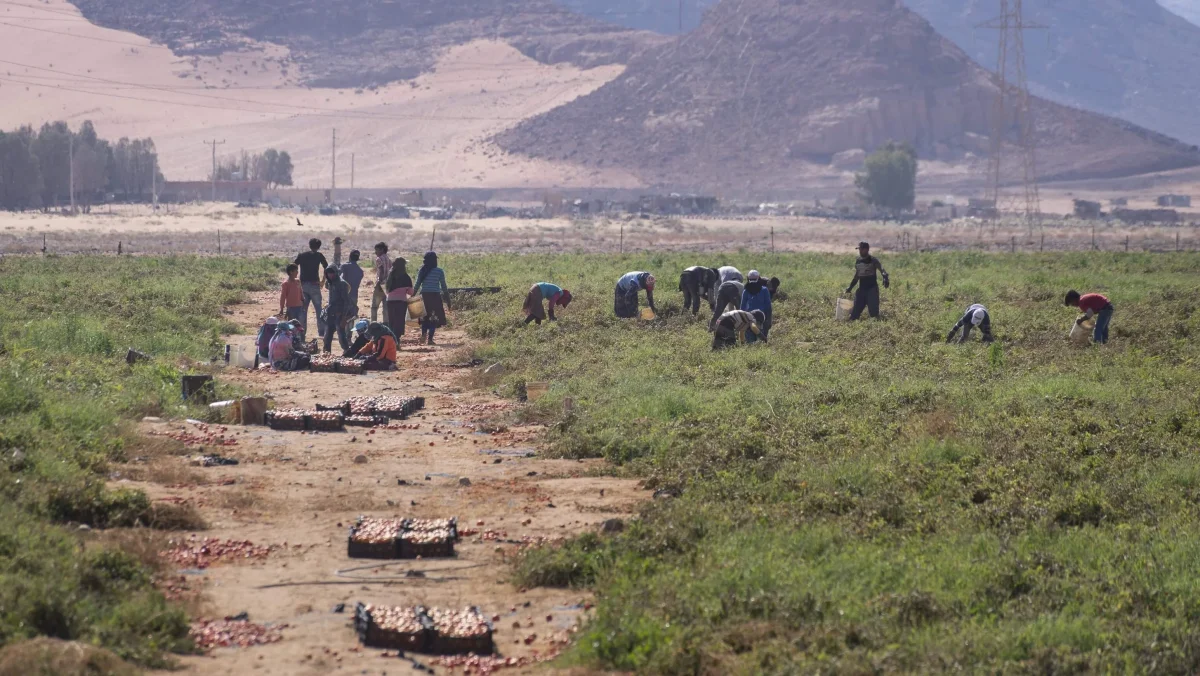
Jordan – one of the most water-poor countries in the world – is a place that imports 98% of its food. Surprisingly, it is right here, in Aqaba, on the coast of the Red Sea, that water flows, crops grow, and desert farmers work.
The history of the «Sahara Forest» project began in 2009, when a team of agronomists presented their idea at a UN climate conference. They demonstrated how agriculture can adapt to the challenges of climate change and water scarcity. And so a futuristic farm was created in the desert, one that does an excellent job of producing most of the vegetables we’re used to.

How does the farm work?
Solar panels power a system that evaporates seawater, thereby helping to keep the air in the greenhouses cool and humid, while also removing salt. Around the greenhouses, hedgerows are planted with plants that can easily tolerate the salty liquid.
In the shade of the solar panels grow crops that cannot withstand direct sunlight, such as herbs and lettuces. Agricultural workers pollinate the plants by hand and bring in wasps for natural pest control. Crop waste is also recycled here into fertilizer, so that the farm enriches the soil rather than destroying it.

Kjetil Stake, managing director of Sahara Forest, notes that all too often land is destroyed for food production. «Our project – is an example of how this can be changed. It shows that food can be produced in a way that doesn’t harm the planet», – he believes.
Israel
Naturally, Jordan – is far from the only country that has learned to cope with the drought of the desert. For example, Eran Ettner, one of the Israeli farmers, grows peppers in the Arava Valley, which runs from the southern tip of the Dead Sea to Eilat. This region has become one of the most fertile, allowing farmers to use the high levels of solar radiation and dry weather to grow remarkably juicy vegetables.
Since rain falls in the country only five months a year, precipitation has always been a matter of life and death in the holy land. However, the Israelis managed to find a successful solution – this is how drip irrigation was invented. The main feature of this watering method is that the water is delivered to the plants directly into the root zone using drip dispensers. This makes the most efficient use of water, while the nutrient-rich liquid reaches all the plants evenly and in equal amounts.
UAE

Another example of how to cope with the forces of nature was shown by Omar Al-Jundi. He managed to create a true oasis in arid and hot Dubai. During a visit to experimental greenhouses in Egypt, Omar was charmed and at the same time intrigued by the sight of plants flowering without soil.
In December 2017, a special farm was opened in the very heart of Dubai. Its condition is unaffected by the climatic conditions outside: all thanks to fertilizer made on mats of recycled fabric, the way the plantings are arranged, and an irrigation system in which the water can be reused up to nine times. In this environment, there is no need for pesticides or other chemicals. Moreover, the farm uses 90% less water than open-field crops. Thus, Al-Jundi’s project is not only eco-friendly but also makes it possible to produce more than 200 crates of fresh vegetables a day.