Mugwort comes into flower at the height of summer and sheds pollen for about a month, and then other weeds take up the baton. For millions of people, that means several weeks of a blocked nose, streaming eyes and being unable to open a window at home.
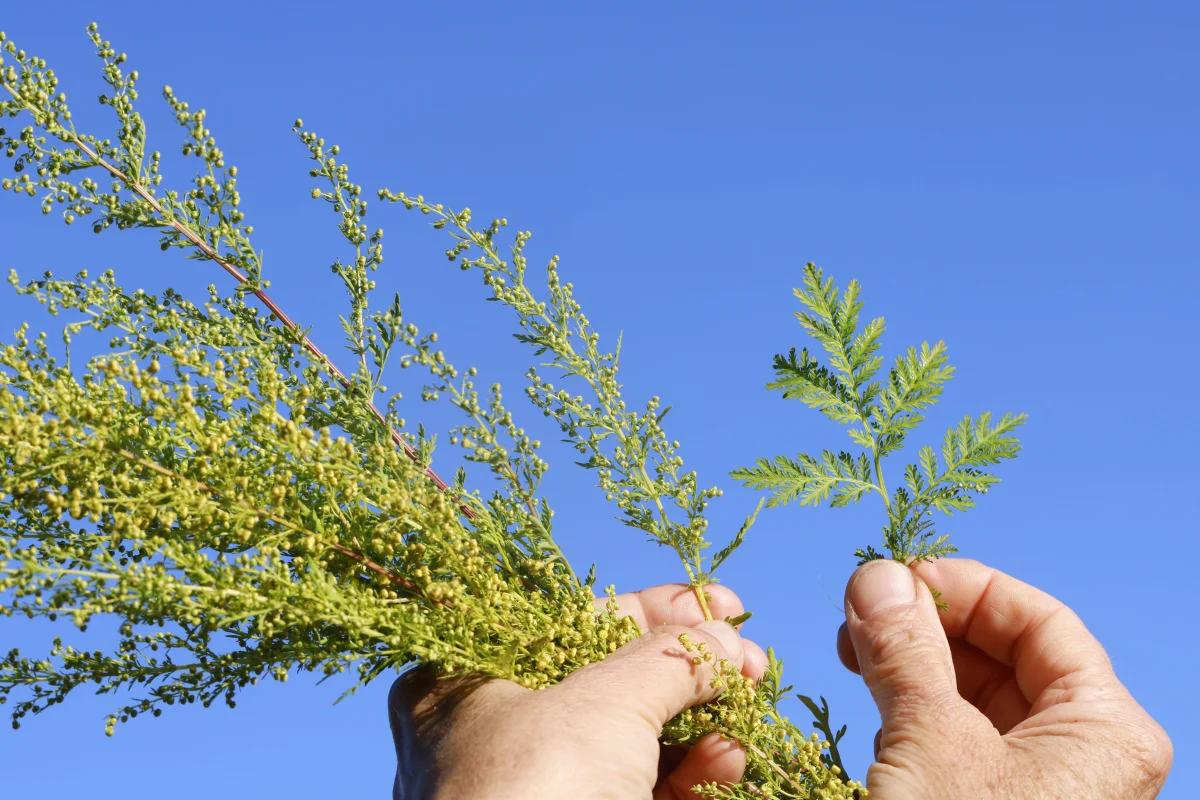
It's a familiar scene: late July, a heatwave, you're walking along a road or across a patch of wasteland, and suddenly you start sneezing. Your eyes water, your nose blocks up and your throat feels scratchy. There are no flowers anywhere nearby, only scruffy grey-green bushes with small tassels at the top.
This is common mugwort (Artemisia vulgaris), known in Russian as chernobylnik, one of the main plant allergens of the second half of summer in Russia. And it's almost impossible to avoid: it grows literally everywhere.
Why Mugwort?
Mugwort isn't the most obvious allergen. Everyone knows about birch and ragweed, but mugwort often gets forgotten. Yet this plant is one of the top three pollen irritants in Central and Eastern Europe and, together with goosefoot and ragweed, drives the late-summer wave of allergies.
The reasons are simple. First, mugwort is incredibly widespread: it's found across practically all of Russia, except the far north and desert areas. Roadsides, wasteland, courtyards, riverbanks, dacha plots and abandoned building sites: it colonises any disturbed ground.
Second, a single plant produces huge amounts of pollen, and the wind carries it tens of kilometres, or even hundreds in strong winds. That means even if there's no mugwort near your home, the pollen can blow in from far away.
When the Season Starts
Mugwort is a late-summer plant. It belongs to the so-called third wave of pollen, after trees (in spring) and grasses (in early summer).
In central Russia, mugwort starts releasing pollen in the second half of July. According to long-term pollen monitoring data in Moscow, the first pollen appears in the air on average around July 20–21 (in some years, anywhere from mid-July to early August).
The peak usually comes in the first ten days of August, and the pollen season lasts on average about a month: by the end of August or early September, mugwort has usually finished flowering.
In southern Russia (Krasnodar Krai, the Rostov region and Stavropol Krai), mugwort flowers earlier. On top of that, late-flowering species of mugwort grow here, producing a second rise in pollen closer to autumn, with ragweed pollen in the air at the same time. So the weed season in the south is noticeably longer.
In Siberia and the Urals, mugwort pollen is usually confined to August, and the weed season here is more often cut short by early frosts in mid-September.
How Many Weeks to Endure
The question in the headline is the most practical one. And the honest answer comes in two parts.
Mugwort itself releases pollen for a fairly short time, about four to five weeks:
-
Central Russia (Moscow, Nizhny Novgorod, Kazan): from the second half of July to the end of August. The peak is in early August.
-
St Petersburg and the North-West: roughly the same dates, late July and August, with lower pollen levels than in the south.
-
The Urals and Siberia (Yekaterinburg, Novosibirsk, Krasnoyarsk): mainly August, sometimes stretching into early September.
-
Southern Russia (Krasnodar, Rostov-on-Don, Volgograd): starts earlier, and thanks to the late species of mugwort, pollen can linger longer.
But mugwort allergy rarely comes alone. Mugwort pollen overlaps with goosefoot, and in the south with ragweed, and many allergy sufferers are sensitive to several weeds at once. Then the "season" stretches out: in central Russia to mid-September, in the south to October, and the total period of discomfort can last six to ten weeks.
What Affects Pollen Levels
This is where things are directly linked to the weather, and why the same week in August can be a completely different experience from one year to the next.
Dry, windy weather is the worst-case scenario. Pollen is easily lifted into the air, scatters for dozens of kilometres and hangs in the atmosphere for hours. If it's hot, windy and cloudless outside, allergen levels in the air are at their highest.
Rain is an allergy sufferer's best friend. During and just after rain, the pollen is knocked down to the ground and the air becomes much cleaner. But the effect is temporary: as soon as surfaces dry out, it all starts again.
Morning is the worst time of day. Mugwort has a clear daily rhythm: the most pollen is in the air before noon, peaking around 9–11am. Levels usually fall by evening. So walks, runs and any outdoor activities are best planned for the second half of the day.
Pollen Without Mugwort: How Come?
One of the most frequent questions is: "There's no mugwort in our yard, so where's my allergy coming from?" The answer lies in aerodynamics. Mugwort pollen is light, and the wind carries it far from where the plants are flowering: it's detected even in the centre of big cities, where the nearest mugwort bush is several blocks away.
Modern pollen forecasts even take into account pollen blowing in from neighbouring regions: the allergen can appear in the air before local plants have even started flowering.
On top of that, pollen settles on clothes, hair and pets' fur, and gets into your home even when the windows are closed. Ten minutes outside is enough.
Cross-Reactions: Foods That Can Catch You Out
Mugwort allergy has a less obvious feature: cross-reactions with certain foods. Proteins in mugwort pollen are structurally similar to proteins in a number of plants, and the immune system mixes them up.
Cross-reactions most often occur with:
-
celery and carrots (the classic combination, known as celery-mugwort syndrome)
-
sunflower seeds and sunflower oil
-
dill, coriander, caraway, fennel and aniseed: the whole carrot family
-
chamomile tea (chamomile is a relative of mugwort in the daisy family)
-
honey, if it contains mugwort pollen
-
mustard and paprika
The reaction can vary, from a slight itching in the mouth to swollen lips. If in August your usual celery salad suddenly starts to "sting," it may not be a coincidence.
When It Ends
Mugwort finishes flowering on its own: in central Russia, usually by the end of August or early September, whether or not there have been frosts. The exact dates shift by a week or two depending on that year's weather.
But the overall weed season, especially where ragweed grows, often really does only end with the first sustained frosts: in Siberia, that can be mid-September; in central Russia, late September or early October; in the south, not before November.
If your symptoms last into autumn, it's probably no longer just mugwort, and that's a reason to find out from an allergist exactly what you're reacting to.
What to Do During the Season
A few everyday tricks that don't require a trip to the doctor:
-
Keep an eye on pollen monitoring. In Moscow, pollen trap data is published by the Allergotop project. For many Russian regions, Yandex Weather has a "Pollen activity" section with forecasts for mugwort, ragweed and other allergens several days ahead.
-
Go out after rain and in the evening. Mornings and dry, windy weather are the worst times for a walk.
-
Shower when you come in from outside. Pollen settles on your skin and hair. Rinsing your nose with saline solution is a simple habit that relieves some of the symptoms.
-
Dry your laundry indoors. Sheets hung out on the balcony in August collect pollen like a filter.
-
Keep the windows closed in the first half of the day. If you need fresh air, air the rooms in the evening or at night, when pollen levels are lowest. A damp piece of gauze over the vent window is an old-fashioned but effective trick.
-
Damp-dust more often. Pollen settles on horizontal surfaces: tables, windowsills and floors. A damp cloth removes it faster than a vacuum cleaner.
If your symptoms are getting in the way of normal life, that's a reason to see an allergist rather than suffer through the whole season. A specialist can help put together a treatment plan that's right for you.
In central Russia, mugwort releases pollen from the second half of July to the end of August, peaking in early August. On its own, it means about a month of discomfort. But together with goosefoot, and with ragweed in the south, the weed season stretches into September or October, and the total period can last six to ten weeks.
It's worst on dry, windy, cloudless mornings, and best after rain and in the evening. Mugwort doesn't have to ruin your whole summer, but for a few weeks you'll have to work around its schedule.