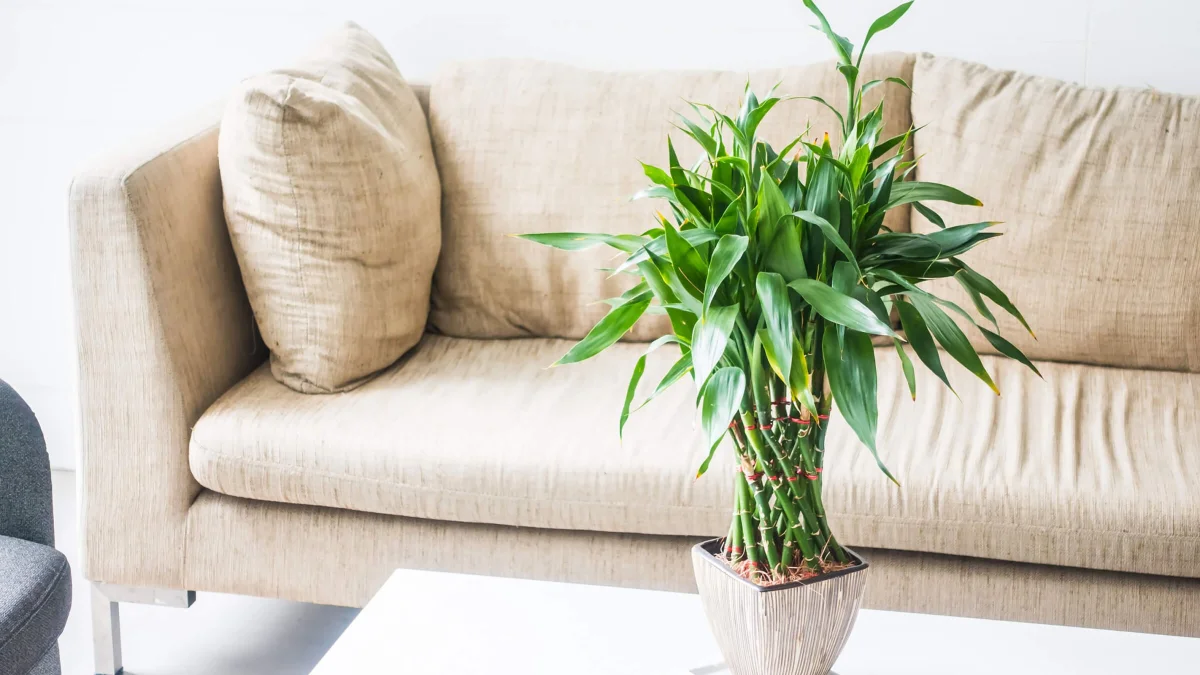
How to Choose a Pot for Bamboo
The container into which indoor bamboo is planted is of great importance to it. And here you need to act on the principle: the larger the plant, the more capacious the pot. The chosen vessel, by our calculations, should hold two rhizomes. And one more necessary condition for the growth of indoor bamboo – is the presence of drainage holes. According to the existing rule, when planting the plant, a quarter of the height of the pot is always filled with expanded clay or pieces of brick.
Soil for Bamboo
The most suitable soil for indoor bamboo – is loamy soil. Peat, sand, and humus are necessarily added to it.
Watering
On summer days bamboo needs to be watered as often as possible, and in late autumn and winter the amount and volume of watering should be reduced. And you should make sure that water does not stagnate in the container, and drain it from the pot's saucer.
.jpg)
Temperature and Humidity
This exotic plant gets along easily in our apartments. And it would seem to require no special expense or effort. However, you must remember from the very first that decorative bamboo cannot tolerate drafts. And it likes a constant temperature regime – 18-25 degrees, combined with proper feeding with fertilizers.
The ideal place for a pot of indoor bamboo – is a windowsill. And it is desirable that it be located on the western or eastern side, but direct sunlight should not fall on it – bamboo likes diffused light. Bamboo adores humidity. Therefore in winter it is better to keep the plant away from heating devices. It is also important to wipe the bamboo's leaves and periodically give it a bath.
Diseases and Pests
One can partly agree with the prevailing opinion that indoor bamboo – is an unpretentious plant. And that it does not seem to require careful care. However, even with it you will sometimes have no end of trouble when it begins to get sick.
For example, dark spots on the leaves of indoor bamboo indicate the presence of fungal rot. And therefore you need to urgently cut it away from the damaged areas and treat them with wax. Along the way you have to treat the whole plant with a fungicide.
The appearance of cobwebs on the bamboo's leaves indicates that its stems have been attacked by spider mites. And you need to promptly treat the plant with a soap solution.
Sticky spots on bamboo indicate that aphids have appeared on it. You should bathe the plant and treat it with a special product.
Leaf drop indicates that the plant has «caught a cold.» Move the bamboo from its usual spot; apparently, there it is suffering from drafts and overcooling.
The bamboo has begun to turn yellow. There can be several causes at once – burns from direct sunlight or, on the contrary, a lack of light, improper watering (for instance, you periodically sin by watering with tap water), insufficient soil drainage.

By the Way
Indoor bamboo (this happens very rarely) can bloom. This process, we note, has a bad effect on the plant. It simply drains the indoor bamboo of its strength.
If your creative imagination has run wild, then this exotic plant can, if desired, be grown into the most whimsical shapes. You only have, for example, to place the bamboo in a box with an opening, and its stem will strive toward the light. And it will make a loop around it, creating a fantastic image.
Do not forget about timely pruning – this affects not only the aesthetic appearance of the bamboo, but also its growth. Periodically trim the dry tips of the stems and treat the cut areas with wax or ash.