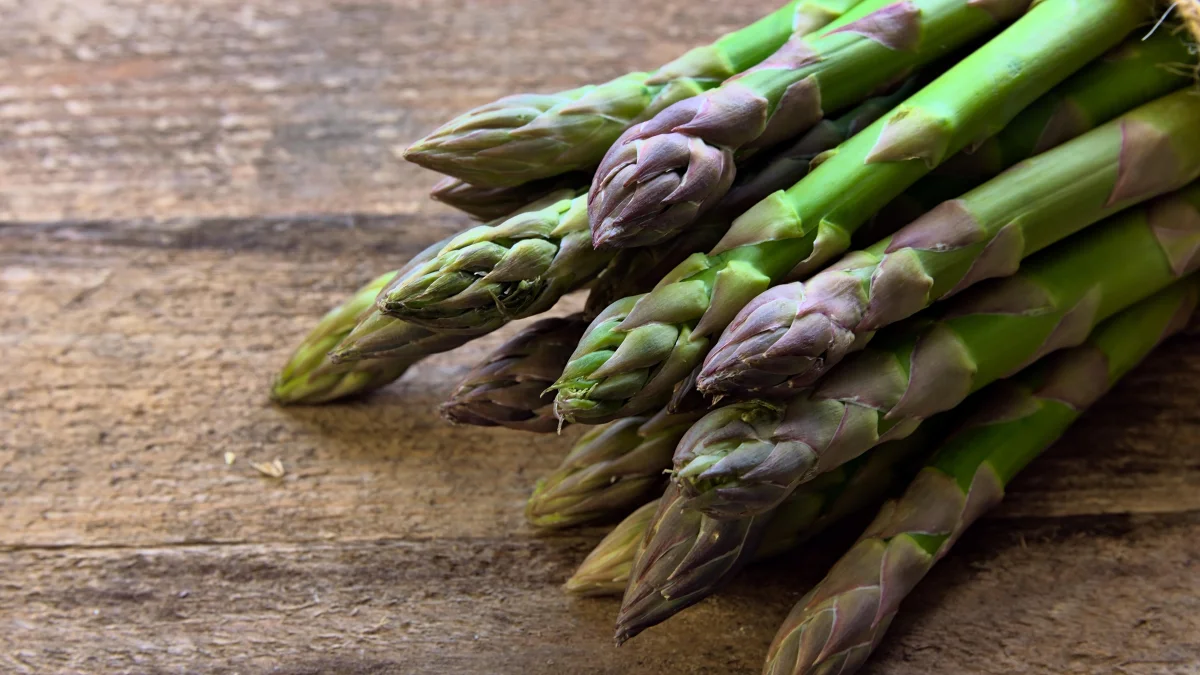
Asparagus (Asparagus officinalis) – is a crisp, tender, fragrant, and healthy vegetable. True, its prices in stores are steep. But you can perfectly well grow it at your dacha if you know how to do it.
How asparagus grows
Asparagus is a unique perennial crop. The edible parts of the plant are called spears. Technically these are the plant’s stems. The shoots emerge from underground buds at the base of the root system. These buds and roots are called «crowns». If the shoots are left to grow, they develop leaves and are then called «ferns».
Asparagus can be harvested for only 2 months a year, because the ferns need to recover and store up energy for the following year.
It is precisely the fern (the leaves) that creates the energy needed to produce shoots the following year. It is important to care for the ferns even after the harvest.

What kind of soil asparagus needs
Asparagus grows best in well-drained soils with a pH of 6.5 to 7.0 and does not tolerate extremely acidic soils. It can grow in heavy, medium, or sandy soils, as long as they are drained and do not cause water to pool after rains.
Before planting asparagus, test the soil to make sure it has enough nutrients. That said, the situation can always be corrected with fertilizers. A typical fertilizer rate for asparagus is from 300 to 400 g of 10% nitrogen, 10% phosphorus, and 10% potassium fertilizers per 10 square meters.
It is best to apply part of the fertilizer in autumn or in spring before planting, and to add about half of the phosphorus and potassium at planting time. Nitrogen should be added after planting, as soon as the crowns begin to grow.
Once the asparagus is planted, fertilizer, compost, or composted manure can be added either in early spring before the shoots emerge, or after the harvest in late June or early July.
Fertilizer should be added near the plant, with light loosening of the soil. Take care not to damage the underground parts of the plants while doing so.

Choosing plants
There are female and male asparagus plants. The male ones do not produce seeds, but both produce edible spears. Female plants grow larger. The male ones produce more small, uniform shoots.
Most asparagus hybrids are plants with male flowers. This is because female plants can produce undesirable weedy asparagus seedlings.
How to plant asparagus correctly
Asparagus lives 15 years or more, so choose the spot for the bed carefully. It should be a fertile, sunny, well-drained area with soil that retains moisture well.
Late spring frosts can kill the shoots that have emerged, so find a warmer spot that is not in a low-lying area.
Asparagus plants have a deep root system. Avoid areas with shallow soils or soils prone to waterlogging.
If the asparagus bed is going to be part of a large vegetable garden, it is best to place it in the northern part of the garden, so that the tall ferns do not shade other crops.

Asparagus is planted from early May to early June.
Choose a planting spot. Then dig a furrow (trench) 15–25 cm deep for planting. On heavy clay soils make the furrows shallower, and on sandy soils – deeper.
The length of the trench should match the number of plants being planted. The spacing between them should be no less than 30 cm. If you are planting several rows, make the furrows at least 15–20 cm apart, because the saplings will spread out as they mature.
To plant the crowns, place them fully along the furrow, so that the crown buds are more than 76 cm apart.
Then cover the crowns with 5–7 cm of soil. Once they sprout, you can fill the rest of the dug-out soil into the trenches as the plants grow.
Do not let the asparagus dry out between planting and sprouting; water it right away.
Small, narrow shoots will begin to emerge from the soil 2–3 weeks after planting, depending on rainfall, temperature, and the amount of soil cover. Once the spears become firm and reach a height of a few centimeters, a few more inches of soil can be filled into the furrow. Be careful at this stage, as large clumps of dry soil can break the fragile sprouts.

How to care for asparagus
Although asparagus rarely shows obvious signs of drought stress, it needs consistent soil moisture to stay healthy and produce a good harvest, especially in a dry season.
Asparagus beds should receive water every week. If not a drop of rain has fallen in the past week, watering is needed. Asparagus growing in sandy soil should be watered more than once a week if there is no rain, while on heavy clay soils it can be watered less often. Mulched soils will retain more water.
Water should penetrate the soil to about 20 cm; for sandy soils this figure is higher.
An important point is weed control. Perennial weeds grow well in asparagus beds, because it is a perennial crop that is rarely cultivated or worked.
Removing weeds by hand still remains one of the most effective methods, especially in small beds.
Cultivation (loosening) is also considered an effective way to control weeds in vegetable gardens, but be careful. Cultivating too deeply or at the wrong time of the season can damage the developing shoots.
There are two times when asparagus beds can be worked: before the shoots emerge in spring, and after all the shoots have been harvested but before the ferns come up in late June. In both cases the cultivation should be very shallow, less than 6 cm deep.
Cultivation is effective on small young weed seedlings, but is unlikely to deal with perennial weeds or large, established annual weeds.
On large plots, perennial cover crops (ground-cover plants) can be planted between the rows of asparagus. Healthy, dense cover crops will help suppress weeds without disturbing the soil through cultivation.
Mulching will help too. Straw and leaves can be used as mulch on asparagus beds to smother weeds. But it is important to remember that these mulches also keep the soil cooler and moister, potentially delaying the emergence of asparagus shoots in spring.
How to harvest
In spring, shoots begin to emerge from the soil. In the first spring, a year after planting the crowns, do not harvest the shoots. Allow the crowns to become established.
In the second spring after planting, if the plants were strong and healthy, you can begin harvesting when the shoots reach a length of 15–20 cm. In the first year of harvesting, asparagus is harvested for only two weeks. After that, let the shoots grow leaves and turn into ferns.
Some gardeners do not harvest at all in the second year, preferring to let the plants gather strength. In subsequent years, however, harvesting begins in May and continues until about July 1.