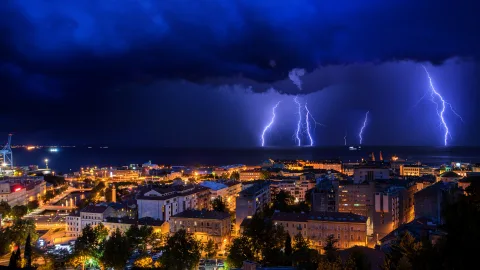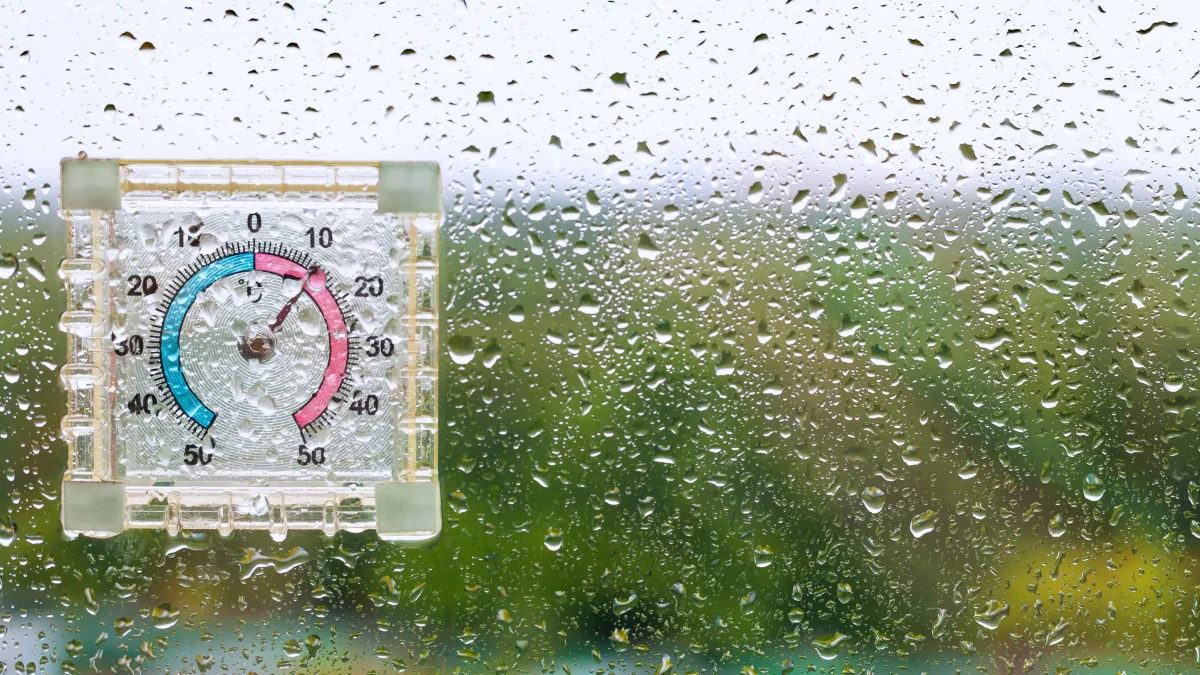
The summer of 2026 started annoying Muscovites as early as June: prolonged downpours, cool days, and an umbrella in every bag as a mandatory accessory. But the records are still a long way off — the rainiest summer in the capital's history came 32 years ago, and that level of precipitation hasn't been matched since.
The normal amount of rainfall for Moscow's three summer months is 246 mm, measured at the VDNKh weather station. That's roughly a third of the annual total. But in certain years, nature overshoots the plan by one and a half to three times — and those summers are remembered for a long time.
The All-Time Record: 1994
The summer of 1994 was the coldest and wettest in Moscow's modern history. Rainfall exceeded the norm threefold. Average monthly temperatures ran 2–4 degrees below normal. Muscovites wore jackets all summer, umbrellas never left their bags, and sunshine was so rare it was greeted as an event.
Rain fell virtually without pause — lingering, drizzling, stretching on for days at a time. Not a cloudburst that strikes and moves on, but a gray curtain hanging over the city for weeks. By feel, summer never happened at all — spring jumped straight to autumn.
Other Record-Setting Years
2008. The rainiest summer of the 21st century — 366 mm over three months, placing it fifth in the entire observation history dating back to 1879. The previous record-holder for the century was 2000, with 365 mm. The difference: one millimeter.
2013. Not a record by total volume, but memorable for violent downpours. In July, the daily maximum surpassed a figure from 1894 — half of a month's normal rainfall fell in a single day.
2016. The all-time record for daily precipitation at the VDNKh station was set — 87.8 mm on August 15. The previous maximum (63 mm, June 1970) was exceeded by nearly half again.
By mid-August, the seasonal rainfall norm had been surpassed, and streets and underground passages flooded multiple times that summer.
2023. On July 19, 68.3 mm fell in 19 hours — the heaviest rain in 50 years. Streets, shopping centers, and several metro stations were flooded.
What's Happening in the Summer of 2026
The summer of 2026 opened with "temperature swings": heat waves reaching +30°C alternated with sharp cool-downs and prolonged rain. June was a study in contrasts — several days of abnormal warmth followed by cool, wet stretches.
According to the Hydrometeorological Center, June rainfall in Moscow came to roughly 77 mm — essentially the norm. July started cool and rainy, then switched to heat.
Anatoly Tsygankov, head of a department at Roshydromet, notes that calling 2026 a clear weather anomaly for central Russia would be premature: "For Moscow, the temperature anomaly is still small — about 0.8°C above the norm."
The defining feature of this summer isn't the amount of precipitation but its character. Rain falls unevenly: several days of downpours in a row, then a week of heat and dryness. It's the contrasts that create the sensation of "endless rain," even though the cumulative numbers so far remain within ordinary bounds.
Why It Feels Like There's More Rain Than There Used to Be
The subjective sense of a "rainy summer" doesn't always match the data from weather stations. Several factors amplify the impression.
The urban environment. Moscow is built up far more densely than 30 years ago. Asphalt and concrete don't absorb water — it sits in puddles for hours, flooding underpasses and roads. The same volume of rain that soaked into the ground in the 1990s now stays on the surface, creating a scene that looks like a flood.
Social media. Every downpour hits the feed instantly: flooded streets, geysers erupting from manholes, cars submerged to the hood. In 1994, people learned about record rainfall from the evening news. In 2026 — from dozens of videos posted within the first minutes of a storm.
A shift in precipitation patterns. Climatologists are documenting a trend: Moscow's total rainfall is growing only slightly, but it's concentrating in powerful short-lived downpours rather than being distributed evenly.
A single deluge dumping 40 mm in an hour makes a far bigger impression (and causes more damage) than a week of drizzle totaling the same 40 mm.
Will It Get Rainier in the Future?
Climate models give a cautious but unambiguous answer: yes. Warming increases the amount of moisture in the atmosphere — warmer air can hold more water vapor. According to Roshydromet, Moscow's average annual precipitation has risen by roughly 10% over the past 50 years.
But it's not the total that matters most — it's the distribution. Downpours are becoming more intense, and dry spells between them are growing longer. Not "more rain" but "sharper contrasts." That's the fundamental shift Muscovites feel every summer — this one included.
Will 2026 Break the Record?
As of late July — unlikely. June showed no anomalies in precipitation, and July started with rain before switching to heat. To match the 1994 record, August would need to be drenched nonstop — and forecasts aren't pointing in that direction for now.
But summer isn't over. August in Moscow is traditionally the most thunderstorm-prone month, and one powerful cyclone can deliver a month's worth of rain in a single week. So it's best to keep that umbrella in your bag — just in case.