Japan stretches 3,000 kilometers from north to south, and winter here is an elastic concept. In Sapporo — minus five and waist-deep snowdrifts. In Tokyo — plus eight and dry blue sky. On Okinawa — plus eighteen and cherry blossoms already in bloom. All of this is one country in the same week of January.
Most outsiders picture Japan as something perpetually blossoming and warm. In reality, winters in the north are harsher than Moscow's — the city of Nagaoka gets six meters of snow per season, and temperatures on Hokkaido drop to –20°C. But the farther south you go, the milder it gets, and in several regions a down jacket genuinely isn't necessary.
The North: Real Winter
Hokkaido (Sapporo, Otaru, Hakodate). Winter runs from November through March. Temperatures range from –7 to 0°C, and snowfall is heavy and frequent. Sapporo is one of the snowiest megacities in the world: cumulative winter snowfall totals around five meters. Without a down jacket, insulated boots, and a hat, you have no business being here.
But it's worth the trip: February brings the Sapporo Snow Festival — giant ice sculptures illuminated at night. Plus the ski resorts of Niseko and Furano, famous for their legendary "Japow" — dry, powdery snow that draws riders from around the globe.
Tohoku (Sendai, Aomori). Slightly milder than Hokkaido, but winter is serious: 0 to +5°C on the coast, deep sub-zero and meter-high drifts in the mountains. A down jacket is mandatory.
The Center: Mild but Deceptive
Tokyo. Winter days run +5 to +10°C; nights hover around 0°C, occasionally dipping just below. Snow falls once or twice per winter and causes chaos: the city isn't built for it, trains run late, pedestrians slip. But overall, winter is dry and sunny — blue skies, bright sun, and against that backdrop, snow-capped Fuji on the horizon.
A down jacket in Tokyo is overkill. An insulated jacket, sweater, and scarf will do. By midday in the sun it can reach +12°C, and a puffer will be too hot. But come evening, the temperature drops sharply, and without a warm layer you'll shiver. The Japanese solve this with layering: thermal base, fleece, windbreaker.
The real catch is indoors. Central heating in the Western sense doesn't exist. Homes use air conditioners in heating mode or ceramic space heaters. Restaurants and shops can feel cool. The kotatsu — a table with a blanket and built-in heater — isn't decoration; it's a survival tool.
Kyoto. Slightly colder than Tokyo — +4 to +9°C. The city sits in a basin surrounded by mountains, and cold air pools. Morning mist, frost on the bamboo groves of Arashiyama, snow dusting Kinkaku-ji (the Golden Pavilion) — some of the most beautiful winter images Japan offers. A warm jacket is needed; a down jacket is optional.
Osaka. Similar to Tokyo: +5 to +11°C, dry, sunny. The city is livelier and louder than Kyoto, and street food runs year-round — takoyaki and okonomiyaki warm you as well as any coat. Comfortable without a puffer.
The South: Winter in Name Only
Kyushu (Fukuoka, Nagasaki, Kagoshima). Winter here is nominal: +5 to +12°C, snow is a genuine rarity. In Kagoshima, at the island's southern tip, January runs +8 to +13°C, while the active volcano Sakurajima smokes on the horizon in every season.
No down jacket needed on Kyushu. A mid-season jacket, sweater, and closed shoes are sufficient. Evenings are cool but not cold. For sightseeing, it's the most comfortable winter region on the Japanese mainland.
Okinawa. A tropical island where the word "winter" draws a smile. January: +15 to +20°C, sunny, dry. Cherry blossoms here open in late January — two months earlier than in Tokyo. A down jacket is categorically unnecessary — a light windbreaker for the evening is all you need.
Swimming in winter won't work — the water is +20–21°C with wind off the sea — but for walks, diving in a wetsuit, and exploring the unique Ryukyu culture, the timing is perfect. Tourists are at a minimum, prices below summer rates.
The West Coast: A Wall of Snow
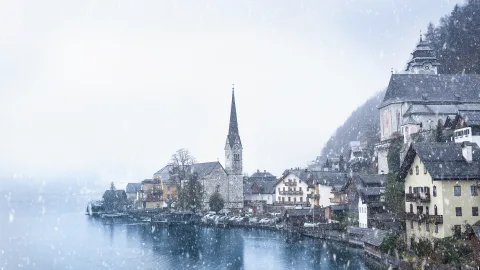
A separate story belongs to the Sea of Japan coast (Kanazawa, Niigata, Nagaoka). Moist air from the sea slams into the mountains, and precipitation falls as colossal amounts of snow. Nagaoka receives up to six meters per winter; Tokamachi gets even more.
Temperatures hover around 0°C — not extremely cold, but the constant dampness and snowfall create the sensation of a harsh winter. This is home to some of the country's best ski resorts and famous onsen, where you can sit in a hot spring with snow falling all around you.
Onsen: Winter's Greatest Argument
Whichever region you choose, winter Japan is hot spring season. Open-air onsen (rotenburo) where +40°C water steams against a backdrop of snow-covered mountains or frosty air — an experience worth freezing for.
The best winter onsen:
- Hakone (1.5 hours from Tokyo) — a view of Fuji from the hot water.
- Nozawa (Nagano) — a village with hot springs running right through the streets.
- Kusatsu (Gunma) — one of the most acidic and hottest springs in Japan.
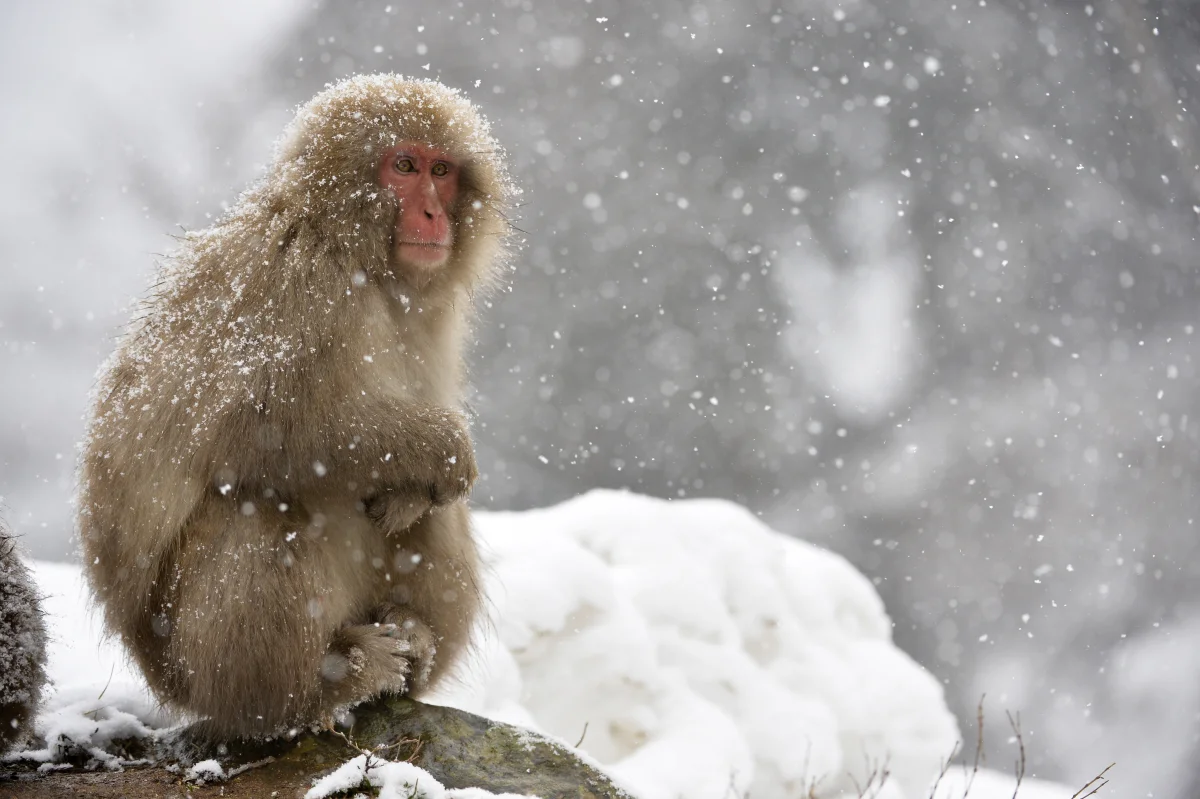
- Jigokudani (Nagano) — the famous snow monkeys that soak in the hot springs alongside humans.
Where You Can Skip the Down Jacket
Ranking cities by winter comfort:
- Okinawa (+15–20°C) — a windbreaker.
- Kagoshima (+8–13°C) — a mid-season jacket.
- Fukuoka (+5–10°C) — an insulated jacket.
- Osaka (+5–11°C) — an insulated jacket and scarf.
- Tokyo (+5–10°C) — a warm jacket, layering strategy.
- Kyoto (+4–9°C) — a warm jacket and gloves.
- Sapporo (–7 to 0°C) — down jacket, hat, insulated boots.
The rule is simple: south of Osaka — no down jacket needed. North of Tokyo — bring one. Tokyo and Kyoto sit in a gray zone where everything depends on how easily you get cold and how much time you plan to spend outdoors.