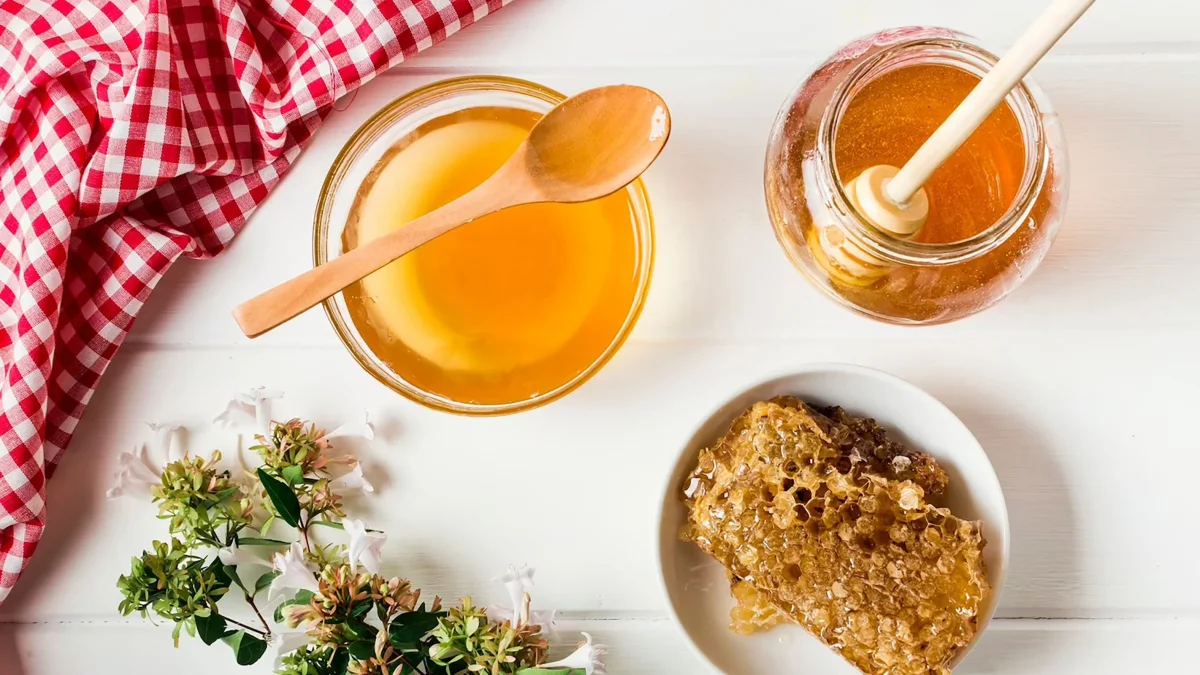
Many of us wonder – which honey is better, healthier, since we are very fond of this product. It is taken for colds, added to desserts and baked goods, and simply eaten with various add-ins and tea. Even if you have bought honey produced in our country and even in your own region before, it is not always the real, healing product. And if you want to get the healthiest honey and appreciate the properties of this natural product, you should choose a jar taking several factors into account.
Most of the honey in the supermarket is heated and re-filtered to extend its shelf life. In these processes many natural properties are lost. It is just a sweet substance, lacking those healing qualities for which real honey is valued. At the market it is also not always easy to buy honey – it may be soured or spoiled, which can cause intestinal problems.
A ranking of honey by variety: the top 5
If you try to assess which honey is the healthiest, you can get confused, since different varieties of the product possess their own unique properties. On the basis of research and the assessments of the people themselves who regularly consume this product, it has been determined which honey is the most valuable and beneficial, and a ranking of varieties has been compiled.
Linden honey

Photo: Freepik
It is considered the most valuable. It has a yellow-amber color that shimmers in the sun. It possesses a whole range of healing properties – it helps with colds, reduces body aches and fever, and has an antiviral effect. Wondering which honey is beneficial for women? Choose this very one: it helps balance hormone levels and the metabolism.
Buckwheat honey

Photo: wirestock on Freepik
It has a dark color with a reddish tint, a specific rich, tart taste with a slight bitterness. This product contains a lot of iron and proteins; it is beneficial for anemia, thyroid problems, and a vitamin deficiency. It has a powerful antibacterial, anti-inflammatory effect, protects the heart, and improves the functioning of the reproductive system of men and women.
Acacia honey

Photo: Sophie N. on Unsplash
It has a pale-yellow color, semi-transparent. What are the beneficial properties of this honey? It contains little glucose, helps in treating sleep disorders and neuroses, lowers blood pressure, tones the walls of blood vessels, and is beneficial for eye health.
Wildflower honey

Photo: KamranAydinov on Freepik
It has a rich yellow color, crystallizes quickly, and has a sweet herbal aftertaste. If you are looking for which honey is beneficial for the stomach, choose this very one. In addition, it strengthens the brain's blood vessels, stimulates the functioning of the cortex, and prevents dementia and Parkinson's disease.
Heather honey

Photo: Arwin Neil Baichoo on Unsplash
It has a dark-brown color and crystallizes quickly. It possesses a number of beneficial effects – it helps in treating joints and strengthens bone structure. It has a mild diuretic effect, protects the kidneys, relieves fever during acute respiratory viral infections, and has an antiseptic and styptic effect.
How to choose honey
It is important to know a number of rules that will help you decide which honey to choose. You need to pay attention to several factors.
Consistency
Assess the consistency of the honey – it can be liquid only during the collection period and for about a month after it. In our country honey is collected from late July to late September, and thus, from October to July all the honey on sale will already be crystallized and thick, with the exception of heather honey and acacia honey.
If in winter or spring you see a jar of liquid honey on a store shelf – this is melted honey, or it has been diluted with glucose syrup. It is important to remember that heating above 40 degrees leads to the loss of the product's valuable qualities, turning it into just a sweet mass.
Making the right choice: grab a spoon!
At the store, choosing honey is harder; it is usually packaged in plastic or glass jars that are securely sealed, and you cannot open them to smell and taste the honey. That is why you should not buy store honey. The risk of buying a fake that will do you no good is too great. At the market, sellers sell honey by the ladleful and by weight, and you can assess the quality of the product in more detail, but here too you cannot do without some knowledge. Cunning traders can deceive those who do not know how to choose honey properly.
If you are testing liquid honey before buying, first dip a spoon into it (ideally – a wooden one) and lift it up. If the honey is of good quality, it will flow off it smoothly and slowly in a single thread, and if the thread breaks, a little mound forms on the surface at the spot where it drips, which slowly spreads out. If the honey is diluted or fake, heated, it flows off the spoon quickly or even with splashes.
In addition, you can turn the spoon, winding the honey «thread» around it. If even folds form, the honey is good; a fake is generally hard to wind around a spoon.
Useful tips: taste and smell
Always trust your senses; they rarely let you down. It is not for nothing that we check the quality of products first and foremost by sight, smell, and taste. With honey it is exactly the same; do not rush in choosing it. A good seller, who is confident in the quality of their goods, will tell you what kinds of honey there are and let you sample it – smell it and assess the taste. Quality honey possesses a specific, rich, and fragrant aroma, possesses a specific taste that cannot be confused or compared with anything else. It is aromatic, gives a burning sensation on the tongue, and is cloyingly sweet and astringent.

Photo: jcomp on Freepik
The absence of a honey aroma or a faint, candy-like, caramel, or sugary smell, as well as a banal sugary taste – is a sign of artificial honey. If you taste a hint of caramel – such honey has been subjected to heating.
Color – depends on the variety
Assessing the quality of honey by its color – is incorrect. Quality does not depend on the coloring, and it is impossible to determine foreign impurities by eye. If the honey is almost white, especially if it has already candied, this does not at all mean that ordinary sugar has been added to it. Likewise, a dark-brown coloring does not indicate that burnt sugar syrup or molasses has been mixed into the honey (although this too happens). The coloring of honey depends on the plants from which the bees collected pollen.
Fireweed, sweet clover, and acacia honey have a very light coloring; cherry, honeydew, or buckwheat honey – is very dark, brown, but transparent. All the other varieties of honey have a coloring of the product ranging from pale-yellow to rich amber.
Let's check at home
If you bought honey at the store or at the market, but upon arriving home doubts crept in regarding its quality, you can check the honey for impurities at home. You can take a spoon of honey, dissolve it in water, mixing the contents thoroughly, and add a drop of Lugol's solution or iodine to the mixture. If the solution turns blue, this indicates that starch or flour has been mixed into the honey.
- Place a piece of bread into the honey, hold it for about 10-15 minutes. If the bread has hardened, the honey is real; if sugar syrup is present, the bread will soften.
- Also, rub a tiny drop of honey between your fingers. The real product rubs in well and is quickly absorbed into the skin. Fake honey forms clumps and lumps, a sticky film on the skin.
- Look at the bottom of the jar, if it is transparent. There should be no cloudiness or sediment there – that is already an alarming sign.
- Take a sheet of paper and drip honey onto it. If the honey is good, it will remain a drop; if it is diluted with water – the product will form wet spots or soak through the paper.
- Drip a couple of drops of acetic essence into a spoon of honey. If it begins to hiss and bubble, ground chalk has been mixed into the honey.
How to store honey so that it does not lose its healing properties
Natural honey is best stored in clay or glass containers. Plastic, metal, and wooden vessels are not suitable for long-term storage; they degrade the product's properties. For storing honey you need a cool, dark, and dry room where there are no foreign, especially strong, odors (otherwise the honey will absorb them). The shelf life of honey without loss of its quality – is up to 12 months.