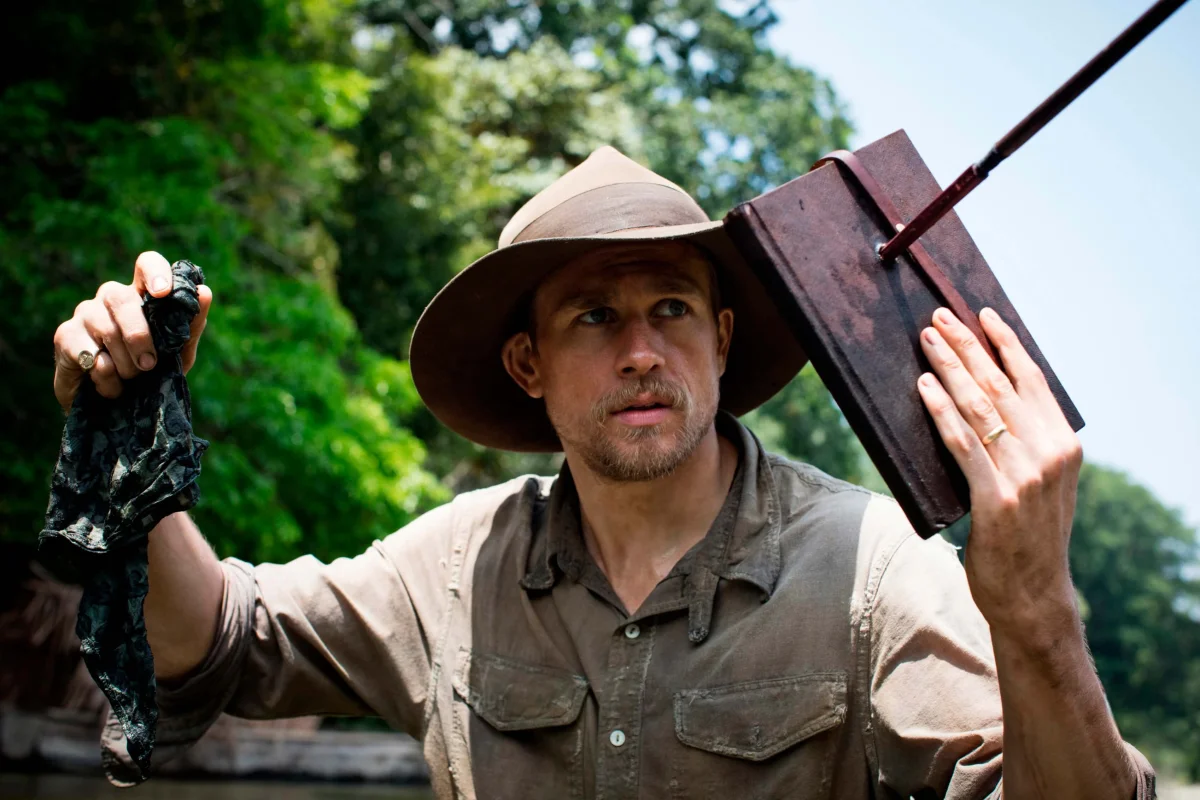
British Colonel Percy Fawcett was not only a famous explorer and surveyor, distinguished by his fearlessness and persistence. He was also known as a romantic who firmly believed that somewhere in the lost corners of South America lay hidden the city of «Z». Fawcett was deeply convinced that he would certainly find yet another piece of evidence for the existence of Atlantis, one of the most ancient civilizations on our planet. Even at the age of 57, Fawcett had not lost his wild youthful imagination. And his rich imagination would once again push him toward a dangerous journey into the depths of Brazil.
The Goal of His Search
Now his goal was a certain mysterious and enigmatic city in the territory of Mato Grosso, which appears on no map in the world. On one of his first journeys through Bolivia and Brazil back at the start of the century, Percy Fawcett had been enchanted by the local inhabitants' tales of its existence. The roar of a waterfall that could be heard from several kilometers away, an extraordinary lake where a statue of a man made of white stone stood, a temple with a disc of crystal – all this was deeply etched into the memory of the impressionable explorer.
In the spring of 1925, Percy Fawcett, together with his elder son Jack and his friend Raleigh Rimell, set off on an expedition to Brazil in search of the city of «Z». The famous explorer was full of hope, and it seemed to him that this time his long-cherished dream would surely come true.
.jpg)
For the young men, the journey into the Brazilian jungle seemed like an easy stroll. Both Jack and Raleigh awaited that historic moment when the three of them alone would reach a fragment of Atlantis. The inexperienced explorers were irritated by the dogs, mules, horses, and two guides from among the local Indians who made up the expedition. Jack wrote to his younger brother that at every stop they drank tea with condensed milk, biscuits, and that so far they saw no difficulties before them.
After the Indians parted with them and they had to travel with no support at all, relying only on their own strength, everything changed at once. Percy Fawcett continued to do his main work: he made notes and coded entries. The latter indicated that he had already fully realized the risk of the undertaking he had begun. Percy Fawcett simply did not want other travelers to follow his route, exposing their lives to deadly danger.
The First Dangers
.jpg)
The former enthusiasm soon faded from the faces of Jack and Raleigh. The impassable thickets, hordes of insects whose bites made their legs swell, poisonous snakes and predators – these difficulties slowed the progress of the expedition. Fawcett himself hoped to reach the waterfall by the city of «Z» by his birthday – August 31. He mentioned his intention in a letter to his wife. Unfortunately, this was the last word from Percy Fawcett. He, together with his elder son and his friend, would disappear forever in the tropical forests of Brazil.
The search for traces of the lost expedition would bring no success. Moreover, every journey to the supposed city of «Z» not infrequently ended in the deaths of people.
Theories of the Disappearance
.jpg)
There are many theories, fantastical and, in our view, sometimes absurd. According to one of them, the travelers were overcome by deadly tropical diseases. Given Percy Fawcett's considerable age and the inexperience and unpreparedness of the young participants for severe ordeals, this assumption is not without grounds. In addition, jaguars – the true masters of the South American jungle – could have killed the weakened travelers.
The Danish explorer Arne Falk-Rønne, who visited Mato Grosso in the 1960s, would later write a book. In it he put forward the theory that the expedition of the British colonel and his companions was attacked by the Kalapalo Indians. Supposedly the bodies of the slain Jack and Raleigh were thrown into a river. Percy Fawcett himself, on account of his age, was buried according to custom.
There was yet another theory connected with the mysterious disappearance of the expedition to the city of «Z». For example, a story circulated for a long time that Percy Fawcett, from the ordeals and illnesses he had endured, lost his memory and became the chief of a tribe of cannibals. The remains of the expedition members were never found.
Just like in a Hitchcock film: flocks of birds have taken over the streets of Mexico - video