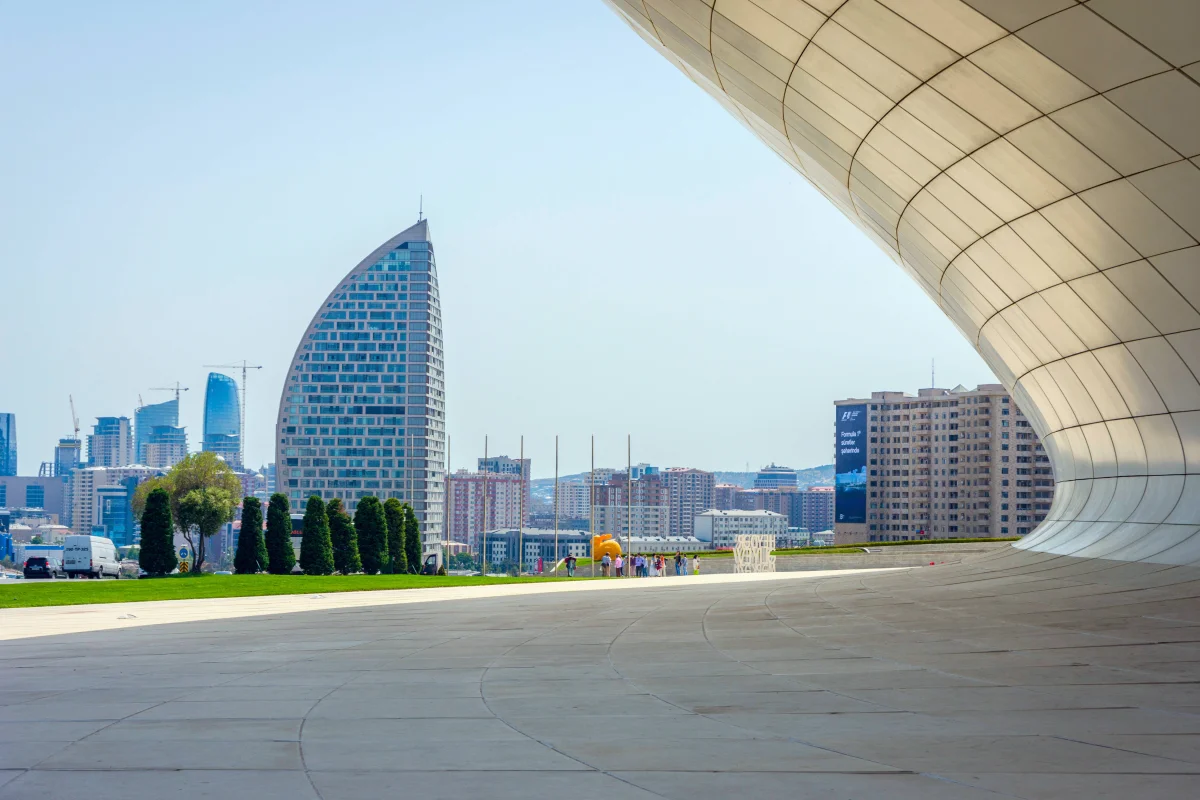
Baku in August: +38°C, scorching stone in the Old City, and a wind that doesn't cool you — it burns. Baku in October: +22°C, golden light on the walls of Icherisheher, and an evening breeze that makes you want to slow down. One city, two entirely different experiences — and the difference comes down to choosing the right month.
Azerbaijan is a country where sightseeing rivals the beach vacation — and sometimes outweighs it. Old Baku, Gobustan with its rock carvings, Sheki with its Khan's Palace, the flames of Yanar Dag — all of it requires time on your feet. Which means the temperature outside matters just as much as what's on the itinerary.
Why Baku Is a City Where the Month Decides Everything
Baku is called the "City of Winds," and that's not a metaphor. Two persistent winds — the khazri (cold, from the north) and the gilavar (warm, from the south) — shape how the city feels every bit as much as the thermometer does.
In summer, the gilavar carries hot, dusty air from the steppes, and at +35°C the wind amplifies discomfort rather than relieving it. In winter, the khazri cuts straight through the waterfront, turning +8°C into something that feels like zero.
Between these extremes lie two short periods when the wind flips from enemy to ally: spring and autumn. It's during these months that Baku becomes the city you see in travel guides.
April–May: The First Perfect Window
Spring arrives in Baku early and confidently. By April, temperatures climb to +16–20°C, most days are sunny, and rain is rare and brief.
April is one of the best months for sightseeing. Icherisheher's stone lanes are warm but not scorching. The Maiden Tower, the Palace of the Shirvanshahs, the caravanserais — all can be explored throughout the day without needing to hide from the heat by noon. Evenings on the waterfront bring +15–17°C and a light Caspian breeze.
In late March comes Novruz, the country's biggest holiday: street bonfires, national cuisine, music, and festivities. Catching these days adds a whole layer of experience unavailable at other times.
May is warmer: +22–26°C. Already noticeably hot by noon, but mornings and evenings stay comfortable. Parks turn green, trees bloom. It's the last month before the summer inferno: temperatures climb past +30°C afterward and don't ease off until October.
September–October: The Second — and Perhaps the Best — Window
If you're choosing one period, many would pick autumn. Here's why.
September in Baku sits at +25–28°C. The heat retreats, but the warmth remains. The Caspian still holds its summer warmth at +23–25°C, letting you combine sightseeing with swimming. The sea breeze is pleasant, not scorching. Evenings are warm, long, and golden. A sunset over Baku Bay in September is one of the best shots you'll bring home from Azerbaijan.
October is a touch cooler: +18–22°C. Ideal for walking. You can wander the city from morning to evening without worrying about heatstroke.
The Flame Towers against an autumn sky, illuminated at dusk, offer a postcard view worth staying until dark for.
Tourist numbers in autumn are lower than spring — Baku hasn't yet become an "autumn hit" among Russian travelers. Accommodation prices run below May levels, no lines at museums, and a table at a waterfront restaurant needs no reservation.
Why Summer Isn't for Sightseeing
July and August in Baku bring +33–38°C at low humidity. That sounds tolerable (dry heat is easier than humid heat), but in practice, walking through the Old City at +36°C is an ordeal.
Stone and asphalt absorb heat, the narrow lanes of Icherisheher trap it with no ventilation, and shade is scarce. By noon, the perceived temperature in direct sun hits +42–45°C. Touring Gobustan (open terrain, cliffs, not a single tree) in that heat isn't sightseeing — it's a forced march between shadows.
Summer Baku works better as an evening format: pool and air conditioning during the day, then the waterfront, restaurants, and Seaside Boulevard after six. But a full sightseeing itinerary in July–August isn't something everyone can handle.
Beyond Baku: When to Visit the Mountains and Sheki
Azerbaijan isn't just Baku. The mountain towns — Sheki, Gabala, Guba, Lahij — run on a different climate schedule, and knowing it expands your sightseeing window.
In summer, when Baku suffocates, the mountains sit at +26–28°C. Sheki, at 700 meters elevation, functions as a natural air conditioner in July: 8–10 degrees cooler than the capital. The Khan's Palace with its shebeke stained glass, the caravanserai, the old lanes — all comfortable to explore even at the height of summer.
Gabala is a mountain resort with a cable car, waterfalls, and walnut forests. Summer temperatures run +25–27°C, while down in Baku it's +36°C. Azerbaijanis themselves head to Gabala to escape the heat.
The optimal strategy for a summer trip: Baku for two days (evening strolls, morning Old City visits before the heat sets in), then three or four days in the mountains (Sheki, Gabala, Lahij), where sightseeing is comfortable at any hour.
In spring and autumn, this split isn't necessary — Baku is pleasant enough on its own. But the mountains during these seasons add autumn colors (October) or spring bloom (April) you won't see in the capital.
Winter: For Those Unbothered by Wind
December through February in Baku brings +8–12°C during the day, +3–5°C at night. By Russian winter standards, that's warm. But the khazri wind at +8°C turns a walk into an ordeal for the unprepared: gusts up to 15–20 m/s, cutting straight through a jacket.
Winter Baku is for those wanting the city without a single tourist. Icherisheher in January is empty, quiet, atmospheric. Museums have no lines. Restaurants offer the best tables. Hotel prices hit their annual low.
The Shahdag ski resort (180 km from Baku) operates from December through March — modern lifts, runs for various skill levels, reliable snow. You can combine two or three days in Baku with two days on the slopes.
Practical Details for a Sightseeing Trip
- No visa needed — Russians enter visa-free for 90 days. A passport is mandatory.
- Flights — direct routes from Moscow (3 hours), St. Petersburg, Yekaterinburg, Novosibirsk, and other cities. Tickets start from 10,000 rubles round-trip outside peak season.
- Language — Russian is understood by nearly everyone; no language barrier. One of Azerbaijan's biggest advantages for Russian tourists.
- Transport — Baku is easy to navigate by metro and taxi (cheap). Outside the city, use a rental car or organized tours. Roads between Baku, Sheki, and Gabala are well-maintained.
- Cuisine is a reason to visit on its own. Saffron-and-chestnut plov, saj, kutabs with greens, lyulya kebab, piti in a clay pot, and tea served in armudu glasses with white cherry jam. The gastronomic program doesn't depend on weather and deserves at least two or three evenings out of seven.
Which Month to Choose
Sightseeing Azerbaijan works from March through November, but two months stand out: April and October. April brings Novruz, blooming flowers, and fresh air after winter. October brings golden light, warm evenings, and that rare balance where you can walk around Baku all day without once thinking about the weather.
September beats both if you want to add swimming to the sightseeing — the Caspian is still warm. Save summer for the mountains: Sheki and Gabala in July run 10 degrees cooler than the capital and ten times calmer. Winter Baku is an acquired taste, but anyone willing to try it gets the entire city to themselves.