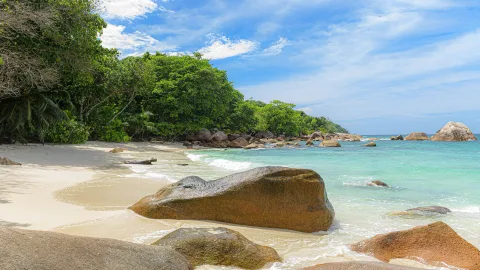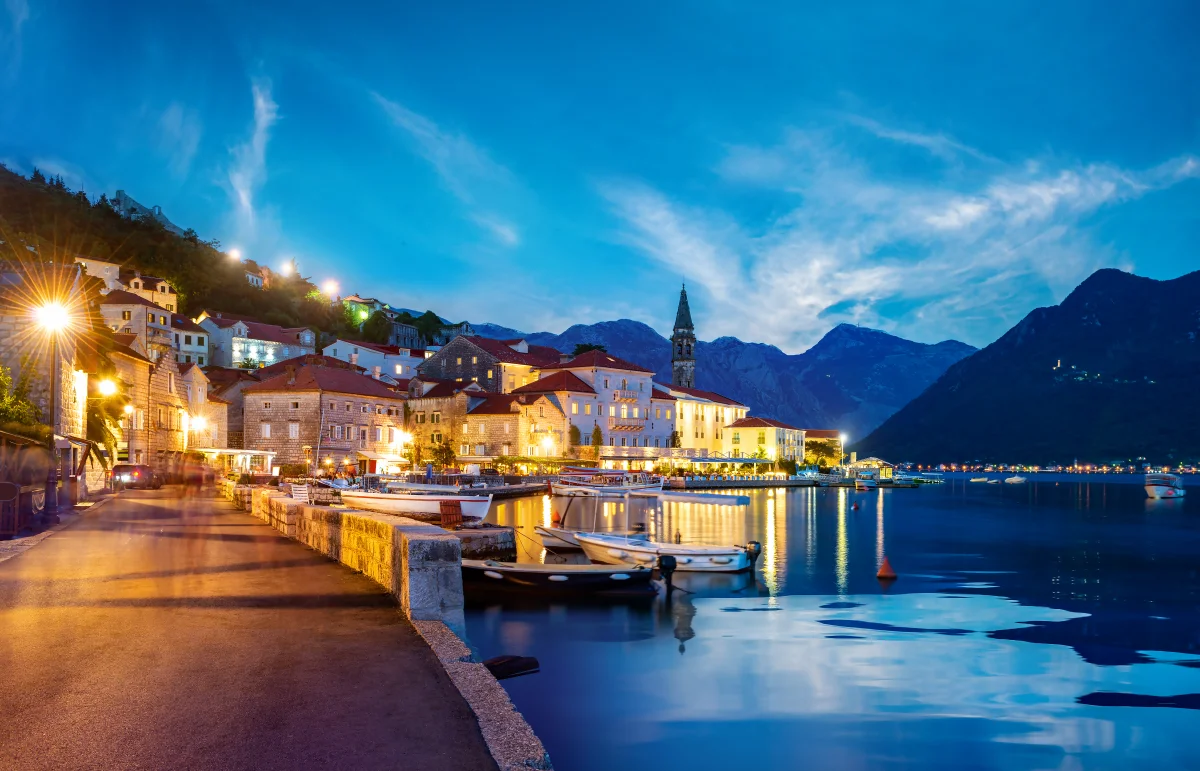
Mid-July, Budva: 93°F, humidity like a sauna, the promenade packed solid, and not an inch of towel space left on Slovenska Beach. The water's warm, but murky, and everywhere around you: traffic jams, honking, and exhaust fumes. Now picture the same spot in September: 81°F, a light breeze, empty loungers, clear water, and rooms costing a third less.
Montenegro is a small country with a short coastline — just 293 km — that draws a disproportionate number of visitors every summer. In July and August, the Budva Riviera is bursting at the seams: hotels full, prices at their peak, beaches overflowing.
None of this means summer is a bad time to go. But it does mean choosing the right month here shapes the quality of your trip as much as choosing the right resort town. Let's break down which months offer the best combination of sea, weather, and comfort.
The Beach Season: Six Months, but Not Equal Ones
Swimming season on the Adriatic runs from mid-May to early October. But within that window are three completely different periods.
Ramping Up (May–mid-June)
Air temperatures at 72–79°F (22–26°C), water at 64–70°F (18–21°C). The sea is still cool: in May, only the hardiest swim; by mid-June, it's workable, though still bracing. In exchange, you get quiet, low prices, and nature at its best — green mountains, oleanders in bloom, fresh air. Ideal for anyone who prioritizes sightseeing over sunbathing.
Peak Season (Late June–August)
Air temperatures at 82–95°F (28–35°C), water at 73–81°F (23–27°C). Hot, crowded, loud. July is one of the hottest months: in the Bay of Kotor, boxed in by mountains, temperatures can climb to 100°F (38°C) with zero wind.
August runs even hotter: the sea reaches its yearly peak (77–81°F / 25–27°C), but at that heat, even the water doesn't refresh you — it feels like warm milk. Prices peak, and beaches overflow.
Velvet Season (September–early October)
Air temperatures at 75–82°F (24–28°C), water at 73–77°F (23–25°C) in the first half of September, dropping to 70–73°F (21–23°C) by month's end. The heat retreats, the crowds leave, and the sea is still warm — it's spent the whole summer accumulating heat and releases it slowly. Prices drop 30–40%. Many locals — and experienced travelers — consider September the best month on the Montenegrin coast.
Five Reasons September Beats July
- Air temperature
In July, it's 86–95°F (30–35°C), with nowhere to hide — the coastline is a narrow strip between mountains and sea, shade is scarce, and the asphalt bakes. In September, it's 77–82°F (25–28°C): warm enough for a tan, without the mugginess. Excursions, walking Kotor's Old Town, climbing the fortress (1,350 steps) — all of it turns from a test of endurance in July into an actual pleasure in September.
- Water temperature
Here's the paradox: the sea in September is only a couple of degrees cooler than in July. July runs 75–77°F (24–25°C); September runs 73–75°F (23–24°C) — a difference the body barely notices. Meanwhile, September's water is clearer: fewer people means less stirred-up sediment and haze.
- Far fewer people
July, and especially August, mark peak season for tourists from Serbia, Bosnia, Russia, and Europe. On Mogren Beach in Budva, you need to claim a spot by 8 a.m. In September, that same beach is half-empty even at midday.
- Prices
An apartment in Budva that runs €70–90 a night in July drops to €40–55 in September. Hotels follow the same pattern. Restaurants and excursions don't get cheaper, but there are no lines.
- Fruit and food
By September, figs, grapes, pomegranates, and persimmons ripen. The markets of Budva and Kotor fill with an abundance that simply isn't there in July. Local wine from the fresh harvest is its own story — small wineries around Podgorica run tastings throughout September.
When July Still Wins
To be fair, July has its own strengths.
- Families with school-age kids. If your child's still in school, the calendar decides for you — July and the first half of August are your only real window.
- The warmest possible sea. If 79–81°F (26–27°C) matters to you specifically — for young kids or anyone who runs cold — that peak falls in late July to early August.
- Nightlife. Budva in July and August is essentially one giant nightclub: bars run until morning, and the promenade fills with music and dancing. By September, the rhythm calms down — a downside for anyone chasing that party scene.
- Festivals. Sea Dance, the major music festival on Jaz Beach, runs in July, as do Budva's summer theater evenings.
Month by Month
May
Air at 68–75°F (20–24°C), water at 64–68°F (18–20°C). Too early for swimming, but ideal for sightseeing. Kotor without the crowds, Perast without a line for the boat trip to Our Lady of the Rocks. The mountains are in bloom, and prices are low. A great month for a sightseeing-focused trip if the beach isn't your priority.
June
Air at 75–82°F (24–28°C), water reaching 70–73°F (21–23°C) by month's end. Swimming season genuinely kicks off. The first half is still calm: beaches open, prices moderate. The second half sees traffic pick up, though nowhere near July's crush. June is one of the best months for combining swimming with sightseeing.
July
Air at 82–95°F (28–35°C), water at 75–79°F (24–26°C). Hot, crowded, expensive. The Bay of Kotor turns stifling — the mountains block any breeze from reaching the coast. The open beaches of the Budva Riviera fare better, but the sun still bears down hard everywhere. Two loungers and an umbrella on Slovenska Beach run €15–20 a day. Free zones are narrow and packed.
August
Air at 84–95°F (29–35°C), water at 77–81°F (25–27°C) — the year's peak. The hottest and busiest month. Budva runs at the edge of its capacity: traffic, noise, crowds. For anyone unfazed by the chaos and chasing the warmest possible water, August works. For everyone else, it's not the best pick.
September
Air at 75–82°F (24–28°C), water at 73–77°F (23–25°C) in the first half, dropping to 70–73°F (21–23°C) by the end. The heat recedes, beaches thin out, and the water grows clearer. Excursions become genuinely comfortable — the winding mountain road above Kotor Bay, a scorching ordeal in July, becomes an enjoyable drive in September. October's rains haven't started yet.
October
Air at 64–72°F (18–22°C), water at 68–72°F (20–22°C) early in the month, dropping to 64–66°F (18–19°C) by the end. The first half is your last real chance to swim. The second half brings the start of rain, falling temperatures, and some restaurants and hotels closing for the season. For strolling nearly-empty towns, it's atmospheric — for a beach trip, it's a gamble.
Visas: Beat the November 1 Deadline
Starting November 1, 2026, Montenegro is introducing a visa requirement for Russian citizens. Until that date, entry remains visa-free for up to 30 days with a foreign passport. After that, a category C visa will be required (a €35 consular fee, processed through VFS Global at eight locations across Russia).
For a September trip, this means one thing: entering before October 31 avoids the visa entirely. All of September and the first half of October fall within the visa-free window — which also happens to be the best-weather stretch of the year. It's hard to imagine a more convenient overlap.
Getting There
There are no direct flights from Russia to Montenegro. The main routes run through Istanbul (Turkish Airlines) or Belgrade (Air Serbia), with total travel time of 5 to 10 hours including a connection. Tivat Airport sits closer to the coast (20 minutes to Budva); Podgorica is further out (1.5 hours), but tickets there are sometimes cheaper.
Round-trip tickets for September start at 35,000 to 55,000 rubles from Moscow. Book 6–8 weeks ahead.
What Else to Know
- Cash. Russian bank cards don't work. The currency is the euro — bring cash or use a card from a bank in a friendly country.
- Car rental. If you want to see anything beyond Budva, a car is essential. The Bay of Kotor, Perast, Sveti Stefan, the mountain road's scenic viewpoints, Jaz Beach — all of it is only accessible by car. Rental starts at €25 a day.
- Registration. You're required to register with the police within 24 hours of entry. Hotels handle this automatically; for private lodging, check with your host.
Montenegro is a country where the month of your trip matters as much as the resort town you pick. July delivers a hot sea and a hot atmosphere — in every sense of the word. September delivers that same sea, minus the heat, minus the crowds, minus the markup — plus clear water, figs at the market, and a quiet you can't buy at any price on the Adriatic in summer.