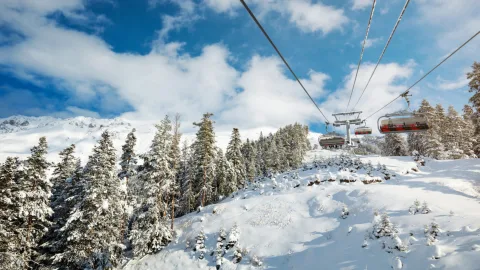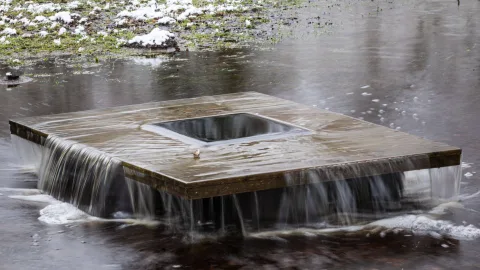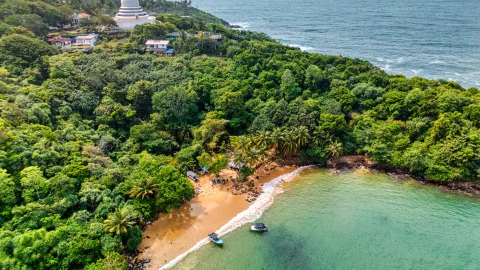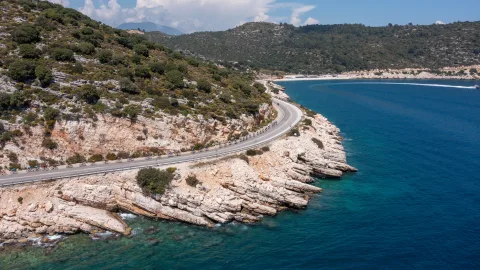
Nalchik is one of those cities you can visit any month and get a different trip every time: blooming orchards and waterfalls in spring, mountain gorges in summer, golden beech forests in autumn, hot springs against snow-capped peaks in winter.
The capital of Kabardino-Balkaria doesn't usually make it into standard "where to go in Russia" roundups, even though it sits in the Caucasus foothills, surrounded by thermal springs, gorges, and waterfalls, with Elbrus just a couple of hours away by car. Its climate, meanwhile, runs noticeably milder than you'd expect from a mountain city: 265 sunny days a year — more than Sochi.
How the Climate Works
Nalchik sits in a foothill basin at 500 meters above sea level, cradled in a semicircle of mountains. The Caucasus range shields the city from northern winds in winter and from suffocating heat in summer — mountain air flows down the slopes and acts as natural ventilation.
The climate is moderately continental, with four distinct seasons:
- Winter is mild, with an average January temperature around 28°F (–2°C). Snow falls, but doesn't stick around long. Severe frost (below 5°F) is rare.
- Spring arrives early and moves fast — by March, air already warms to 50°F, and by April, to 59–64°F.
- Summer is warm but not exhausting: average July–August temperatures run 77–82°F (25–28°C). Heat above 95°F does happen, but mountain winds make it tolerable.
- Autumn is long and sunny, with warmth holding through the end of October.
The rainiest months are May and June (13–14 days with precipitation). The driest are January and February (1–2 days). Autumn and early winter see almost no rain.
Spring: Waterfalls at Full Force
If the Chegem Waterfalls are the goal, the best time is April–May. In winter, the waterfalls partially freeze (which is beautiful in its own way, but a different kind of scenery), while by spring, meltwater fills them to maximum capacity: streams burst from the rock with enough force that fine spray hangs suspended in the air for dozens of meters.
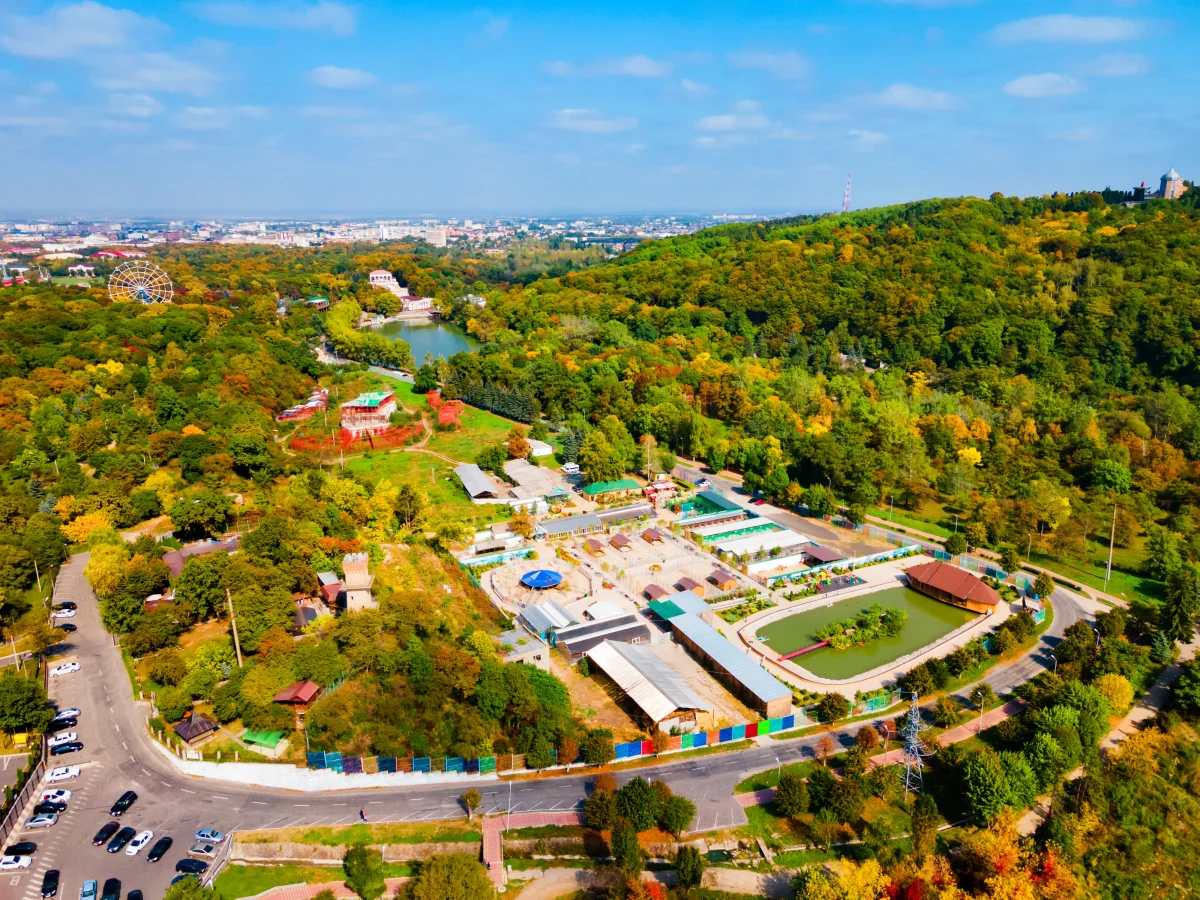
By late April, the valley around Nalchik fills with blossoming orchards — apricot, cherry, apple. Temperatures run 59–68°F (15–20°C) — ideal for long walks through Atazhukin Park, one of the largest city parks in southern Russia: 250 hectares of old trees, tree-lined paths, lakes, and terrenkur health trails.
Spring's downside is rain: May sees more precipitation than any other month. But it's generally brief and doesn't disrupt a full day's plans.
Summer: Mountains and Gorges
In summer, day trips into the mountains from Nalchik become genuinely convenient — this is the main reason to visit specifically in June–August.
- The Bezengi Gorge, sometimes called the "Little Himalaya of the Caucasus," offers a horizon-spanning wall of 5,000-meter peaks, alpine meadows, and glaciers. The drive from Nalchik takes about 2.5 hours each way. The best window is July–August, once the mountain passes are clear of snow and trails have dried out.
- Upper Balkaria offers medieval defensive towers, the Cherek Gorge with a road carved directly into sheer rock, and the Blue Lake (Tsyrik-Kel) — a karst sinkhole over 250 meters deep, with water holding a constant temperature of 48°F (9°C). The lake stays equally turquoise in any season, but summer makes it easier to reach.
- The Elbrus region sits about 2 hours from Nalchik to the Azau glade. In summer, the cable car climbs to 3,847 meters, opening up a panorama of the entire Main Caucasus Ridge.
The heat barely registers in the mountains — at 2,000 meters, temperatures run 10–12 degrees cooler than in the city.
Autumn: The Best Time for Sightseeing
September and the first half of October are arguably Nalchik's most comfortable weeks. Air temperatures run 64–75°F (18–24°C), rain is nearly absent, and sunny days outnumber any other season (up to 18–20 a month).
The beech and hornbeam forests on the slopes surrounding the city turn gold and crimson, staying that way through the end of October. For anyone chasing Caucasus golden autumn without the crowds, Nalchik is one of the best spots: it lacks the tourist flow that defines Arkhyz or Dombay, while the scenery holds up just as well.
Autumn is exactly the season to walk the terrenkur trails of Atazhukin Park — health routes with elevation changes, laid out back in Soviet times when Nalchik served as one of the country's leading balneological resorts.
Winter: Thermal Springs
In winter, mountain excursions become limited — passes close, trails fill with snow, and daylight hours shrink. But this is exactly when the thermal springs perform best: the contrast between freezing air and hot water is precisely what draws people here from December through February.
- Aushiger, a village 25 kilometers from Nalchik, features open-air pools filled with thermal water at 104–122°F (40–50°C). The water is mineral-rich, carries a sulfurous smell, and is considered therapeutic. Swimming is possible year-round, but in winter, with steam rising off the pool against a backdrop of snow-covered mountains, the experience turns into something genuinely special.
- Geduko is another thermal complex near Nalchik, less well-known, with similar water and fewer visitors.
Within Nalchik itself, sanatoriums offer mineral baths and mud therapy — infrastructure inherited from the Soviet-era resort days, and noticeably updated in recent years.
Getting There and What to Know
The nearest airport is Mineralnye Vody, 110 kilometers from Nalchik — about 1.5 hours by car or bus. Direct flights to Nalchik itself from Moscow are limited, but several airlines fly to Mineralnye Vody daily.
A practical note: it's cold in the mountains even in summer — if Elbrus or Bezengi are on the itinerary, a warm jacket and waterproof shoes are essential. In spring and autumn, a rain jacket comes in handy. And for a winter trip to the thermal springs, bring a swimsuit, a towel, and a change of shoes — Aushiger has some infrastructure, but it's minimal, and bringing your own gear is far more convenient.