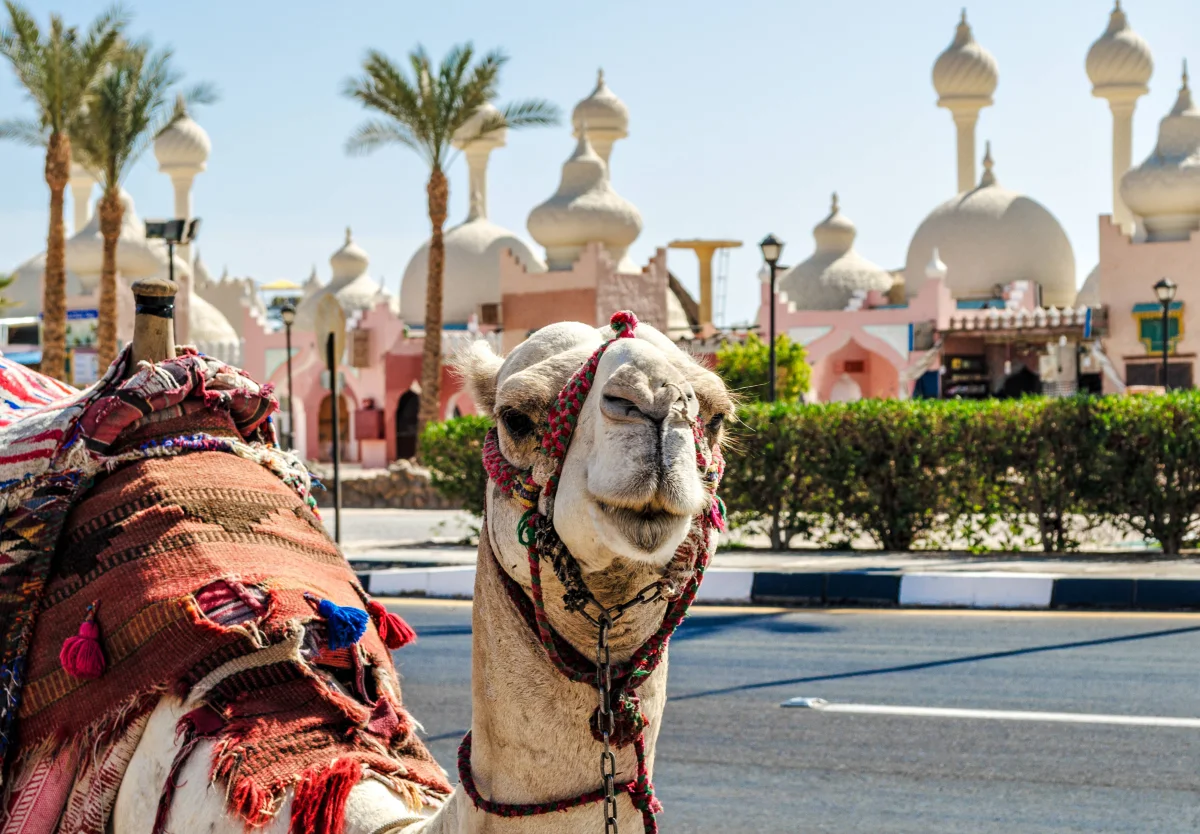
Sharm el-Sheikh is one of the few resorts where you can swim 365 days a year. The Red Sea doesn't drop below +21°C even in January. But between a winter +21°C with wind after sunset and an autumn +28°C in dead calm, the gap in how it actually feels is enormous.
The resort sits at the southern tip of the Sinai Peninsula, surrounded by mountains. Those mountains are Sharm's key climatic advantage over Hurghada: they shield the coast from wind, creating the effect of a protected bay. In winter, it feels 3–4 degrees warmer here than on Hurghada's exposed shore.
October and November: The Two Best Months
If you had to pick the perfect time, most travelers and local guides would give the same answer: October.
October. Air at +30–33°C, water at +27–28°C. Summer heat has departed, winds are minimal, the sea is calm and crystal clear. Diving and snorkeling are in the best conditions of the entire year: underwater visibility reaches 30 meters. The coral reefs of Ras Mohammed and the Strait of Tiran are visible down to the finest detail.
November. Slightly cooler — air +27–29°C, water +25–27°C. Still comfortable, winds remain light. High season begins and hotels start filling up, but the December frenzy is still far off. For anyone wanting warmth without crowds, it's an excellent window.
How Spring Weather Behaves
March. Air warms to +24–27°C, water +22–23°C. Swimming is possible, but the sea has a bite — especially in the first half of the month. Onshore conditions are pleasant, and for excursions into the desert or to St. Catherine's Monastery, the timing is ideal.
April. Noticeably warmer — +28–30°C, water +23–24°C. But April is when the khamsin season begins — a scorching wind from the desert. Sandstorms can last a day or two: the sky turns yellow, visibility drops, and sand gets everywhere.
The mountains protect Sharm better than Hurghada, but they can't fully block the khamsin.
May. Heat ramps up — +32–35°C, water +24–26°C. The khamsin retreats, winds die down. By the ratio of weather to price, it's one of the best months: summer warmth, but hotel rates haven't hit summer levels yet.
Why Summer in Sharm Is an Acquired Taste
June through September brings extreme heat. Air at +35–38°C, spiking above +40°C on some days. Water at +27–29°C — warm, but no longer refreshing. Air conditioning is the only salvation from 11 a.m. to 5 p.m.
Summer's upside: rock-bottom prices and empty reefs. Divers willing to go in early morning get the underwater world to themselves. Beaches are sparsely populated, and hotels offer discounts of up to 50%.
But spending time on the beach during the day is physically grueling, and desert excursions at +45°C are a test even for the prepared.
September is transitional. The heat starts retreating, and by month's end the air drops to +32–33°C. The sea is at its annual peak — +29°C. Many consider the second half of September the start of the velvet season.
Winter in Sharm — and Why It Works
December through February is high season by occupancy. Russians, Germans, and Brits fly in en masse for winter sun. And Sharm delivers — but with caveats.
December. Air +22–25°C during the day, +12–14°C at night. Water +23–24°C — warmer than the air, and swimming feels great. The issue is evening. After sunset, the temperature drops sharply, and going out for dinner in shorts is no longer comfortable. Warm clothing is a must.
January–February. The coolest months. Air +20–22°C, nights +10–12°C. Water +21–22°C. Wind does occur, but Sharm is shielded by mountains, and compared to Hurghada it's significantly calmer.
For a winter beach vacation, it's the best choice in Egypt.
Winter Sharm follows a "swimming before lunch, excursions and poolside after" format. Hotels with heated pools are a sensible safeguard for anyone who finds +21°C water a bit chilly.
Sharm's Greatest Asset: The Reefs
Regardless of season, Sharm el-Sheikh remains one of the world's premier destinations for snorkeling and diving. Coral reefs begin right at the shoreline — no boat needed, just a mask and a snorkel.
Best underwater conditions by season:
- October–November — maximum clarity, warm water, flat calm.
March–May — visibility slightly lower, but the water is already comfortable and there are fewer people.
June–August — good clarity, but the heat onshore limits dive time.
December–February — cooler water, a 3 mm wetsuit is needed, but the reefs are as magnificent as ever.
Which Month to Choose
Want the perfect balance — October. Want warmth in winter — December or November. Want it cheap and can handle the heat — June–August. Want to avoid wind and khamsin — October–November or May. And the golden rule for Sharm: there's no truly bad month here — just months you need to pack correctly for.