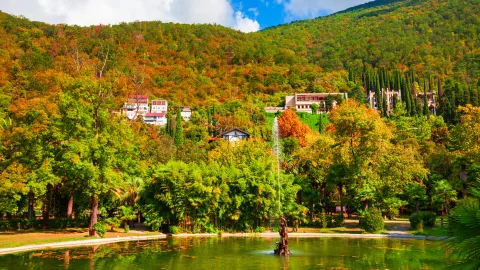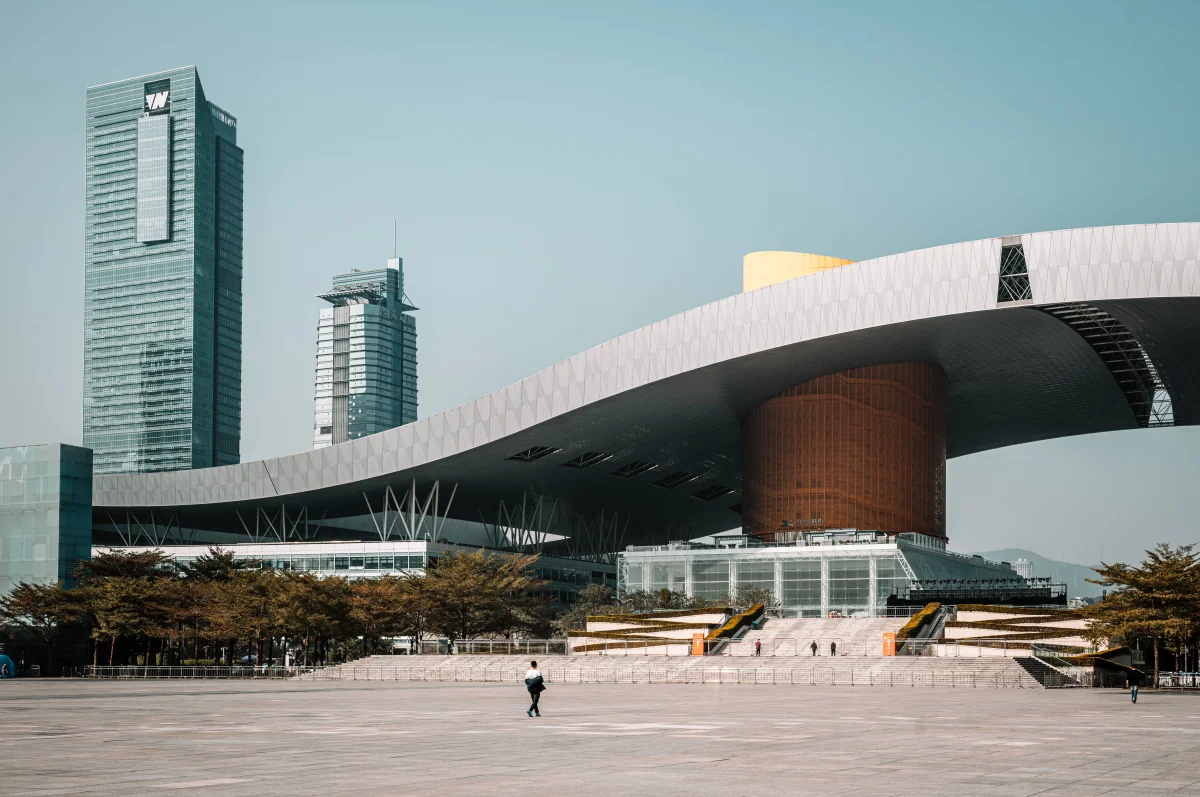
Shenzhen — China's tech capital — gets nearly 2,000 mm of rainfall a year. That's more than Sochi. Most of it falls in just three summer months, and from July through September, typhoons pile on top of the downpours. But shift your trip to autumn, and the same city greets you with dry, transparent air and +22°C.
Shenzhen sits in southern China, in Guangdong province, right across the border from Hong Kong. The climate is humid subtropical, with hot wet summers and mild dry winters. The city is relatively young — not yet 50 years old — but already ranks among the world's ten largest metropolises.
People come here for technology, electronics, futuristic architecture, and as a "gateway" to China for those flying in via Hong Kong.
Rainy Season: April Through September
Rain begins in April — still infrequent and brief. By May, it becomes more regular: 170–200 mm per month. From June through August, it peaks: 300–340 mm monthly, with nearly daily downpours, often at tropical intensity. An hour can dump as much water as Moscow gets in a month.
The rainfall pattern mirrors Southeast Asia's: mornings often clear, clouds gathering by noon, a heavy downpour for one to three hours in the afternoon, then clearing again.
Unlike, say, Bangkok, Shenzhen's rains can be prolonged — sometimes lasting all day, especially in June, when the city falls under the "plum rain" (meiyu) belt.
Add humidity — 80–90% at +30–33°C — and the perceived temperature hits +38–40°C. Clothes soak through with sweat within minutes, glasses fog up stepping out of an air-conditioned building, and cameras get coated in condensation.
Typhoons: July Through September
Typhoons are the second reason to avoid summer. The South China coast is one of the most typhoon-prone regions in the world. Shenzhen takes direct hits or glancing blows several times per season.
Under a typhoon warning (Signal 8 or above), the city essentially shuts down: offices, malls, the metro, and buses all close. Flights and trains get canceled. Being stuck in a hotel for a day or two is a realistic scenario to prepare for.
Even without a direct hit, a typhoon several hundred kilometers away brings heavy rain, gusting wind, and waves — if you'd planned on the beach, that's off the table.
October–December: The Best Time to Visit
Autumn in Shenzhen is a sharp contrast to summer. The monsoon departs, skies clear, and humidity drops to 55–65%. The city exhales.
October is transitional. The first half may still see rain and residual typhoon influence. By the second half, clear, warm, dry weather settles in: +24–28°C during the day, +20°C at night. Comfortable for walking, shopping, and sightseeing.
November — many consider it the best month. Air at +20–25°C, almost no rain, high transparent sky. Ideal conditions for strolling along Shenzhen Bay, visiting tech parks, the Huaqiangbei electronics market, and the parks.
December — a bit cooler: +17–22°C during the day, +12–15°C at night. Still dry and sunny. For a Russian, it's warm autumn weather; for locals, it's winter — Shenzhen residents pull out down jackets at +15°C.
Winter: Mild, but With Caveats
January and February are the coolest months: +15–20°C during the day, +10–13°C at night. Compared to Beijing or Shanghai, that's warm. But by local standards, it's uncomfortable — and the main reason is no heating.
Like everywhere south of the Huai River, Shenzhen has no central heating. Hotels rely on air conditioners in heating mode; restaurants and shops don't always have that option.
Rain is scarce in winter (30–40 mm per month), but cold fronts from the north occasionally drop temperatures to +8–10°C for a few days. Sightseeing requires a jacket and closed shoes.
Winter Shenzhen suits travelers coming for shopping and technology, not weather. Electronics markets, showrooms, factory outlets — everything operates year-round, and winter occupancy is lower.
Spring: Beautiful, but Wet
March is the ideal spring month. Temperature climbs to +20–23°C, rain is still infrequent, trees bloom. Comfortable for sightseeing; too early for the beach (water at +19–20°C).
April–May marks the start of rainy season. Rainfall runs 170–250 mm per month, humidity climbs, mugginess builds. You can still visit — but an umbrella, raincoat, and waterproof case for your electronics become essential.
Beach Vacations: When and Where
Shenzhen isn't a beach resort, but decent beaches do exist here. Dajiawan, Xiaomeisha, Nan'ao — sandy coves with clean water, surrounded by greenery. Water warms to swimmable +26–27°C from May through November, but the best window is September–October: the sea is still warm, and both the rain and typhoon waves have subsided.
In summer, swimming is possible, but only between downpours, and with an eye on typhoon warnings. In winter, water cools to +18–20°C — a bit chilly.
What to Consider When Planning
The visa-free regime for Russian citizens runs through December 31, 2027 (up to 30 days). Verify current status before buying tickets.
From Hong Kong to Shenzhen is 15 minutes by metro through the Lo Wu border crossing. Many travelers combine both cities in one trip. Direct flights from Moscow to Shenzhen are scarce — it's more convenient to fly via Beijing, Shanghai, or Hong Kong.
National holidays are a factor to plan around. Chinese New Year (late January–early February) and Golden Week (October 1–7) are periods when 1.4 billion people travel simultaneously. Transport is packed, hotels get pricier, and attractions are besieged. Best to avoid these dates.
Which Month to Choose
- Want ideal weather — November. Dry, warm, comfortable for everything from walking to the beach.
- Want warmth without rain — late October or December. A bit cooler than November, but just as sunny.
- Want to combine it with Hong Kong — November–December. Both cities in their best form, and the border crossing takes just 15 minutes.
- Want the beach — September or early October. Water still warm, typhoons receding.
The least favorable period is June through August. Downpours, mugginess, typhoons. The tech parks and electronics markets aren't going anywhere, but heatstroke at +33°C with 90% humidity isn't the souvenir you want to bring home from China.