South Korea has four sharply defined seasons, and each one transforms the country beyond recognition: from pink clouds of cherry blossoms in April to crimson maples in October, from monsoon downpours in July to dry, biting frost in January. Get the month wrong and you'll see an entirely different Korea.
The climate is monsoon-driven, with dramatic contrasts: summer brings +35°C and 80% humidity, winter drops to –10°C with an icy wind. But it's in the shoulder seasons — spring and autumn — that Korea shows its best face.
Spring: Cherry Blossoms and Festivals
April is one of the finest months. Cherry blossom season begins in the south (Jeju, Busan) in late March and reaches Seoul by mid-April. The city drowns in white-and-pink clouds, parks fill with people carrying blankets and food — Koreans throw picnics under the blossoming trees, much like the Japanese during hanami.
Temperatures are comfortable: +15–20°C during the day, +7–10°C at night. Rain is infrequent, sunshine is plentiful. But cherry blossoms have a catch — they hold their peak for just a few days, and a sudden cold snap can shift the dates by a week and a half. It's best to plan flexibly, with a 2–3 day buffer.
May is warmer and more stable. The blossoms are gone, but everything is green and fresh. Daytime highs of +20–23°C, plenty of outdoor festivals. An excellent window for city sightseeing and trips to national parks.
Summer: Sea, Rain, and Swelter
Summer in Korea requires an honest warning. From late June through mid-July, the monsoon season — known as "changma" — is in full force. Rain pours for days on end, humidity goes through the roof, and an umbrella becomes your most important accessory. August is the hottest month: +30–35°C with suffocating moisture.
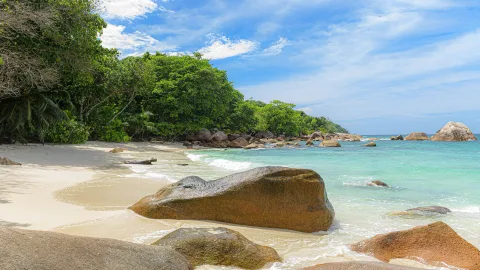
But summer is also when the sea warms up. Coastal water reaches +24–26°C, and Jeju Island — Korea's "Hawaii" — opens for proper beach vacations. Busan with its Haeundae Beach, the east coast with its long sandy stretches — it all runs from June through September.
Summer suits those who are heading for the beach and willing to tolerate the rain; want to catch summer festivals like the Mud Festival in Boryeong or the sea festival in Busan; or are planning to combine Korea with Japan or Taiwan, where it's equally hot at the same time.
Autumn: The Best Season for a First Visit
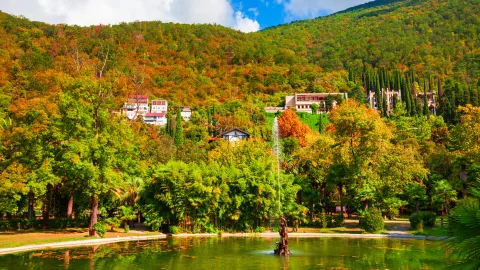
If you could pick just one month, make it October. Many experienced travelers call it the perfect choice. Dry, clear, +15–20°C during the day. The mountains blaze in crimson and gold — this is "danpung," the Korean equivalent of Japan's momiji.
Unlike cherry blossoms, autumn foliage is stretched out over time — colors appear in the mountains in early October and hold in Seoul and southern cities through early November. Missing the window is much harder. Especially stunning at this time:
- Seoraksan National Park — one of the most spectacular mountain hiking routes in all of Asia.
- Nami Island — its sequoia-lined avenue became famous after the K-drama "Winter Sonata."
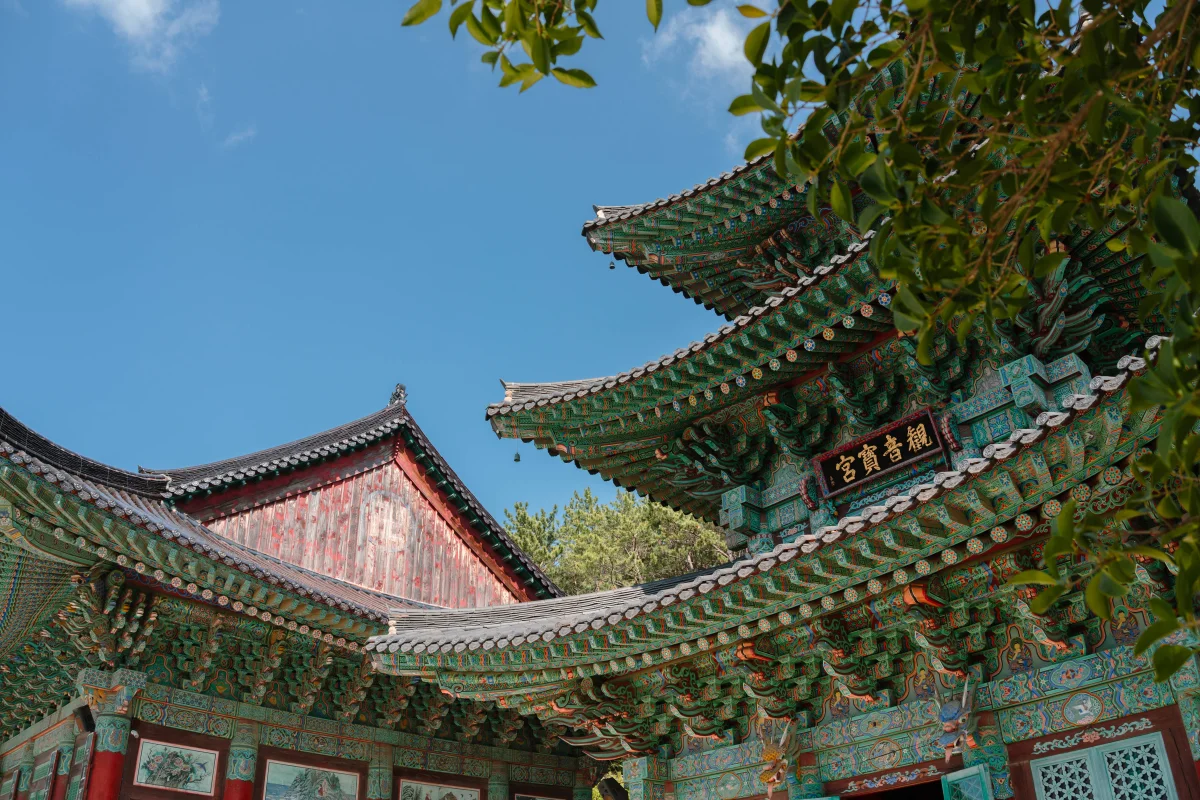
- Seoul's palaces — Gyeongbokgung, Changdeokgung — maples framing tiled rooftops.
- Gyeongju — the ancient capital, with temples and burial mounds set amid autumn forest.
September is a transitional month. The heat fades, but humidity is still noticeable. By the second half, conditions turn comfortable. November is cool, but in its first half you can still catch foliage in the cities.
Winter: For K-Culture Fans and Skiers
Korean winter is dry, cold, and windy. In Seoul, –5 to –10°C, snow, and a piercing wind. Not great for strolling, but winter has its own trump cards.
Tourist numbers hit their minimum, and hotels are cheaper. It's the best time for shopping, museums, cafés, and Korean street food — tteok, hotteok, and ramyeon warm you up better than any down jacket. Ski resorts Yongpyong and High1 operate from December through March.
Jeju in winter is its own story. The island sits at +5–10°C, snow is rare, and the mandarin groves are in full bloom.
When Not to Go
Late June through July — monsoon rains. Plans fall apart, downpours are heavy, and getting around is miserable.
Chuseok (Korean Thanksgiving, usually September–October) and Lunar New Year (January–February) — the country shuts down for three days: shops, restaurants, and museums close, trains and flights are packed, and prices peak. The dates shift each year — check in advance.
March — deceptively spring-like, but the wind is still cold, and clouds of yellow dust from China blanket the peninsula.
Which Season for Which Type of Trip
Sightseeing and palaces — April or October. Beach vacation — July–August, Jeju or Busan. K-pop, shopping, and café culture — November through February, when it's cheaper and quieter. Nature and trekking — October, national parks.
A first trip where you want a sure thing — the second half of October. Dry, beautiful, comfortable, and nearly impossible to get the timing wrong.