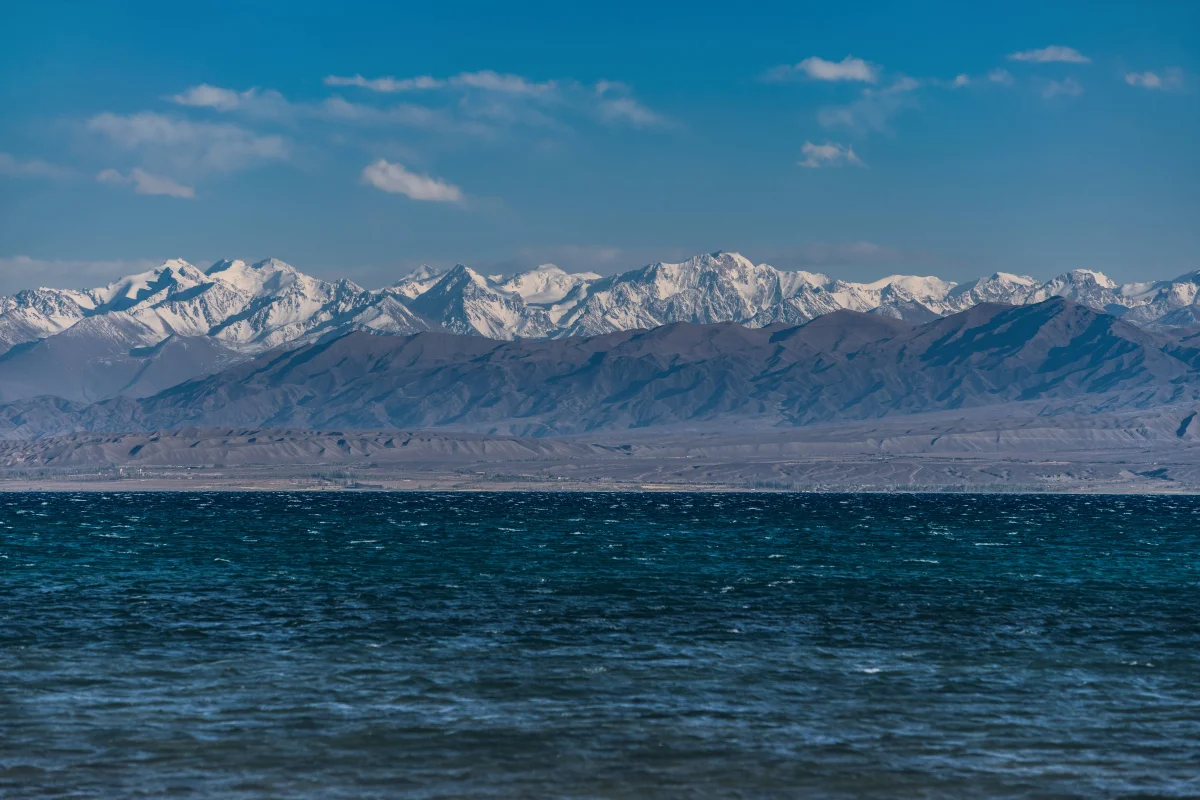
Issyk-Kul is a lake of contradictions. Its name translates from Kyrgyz as "hot lake" — it never freezes, even in winter — yet swimming season here lasts just eight or nine weeks, and the water rarely warms above +22°C. But those who've been once aren't deterred by the numbers on a thermometer.
The lake sits at 1,608 meters elevation in a mountain basin of the Tian Shan range, in Kyrgyzstan. It's 182 kilometers long and 60 kilometers wide — one of the largest mountain lakes in the world and the second most transparent after Baikal.
The water is slightly brackish (around 6‰), mountains rise on every side, and the air carries the scent of conifers and alpine grasses. For residents of Kazakhstan and Central Asia, it's the flagship beach destination. For Russians, it's a destination that's only just starting to gain popularity.
Why the Water Warms Slowly
Three factors work against the heat.
- Altitude
For every kilometer of elevation gain, air temperature drops 6–7 degrees. At Issyk-Kul's level, that means when Bishkek (760 m) hits +30°C, the lake sits at +24–25°C. Less heat in the air means slower warming of the water.
- Depth
Average depth is 280 meters, maximum 668. That's a colossal volume of water impossible to heat during a short mountain summer. The sun warms the surface layer, but below it stays a steady +4°C year-round.
- Mountain rivers
More than 80 rivers and streams flow into Issyk-Kul, fed by glaciers and snowfields. Each carries cold water that mixes into the coastal layer. Near river mouths, temperatures run 3–5 degrees lower than at the main beaches.
When Swimming Season Starts
Officially, the season begins in late June, when water in shallow bays reaches +18°C. But comfortable swimming comes later.
In June, water sits at +15–18°C. Few people go in, and those who do get out quickly. Air at +22–25°C, bright sunshine — sunbathing is pleasant, but after wading in, you'll want your towel back. On the upside, beaches are half-empty, accommodation prices are low, and the mountains are green after spring rains.
By mid-July comes the turning point. Coastal water rises to +19–22°C, reaching +23°C in the shallow bays of the northern shore. This is the peak to aim for. Air at +25–28°C, with more than twenty sunny days in the month.
August is the warmest month for the water: +20–23°C on average, hitting +24°C in bays on select days. The lake has stored its maximum warmth, nights are still mild, and swimming works from morning to evening — though "evening" arrives early at 1,600 meters: by seven o'clock, a chill sets in.
By mid-September, it drops to +16–18°C, and the season essentially closes. You can still sunbathe on the shore, but the water is for the hardy only.
The real window of comfortable swimming: mid-July through late August, roughly six to seven weeks.
North Shore or South Shore: A Fundamental Difference
Issyk-Kul is enormous, and its two shores function like two different resorts.
The northern shore is the main resort zone. It's home to Cholpon-Ata — the unofficial capital of lakeside vacationing, with dozens of guesthouses, resorts, restaurants, and equipped beaches.
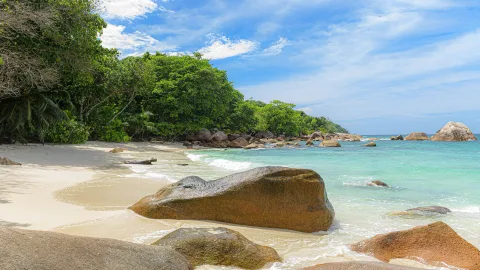
Gentle entry into the water, sandy and fine-pebble beaches, developed infrastructure. Water warms a bit better here than in the south — the shallows are wider and wind protection better.
Nearby: Bosteri, Sary-Oy, Tamga, Balykchy. Each town has its own character, but the general formula holds: beach + mountains + Soviet-era resort legacy, some of it renovated, some still waiting.
The southern shore is quieter, cheaper, and wilder. Infrastructure is more modest, but nature is more dramatic. The Barskoon and Jeti-Ögüz ("Seven Bulls Rocks") gorges are among the most beautiful in the Tian Shan. Water here tends to run cooler — mountain rivers on the southern slope carry glacial meltwater straight into the lake.
For a first trip, choose the northern shore. For those who've been and want a different Issyk-Kul, the southern shore.
What Tourists Don't Expect
Issyk-Kul isn't Turkey or Sochi. A few things worth preparing for in advance.
The sun burns faster than you'd expect. At 1,600 meters, UV radiation runs 20% more intense than at sea level. Water reflects the rays, and mountain wind masks how much your skin is overheating. Sunburn can happen in 20 minutes — even on a cloudy day, since clouds at this altitude don't block UV. SPF 50 is non-negotiable.
Evenings turn cool. +27°C during the day, dropping to +14–16°C by nine in the evening. The swing is sharp. A light jacket or fleece for the evening is essential luggage. Nights can hit +10°C, and sleeping with an open window gets cold.
Wind. Issyk-Kul is an open mountain basin, and wind blows frequently — sometimes strong enough to raise meter-high waves. Beach umbrellas take flight, so do inflatable mattresses. On windy days, swimming can be uncomfortable even in warm water.
The water isn't always warm even at peak season. Wind mixes the warmed surface layer with colder water below, and temperature can swing 3–4 degrees within a single day. +22°C and calm in the morning. Wind picks up by noon — already +18°C. Calms down by evening — back to +20°C.
Getting There
The nearest international airport is Bishkek (Manas). Direct flights from Moscow take roughly 4 hours. From Bishkek to Cholpon-Ata is 260 km — four to five hours by car or shared minibus. The route runs through the Boom Gorge, scenic and well-paved.
From Almaty (Kazakhstan), it's 350 km, crossing the Kazakh-Kyrgyz border (the queue can take anywhere from 30 minutes to several hours at peak season). Many Kazakh tourists drive to Issyk-Kul themselves — it's the nearest major body of water for residents of southern Kazakhstan.
No visa needed for Russians — visa-free entry for up to 60 days. Language: Kyrgyz and Russian (Russian is understood by nearly everyone).
Issyk-Kul vs. Baikal: An Inevitable Comparison
Both are mountain lakes, deep, transparent, and cold. But the differences are substantial.
Issyk-Kul is 10–12 degrees warmer than Baikal in the open water: +20–23°C versus +7–9°C. Baikal's shallow bays do warm to a similar +20–24°C, but the main body of water stays ice-cold. Issyk-Kul warms more evenly — the gap between shore and center is smaller.
Infrastructure at Issyk-Kul is more developed: resorts, equipped beaches, cafés, rentals. Baikal leans toward wild, unequipped travel. But Baikal is larger, deeper, and — if you can call it that — more powerful in its energy.
For a beach vacation, Issyk-Kul is unambiguously more comfortable. For the sheer scale of nature, Baikal is unmatched.
Which Month to Choose
- Want to swim every day — the second half of July or the first half of August. Water at its peak, maximum sunshine, rain rare.
- Want quiet and low prices — June. The water is cool, but beaches are empty, mountains green, and accommodation prices at their lowest.
- Want to combine beach and mountains — August. Warm water, plus enough energy left over for day trips into the Barskoon and Jeti-Ögüz gorges.
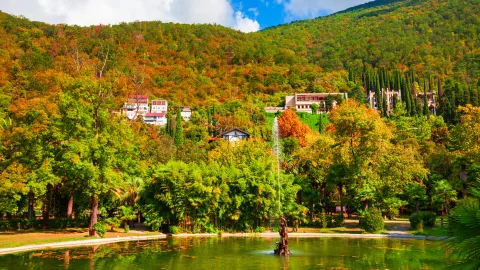
- Want mountains without the beach — September. Golden autumn in the Tian Shan, empty trails, crystal-clear air. Swimming is an acquired taste, but the scenery is worth freezing for.
Above all: don't expect Turkish +28°C from Issyk-Kul. This is a mountain lake at 1.5 kilometers' elevation, and +22°C isn't a compromise — it's the maximum nature can offer here. But in exchange, the surrounding mountains, crystal-clear water, and air that makes you dizzy with its purity — that's something no warm sea can give you.