The Maldives is a destination where the price gap between the "right" and "wrong" month can hit 100%. Meanwhile, air and water temperatures differ by only a couple of degrees, and rain during the wet season most often falls at night, while you're asleep.
The archipelago of 1,200 islands sits on the equator in the Indian Ocean. The climate is tropical, with no winter in the conventional sense: year-round air at +28–32°C, water at +26–29°C. The seasons differ not in temperature but in rainfall, wind, and — most importantly — price.
Dry Season: November Through April
The northeast "iruvai" monsoon brings dry air to the islands. Rain is scarce, the sea is calm, and underwater visibility reaches 30 meters. This is high season: hotels fill up, prices peak, and booking needs to happen months in advance.
- November
A transitional month. Rain still occurs — a holdover from the departing monsoon — but by mid-month, weather stabilizes. Prices are already climbing but haven't hit their peak. A good option for anyone wanting dry season without the December surcharge.
- December–February
The height of high season. Clear skies, flat calm, ideal conditions for snorkeling and diving. But prices run 50–100% above summer rates. Christmas, New Year's, and Chinese New Year pack the islands to capacity. These dates need booking 6–8 months ahead, and popular resorts a full year out.
- March–April
Heat intensifies — up to +33°C. The sea remains calm, rain minimal. March opens surf season — small waves on the southern atolls. Prices start easing after the February peak. April is the last month of dry season and one of the best deals available: the weather is still excellent, but costs are already sliding down.
Wet Season: May Through October
The southwest "hulhangu" monsoon brings moisture, wind, and swells. It sounds alarming — in practice, it's nowhere near as bad.
May. A transitional month. The first rains arrive, but they're still brief — 20–30 minutes, usually in the evening or overnight. Between downpours: sunshine. The sea starts getting choppy, but sheltered atolls stay calm. Prices drop 30–40%. For anyone undaunted by a half-hour rain shower, this marks the start of a great-value season.
June–August. The height of wet season. Rain is more frequent and longer, cloud cover higher, waves build on outer reefs. But the temperature stays at +28–30°C, and there's plenty of sunshine for tanning. Rain in the Maldives isn't a Moscow drizzle that lasts all day. It's a tropical downpour that hits, ends, and leaves no trace half an hour later.
The biggest bonus of wet season is the underwater world. The plankton that the monsoon brings attracts manta rays and whale sharks. For divers, it's the event of the year: encountering a six-meter whale shark at the reef is one of those experiences people keep coming back to the Maldives for. In dry season, the odds of such an encounter are significantly lower.
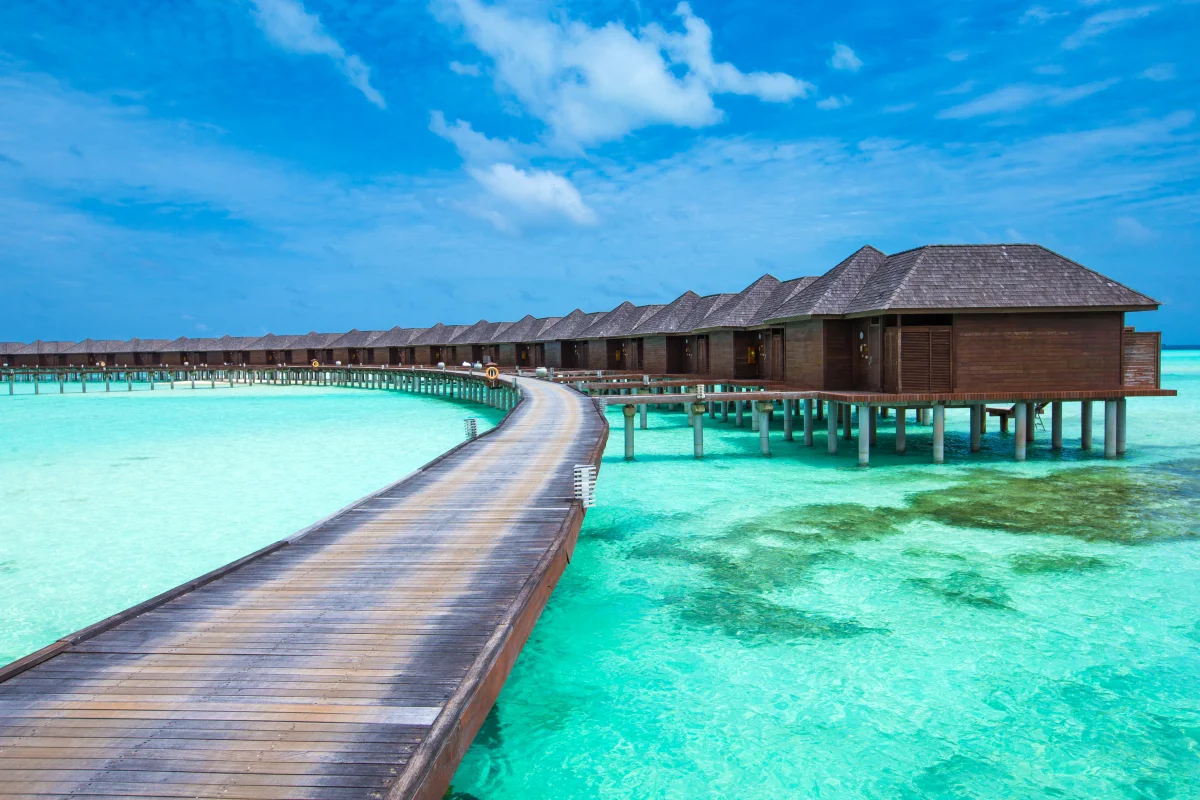
September–October. The wettest months — more rain, and overcast days can exceed half the month. But prices hit their absolute floor. Overwater villas that go for $1,500 a night in January can be found for $500–700 in September. There's real risk, but the savings are substantial.
Are Peak Months Worth the Extra Cost?
It depends on what you're after.
Paying extra makes sense if:
- This is your first trip and you want the guaranteed postcard image — turquoise water, flat calm, cloudless sky.
- You're going for diving and snorkeling in ideal conditions — maximum visibility, calm water.
- The trip is tied to an event — a honeymoon, anniversary, proposal — when the moment matters more than the budget.
- You handle unpredictability poorly and would be disappointed by rain instead of sun.
Paying extra doesn't make sense if:
- You've already visited the Maldives in dry season and want a different experience — manta rays, whale sharks, dramatic sunsets.
- Budget is the deciding factor. The price gap between January and June buys you extra days or a higher-tier resort.
- You're at ease with rain and understand a tropical downpour isn't the end of the world.
- You're coming for surfing — the waves arrive from May through October.
What a Trip Costs Across Seasons
For reference — an overwater villa at a four-star resort with half-board:
- January–February: $1,200–2,000 per night
March–April: $800–1,500 per night
May–June: $500–1,000 per night
July–September: $400–800 per night
November: $700–1,200 per night
Prices, of course, can shift — these are meant only as a rough range. On top of that comes the flight (no direct flights from Russia; a layover through Dubai or Istanbul runs 12+ hours), the seaplane or speedboat transfer, and meals if not already included.
Which Month to Choose
Want perfect weather and are willing to pay — January or February. Want dry season without the surcharge — November or April. Want to save money and aren't afraid of rain — May or June. Want manta rays and whale sharks — August or September. Want the lowest possible price — September or October, understanding that two or three days out of ten might be overcast.
And the most important thing to remember: the Maldives doesn't really have "bad weather" in the conventional sense. Even at the height of the wet season, temperatures never drop below +27°C, water stays above +26°C, and the white-sand beach doesn't go anywhere. The difference is between "perfect" and "very good" — and that difference is what commands double the price.