In early July 2026, the Volga near Samara warmed to +21°C — and promptly turned green. The bloom of blue-green algae that arrives with the warmth forces residents into the same dilemma every year: swim in warm but green water, or wait for the bloom to pass and shiver in clean water.
Samara is one of the few million-plus cities in Russia with a genuine river beach scene. A five-kilometer promenade, sandy beaches within city limits, and July heat above +30°C — all of it turns the Volga into the primary summer resort for two million people in the metropolitan area. But swimming in the Volga comes with its own rules and surprises.
When the Volga Becomes Fit for Swimming
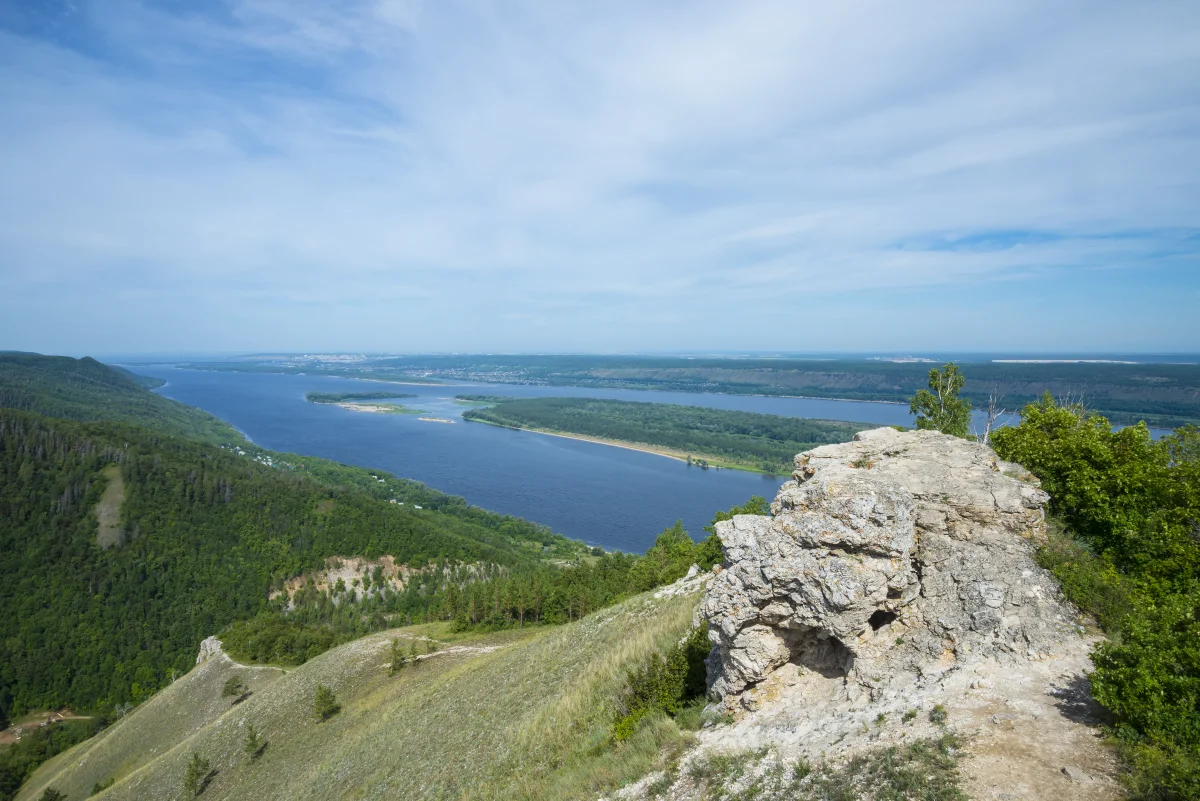
The Volga in Samara Oblast isn't a single river — it's a system of reservoirs: the Kuibyshev (above Tolyatti) and the Saratov (below). Each warms at its own pace.
Ice clears by mid to late April, but the water is still frigid: +4–6°C. By late May, it climbs to +14–16°C — a few daring souls venture in, but most wait.
The turning point comes in mid to late June, when sustained heat above +30°C sets in. The Volga starts warming rapidly: in two to three weeks, temperatures jump from +16 to +20–22°C. Medical guidelines consider +22°C the threshold for comfortable swimming — and that's the mark lifeguards use to open beaches.
In 2026, as of July 2, the water near Samara held at +19°C, near Syzran at +20°C, and near Tolyatti at roughly +20°C. By July 8, after several days of heat above +30°C, the Volga near Tolyatti had warmed to +24°C, near Samara to +21°C. By mid-July, the water reached +24°C at the Samara shoreline as well.
How Warm the Volga Actually Gets
Peak temperatures fall in late July through early August. In hot years, the Volga near Samara warms to +25–26°C; in shallow bays and backwaters, up to +28°C. The average July maximum is +24°C — comparable to the Baltic on its best days, but noticeably below the Black Sea.
Near Tolyatti, where the Kuibyshev Reservoir is wider and shallower, water usually runs 1–2 degrees warmer than at Samara. Syzran falls somewhere in between.
By mid-August, cooling begins. By month's end — +19–20°C; in September — +14–16°C. The swimming season effectively closes by the second ten days of August, though in hot years it stretches to month's end.
The real window of comfortable swimming: six to eight weeks, from late June through mid-August.
Where to Swim in Samara
Samara's embankment is one of the longest river promenades in Europe. Beaches sit right within the city — a rarity for a city of this size.
- First and second sections of the embankment. The central beaches: sand is trucked in and leveled annually, with loungers, changing cabins, and lifeguards. On weekends — standing room only. The entry is gentle, but the current is noticeable.
- Fourth section of the embankment. Less crowded, cleaner sand. Closer to the Suburban Park, where there's shade and greenery. One of the best options for families with children.
- Suburban Park. A beach with infrastructure, rides and cafés nearby. Quieter than the central embankment.
- Krasnoglinsky District. Beaches on the city's outskirts, less packed. Water tends to be slightly cleaner, but the commute is longer.
- Mastryukovo Lakes (30 km from the city). Floodplain lakes separated from the main channel. Shallow, they warm faster than the Volga — reaching +26–28°C as early as the start of July.
The water is cleaner and there's no current. For anyone with a car, it's the best alternative to city beaches.
Algae Bloom: The Biggest Problem on Samara's Beaches
Every year when the heat arrives, the Volga sees a mass proliferation of cyanobacteria — blue-green algae. The water turns vivid green, a distinctive smell appears, and transparency drops to zero.
In 2026, the first signs of blooming were recorded on July 5 — right when the water had reached comfortable temperatures. By mid-July, the right bank near Samara was green in bloggers' videos.
The bloom isn't just unpleasant — it's potentially dangerous. Cyanobacteria release toxins that can cause skin irritation, allergic reactions, and if water is swallowed, stomach problems. Rospotrebnadzor publishes an annual list of locations where swimming is banned due to water quality.
The paradox of a Samara summer: when the water is warm enough for swimming, it's already green. When it's clean, it's still cold. The window between "warm enough" and "already blooming" sometimes lasts just a week or two.
How to Get Around the Problem
Several ways to swim in clean water even when the Volga has gone green:
- Mastryukovo and floodplain lakes. Lakes with water flow experience less blooming than the main channel. Water is warmer and cleaner.
- The left bank opposite Samara. The current is stronger there, water refreshes faster, and blooming is less intense. Accessible by river ferry.
- Early morning. Overnight, the algae settle, and morning water is noticeably cleaner than in the afternoon. By noon, the wind stirs the mass back up.
- Monitor Rospotrebnadzor bulletins. Weekly testing shows which beaches are safe and which aren't. The information is published on the regional branch's website.
What Else to Keep in Mind
Current. The Volga at Samara is wide and has a noticeable flow. On city beaches it's moderate, but past the buoys it's significant. Swimming far out is dangerous, especially after rains, when the current intensifies.
Shipping traffic. Barges and passenger vessels use the navigation channel. Swimming in the shipping lane is prohibited — the wake from a barge can drag you into deep water.
Wild beaches. There are dozens along the Volga's banks. The bottom is unsurveyed, there are no lifeguards, and water quality goes untested. The vast majority of drowning incidents in Samara Oblast happen at these unequipped spots.
Heat. Samara is one of the hottest cities in the Volga region: July reliably brings +30–35°C. Sunburn at the beach is routine, especially when a breeze off the water masks the skin's overheating.