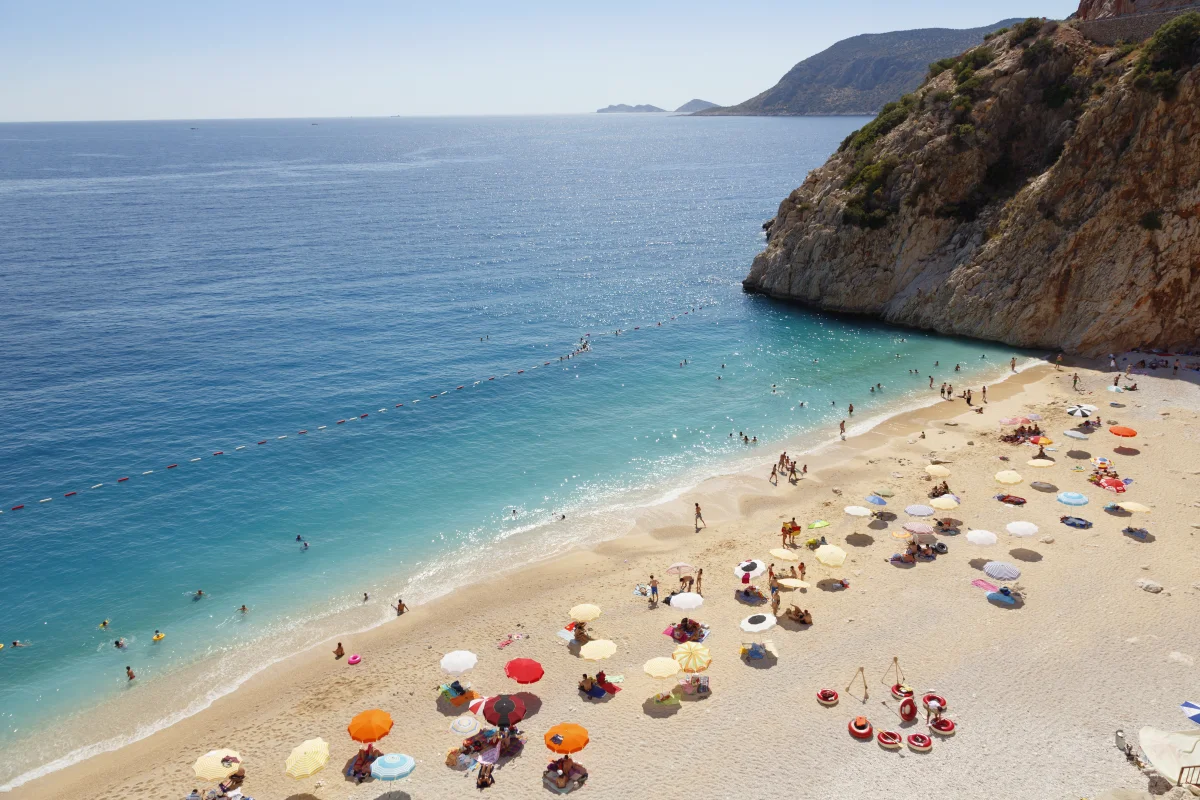
Beach season on Turkey's Mediterranean coast runs from May through October, and the dates haven't shifted. What has changed is the prices, tourist behavior, and the competitive landscape. More on that below.
Turkey remains the top international beach destination for Russians, but in 2026 the familiar formula of "cheap and all-inclusive" is working less and less well. Hotels have gotten pricier in hard currency, the feeling of "affordable abroad" is fading, and Russians have for the first time started seriously comparing Turkish all-inclusive packages with domestic resorts — and not always in Turkey's favor.
The Mediterranean Coast by Month
May. Season opener. Air +25–28°C, water +20–22°C. Swimming is possible but bracing — especially in the first half. Tourist numbers are low, prices sit 20–30% below summer rates. A good window for anyone wanting a beach without crowds and willing to accept a coolish sea.
June. The real start. Water +23–25°C, air +30–33°C. No rain, bright sunshine. Occupancy is climbing but the July peak is still far off. One of the best months for the balance of weather, price, and comfort.
July–August. The peak. Water +27–29°C, air +33–38°C. Hot, humid on the Mediterranean, drier on the Aegean coast. Every hotel is packed, prices at their ceiling, beaches overflowing. For families with small children — tough going in the heat.
September. Velvet season. Water +26–28°C, air +28–32°C. The heat eases, tourist numbers drop, and prices come down. Many seasoned travelers consider September the best month.
October. Water +23–25°C, air +22–27°C. By month's end — the first rains, cool evenings. The first half of October is still beachworthy; the second is transitional.
The Aegean Coast: An Alternative for Those Who Find It Too Hot
Bodrum, Marmaris, Fethiye, Çeşme — Turkey's western coast, which has been gaining popularity among Russians in recent years. Water here runs 2–3 degrees cooler than in Antalya, and the air is less humid. In July–August at +35°C, that's a real advantage.
The season is shorter: comfortable swimming runs from mid-June through late September. But the atmosphere is different — less "package tour," more European tourists, more scenic landscapes. For anyone tired of cookie-cutter Antalya hotels, it's a breath of fresh air in the most literal sense.
What Changed in 2026
Weather and sea — the same. The changes are in economics and sentiment.
Prices. Contracts with Turkish hotels have risen in hard currency — inflation in Turkey remains high. But the ruble's strengthening in 2026 partially offset the increase: according to Coral Travel, ruble-denominated tour prices came in at last year's level or slightly below.
The minimum cost of a ten-day, two-person all-inclusive tour in July starts at 120,000 rubles when purchased in June. High-end hotels are offering up to 12% discounts on late bookings.
Turkey is no longer "cheap." This is the season's biggest psychological shift. Dinner at a restaurant outside the hotel: 1,500–2,000 rubles per person. Car rental: from 2,500 rubles per day. Excursions: from 3,000 rubles.
According to ATOR (Association of Tour Operators of Russia) experts, Russians have for the first time begun genuinely weighing a good Turkish all-inclusive against premium Russian resorts. Turkey used to win by default — now, not always.
Tourist behavior. Booking depth has stretched to 6 months: people buy tours in winter to lock in prices. At the same time, the share of last-minute purchases is growing — those who wait until the final moment hoping for a discount. Projections put Turkey at 4.5–6 million Russian tourists in 2026.
Crimea as an unexpected competitor. Falling prices at Crimean resorts and reduced demand for Sochi have produced a paradox: for some travelers, Crimea has become a better deal than Turkey — no international flight, no foreign passport, no language barrier.
Which Resort to Choose in 2026
- Antalya and Belek. The all-inclusive classic. Sandy beaches, well-developed infrastructure, direct flights from dozens of Russian cities. The most mainstream and the most crowded option.
- Alanya. The southernmost major resort — water runs a degree or two warmer than Antalya. Cheaper than Belek, simpler service. Cleopatra Beach is one of the coast's calling cards.
- Kemer. Mountains press right up to the sea, pebble beaches, water clearer than in Antalya. Pine forests provide shade and freshness. For those who value nature over service.
- Bodrum. Aegean coast, a different atmosphere — more European, less "packaged." Water is cooler, wind is stronger, but the dry climate compensates. Nightlife and restaurants are on par.
- Fethiye and Ölüdeniz. A turquoise lagoon, paragliding, the Lycian Way. For anyone wanting to combine beach time with trekking and adventure.
What to Keep in Mind
- Early booking pays off. Tours purchased in winter or early spring cost 10–15% less than those bought a month before departure. The exception is last-minute deals — but with those, you have no guarantee of choice.
- Check what "all-inclusive" actually includes. In 2026, some hotels have trimmed the offering — reduced the alcohol selection, removed à la carte evening restaurants from the base package, and limited bar hours.
- Insurance is mandatory. Healthcare in Turkey is expensive: an ambulance call starts at $200, hospitalization at $500 per day. Without insurance, it's all out of pocket.
- Foreign passport. Entry requires a passport valid for at least 120 days from the date of arrival. Visa-free stay: up to 60 days.
When to Go in 2026
Want it cheap and quiet — May or the second half of October. Want warm sea without extreme heat — June or September. Want the warmest possible water and can handle the blaze — July–August. Want a different Turkey — the Aegean coast from June through September.
And the key piece of advice for 2026: calculate the full cost of the trip, not just the tour price. Turkey remains an excellent destination, but "affordable abroad" is gradually becoming simply "abroad" — and that's worth factoring into your budget.