Swimming season in Abkhazia runs from late May through mid-October — longer than at most Russian resorts. But the most interesting part begins once the main wave of tourists departs: the sea in September here is warmer than in June, and prices drop by a third.
Every year, the same story plays out: in August, the beaches of Gagra and Pitsunda are packed to capacity, loungers need claiming in the morning, and dinner at a promenade café means waiting in line. Two weeks pass, and September 1 arrives — the coast exhales. Tourist numbers drop by half, and the Black Sea, warmed all summer, keeps releasing its stored heat for another month and a half.
This tail end of the season — early September through mid-October — is what many consider the best time for Abkhazia. Let's break down what to expect in each autumn month and when to pack your bag.
Why the Sea Is Warmer in September Than in Early Summer
The reason is water's thermal inertia. The Black Sea off the Abkhazian coast starts warming in May, but slowly: by early June, water temperature sits at just +20–22°C. Swimming is possible, but after your first dip, you'll want to wrap up in a towel.
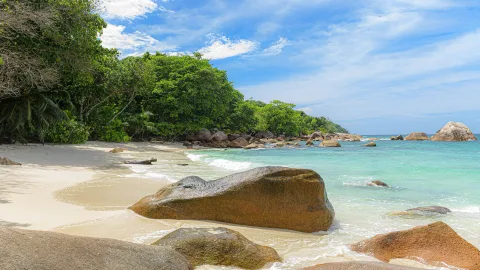
By late August, water hits its peak — +26–28°C. And here's the key point: it cools even more slowly than it warmed. In the first half of September, the sea holds +24–26°C; in the second half, +23–24°C. That's warmer than June, while the air no longer melts your brain with thirty-degree heat.
Add the subtropical geography to this. The Caucasus range shields the coast from cold northern winds, and moist sea air creates a "warm blanket" effect — temperature drops gradually, without sharp swings.
September: Velvet Season in the Fullest Sense
September in Abkhazia is the best month for a beach vacation, and that's not marketing — it's arithmetic. Air runs +26–29°C during the day, +17–19°C at night. The sea: +24–26°C. Rain is scarce — 3–4 days a month on average, and usually a quick downpour before the sun returns.
The main advantages over summer:
- No exhausting heat. In July–August, air in Gagra climbs to +32–35°C with high humidity. In September, the sun is gentler, and you can walk and go on excursions all day — no need to wait out the midday swelter in your room.
- Beaches thin out. After September 1, tourist flow drops sharply. Pitsunda's beaches, which resemble rush-hour subway crowds in summer, gain breathing room. In Novy Afon, they're practically empty.
- Prices drop 30–40%. Hotels and private rentals cut prices right after school holidays end. According to tour operators Intourist and Alean, September and early October bookings perform best.
- Fruit. September is peak harvest: figs, grapes, pomegranates fill the markets of Sukhumi and Gagra. By month's end, feijoa arrives — dark green fruit with a strawberry-pineapple scent, priced three times higher in Russian stores.
October: Your Last Chance for a Swim
October splits into two halves, and the difference between them is like two different trips.
- The first ten days (October 1–10) — essentially a continuation of velvet season. Air at +22–25°C, sea at +22–23°C. Swimming is still comfortable, especially at midday. Beaches see just a handful of people, restaurants don't require reservations, and tour groups are small.
- The second half — weather turns unstable. Daytime temperature drops to +19–22°C, the sea to +20–21°C: right at the edge of comfort for most people. Rains begin — October sees 6–8 rainy days. Sea wind strengthens, and evenings turn cool without a jacket.
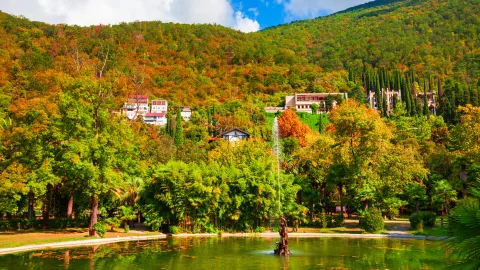
But these exact weeks bring a different kind of blooming to Abkhazia. The mountains around Lake Ritsa turn gold and crimson — October photos from there consistently outperform summer shots in likes. Markets fill with persimmons, the first mandarins, young wine — the gastronomic season begins. A trip to the New Athos Cave without the summer line becomes an entirely different experience.
By the 20th of October, swimming season effectively ends. A few hardy individuals swim into November, but mass swimming stops.
November: No Longer Beach Season, Not Yet Winter
November is shoulder season. Air temperature runs +15–18°C during the day, sea cools to +16–18°C. Swimming happens, if at all, as a one-off bet or a "closing the season" ritual. Rainy days number 7–9 per month, and precipitation is no longer brief summer showers but prolonged rain.
But November is mandarin season. Abkhazian mandarins begin ripening in late October and fill every market by November. Unassuming in appearance — loose, slightly green peel, uneven shape — but incredibly juicy and aromatic. Local prices run 3–4 times lower than winter Russian store prices.
Where It's Warmest at Season's End
Not all Abkhazian resorts cool at the same rate. The difference is small — 1–2 degrees — but when every degree counts at season's end, it matters.
Gagra — Abkhazia's warmest resort. Mountains press right up to the sea, creating a wind-sheltered microclimate. Water near shore in early October: +22–23°C, a degree or a degree and a half warmer than Sukhumi.
Beach season here runs a bit longer than the rest — through mid-October.
Pitsunda — a degree cooler than Gagra, but the cleanest sea on the coast. The city sits on a cape, and water stays visible to the bottom even in autumn. The relic pine grove saturates the air with phytoncides — a scent of pine mixed with salt breeze that stays with you. Beaches are fine pebble mixed with sand, gentle entry, shallows extending 20–30 meters — ideal for children.
Novy Afon — a touch warmer than Pitsunda, quieter and smaller. Air and water run about a degree higher than Pitsunda's. The main autumn advantage: the cave, monastery, and waterfall are all within walking distance of the beach — no need to burn a day on transfers.
Sukhumi — the capital, the largest city. The sea is comparable to Pitsunda's, but there's the Madzhakvarsky embankment, urban infrastructure, and restaurants that stay open into late autumn. For those unprepared for village-level quiet.
What to Do When the Sea Turns Cool
If swimming is questionable (late October, November), Abkhazia switches into sightseeing mode — and this might be its best version.
Lake Ritsa — a mountain lake at 950 meters elevation, ringed by forest. Crowded with buses in summer, silent in autumn, with gold foliage reflected in turquoise water. The road through Yupshara Canyon, with its vertical walls up to 500 meters, is its own experience.
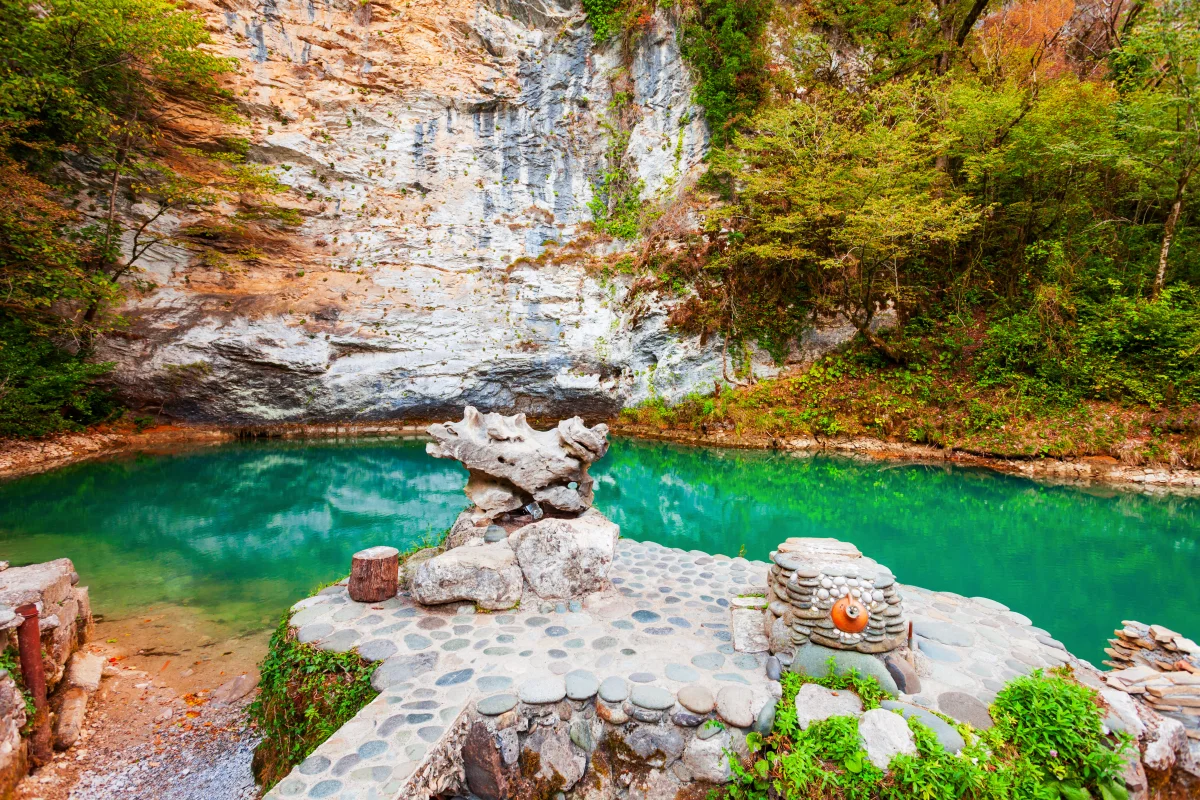
Along the way: Blue Lake, which never freezes and holds a constant +10°C year-round.
New Athos Cave — one of the largest in the world, interior temperature +11°C regardless of season. Tickets sell out within a day in summer; in autumn, you can arrive at opening and get in without waiting.
Kindig hot springs — open-air pools of natural hot water at +37–45°C. Autumn brings special pleasure: cool air contrasting with hot water, few people around, open parking. Operates year-round.
Abkhazian wine. By late October, young wine season begins — tastable straight from private vineyards and rural homes.
What to Pack for Velvet Season
September–October in Abkhazia calls for two wardrobes in one suitcase. Daytime beach wear: shorts, swimsuit, flip-flops. Evening: a light jacket or windbreaker, since temperature drops to +15–17°C after sunset, and mountain excursions run even cooler.
Essential: sunscreen (September's UV index is still high), sturdy shoes for trails (if planning Lake Ritsa, Gegsky Waterfall, or alpine meadows), a raincoat or foldable umbrella (downpours are brief but intense, especially in October). The umbrella also helps on excursions — trails have no shelter.
For those driving through the Psou border checkpoint: crossing in September moves faster than summer — the entry line usually runs 30–40 minutes, versus two hours in peak summer. But weekends can still bring backups — better to cross on a weekday before noon.