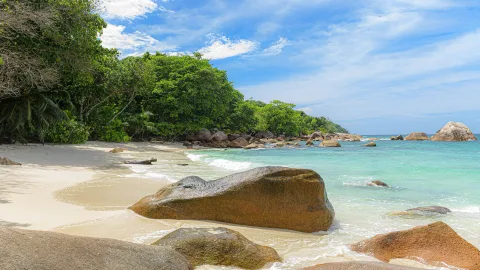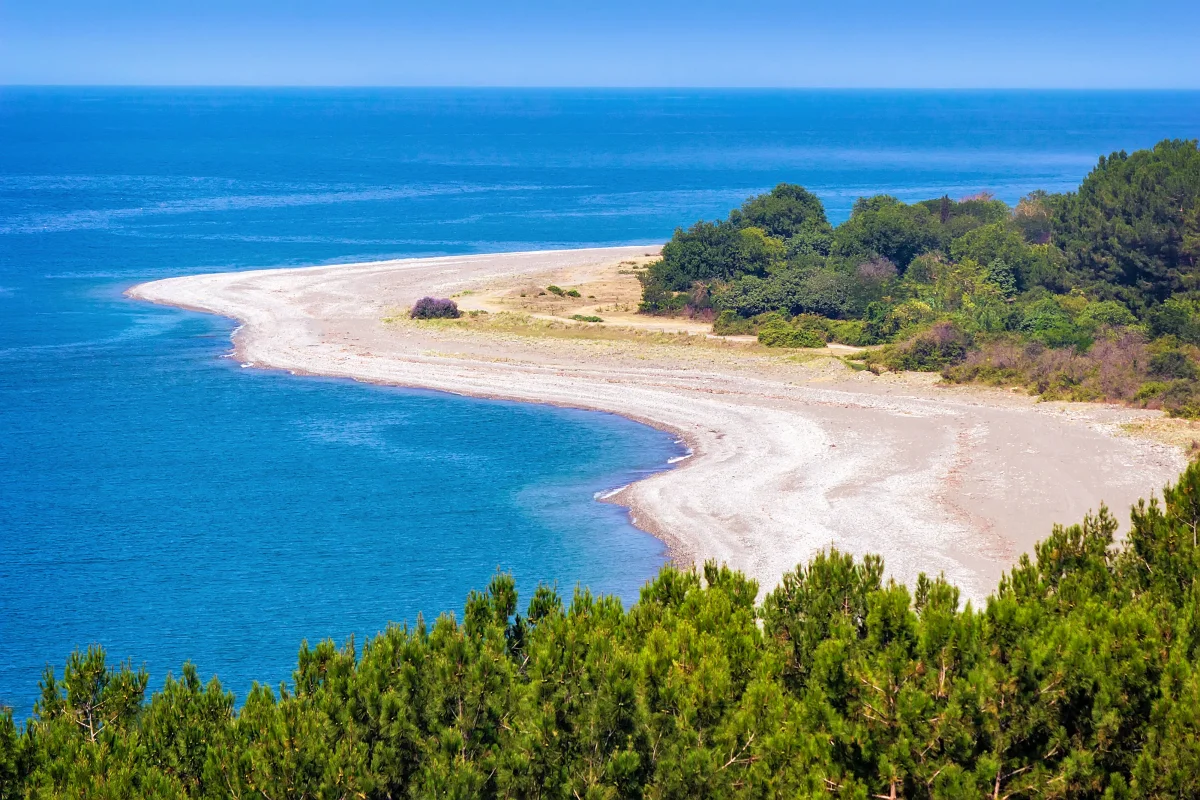
Abkhazian summer doesn't end on September 1 — it stretches into mid-October, cooling gradually, like a sea reluctant to let go of its warmth. By early October, the water is still +22°C, the beach is empty, and the market sells persimmons, feijoa, and pomegranates — fruits that weren't there in August.
Swimming season in Abkhazia is one of the longest on the Black Sea. A subtropical climate, mountains shielding the coast from northern winds, and a warm sea that stores energy all summer stretch comfortable swimming to five months — late May through mid-October. But the season's final weeks are their own story, unlike the August peak or the June start.
How the Sea Cools After Summer
The Black Sea off the Abkhazian coast peaks in the first half of August at +27–28°C. After that, gradual cooling begins — but "gradual" is the key word. The water mass releases heat reluctantly, and by September, temperature drops just a couple of degrees.
September holds at +24–25°C. The difference from August is barely noticeable while swimming — the water still envelops you, and you don't want to get out. Air temperature runs +25–27°C, and for the first time all summer, water and air match. There's no sense of contrast — just comfort, absent during August's heat.
By late September, the first signs of change appear. Evenings turn fresher — +18–20°C — and after sunset, the beach already feels cool. At night, you can open the window without air conditioning — a shift after two months when sleeping without it was impossible.
October continues the downward curve. The first half brings +21–22°C in the water; by month's end, +18–19°C. The monthly swing of 3–4 degrees is felt at every step: +22°C still feels comfortable, +18°C already feels bracing.
October: What to Honestly Expect
The first half of October on the Abkhazian coast is the last window when swimming remains a pleasure, not a feat of endurance.
Daytime air runs +20–23°C, sunlight soft, not scorching. Sunbathing works, but not in the typical summer format: UV is weaker, and an even tan takes longer to develop. On the upside, sunburn is nearly impossible.
The sea holds +21–22°C in early October. That's a temperature most people can still swim in comfortably, though stepping out into the wind afterward brings a noticeable chill. For comparison: +21°C matches the Baltic on its best August days, when Kaliningrad residents consider the water "warm."
The second half of October marks the edge. Water drops to +18–19°C, air to +17–20°C, rain becomes more frequent. Only a handful swim — the hardy, the accustomed, or those set on it regardless. Most people switch to sightseeing, walks, and cuisine.
Why October Beats August
A strange claim, but for a certain type of vacation, October in Abkhazia objectively outperforms the summer peak. Beaches are empty — not "less crowded," but literally empty. In Pitsunda, packed solid in August, October brings just a handful of people per kilometer of coastline. The pebbles are warm from the sun, no need to claim a lounger at seven in the morning, and it feels like the entire coast is yours.
August's +33°C at 80% humidity turns any activity besides lying by the sea into an ordeal. October's +21°C is the ideal temperature for excursions. Lake Ritsa, the New Athos Cave, Gegsky Waterfall, Anakopia Fortress — all accessible without heatstroke or dousing yourself with water every half hour.
August is peach and watermelon season. October brings persimmons, feijoa, pomegranates, mandarins (early varieties), late figs, and chestnuts. October's market selection is richer and more varied than summer's, a compelling argument for the food-focused traveler.
Accommodation in October runs 30–40% cheaper than August. Guesthouses that charged 3,000–4,000 rubles in summer go for 1,500–2,000 in October. Some establishments close, but the core infrastructure — cafés, restaurants, shops, transport — keeps running.
Why October Falls Short
An honest list of limitations, without which the picture would be incomplete.
- Rain
Abkhazia is one of the rainiest places on the Black Sea, and autumn brings more of it. October sees 8–12 rainy days out of 31. The rain is tropical in character: a powerful downpour for an hour or two, then sunshine again. But hit a stretch of three or four consecutive rainy days, and your mood dampens along with the weather.
- Daylight
In August, it gets dark by eight in the evening; in October, by six. That two-hour difference means an evening walk along the promenade already starts in twilight, and swimming after five happens in cool air.
- Infrastructure winds down
Some seaside cafés close by mid-October. Excursion buses run less frequently. Beach rentals aren't available everywhere. Abkhazia in October isn't a dead season, but it's no longer at full swing either. Major restaurants, shops, and guesthouses operate, but the selection is narrower.
- The sea grows unpredictable
Autumn storms on the Black Sea are powerful and prolonged. A single storm can raise waves for two or three days, during which swimming becomes impossible. In August, storms are rare. In October, they occur roughly once every one or two weeks.
Which Resort to Choose for October
Not all Abkhazian resorts are equally good at season's end. The differences lie in microclimate and wind protection.
- Pitsunda — the best choice for October. The bay is enclosed, waves are absorbed by the cape. The relic pine grove retains warmth and creates a microclimate 1–2 degrees warmer than Gagra. Bay water stays heated and cools more slowly than the open coast.
- Novy Afon — quieter and greener than Gagra, sheltered from the main winds. Nearby: the cave, the monastery, and the Seaside Park. For a "morning swim plus afternoon sightseeing" format, it's more convenient than the alternatives.
- Gagra — more exposed to wind, and by October it's a bit cooler and windier than Pitsunda. Infrastructure is the most developed, but some establishments close by mid-October.
- Sukhumi — the capital, an urban format. Beaches aren't the best, but the promenade, Botanical Garden, and monkey nursery operate year-round. For anyone who values the city more than the beach, October in Sukhumi is comfortable.
When the Season Finally Closes
There's no official date — lifeguard posts wind down once the flow of swimmers dries up. In practice, this happens around October 20–25. By that point, water drops below +20°C, evenings turn cold, and the beach sees only stray enthusiasts.
In November, water sits at +16–17°C, air at +12–16°C, rain every other day. Swimming season is unambiguously closed.
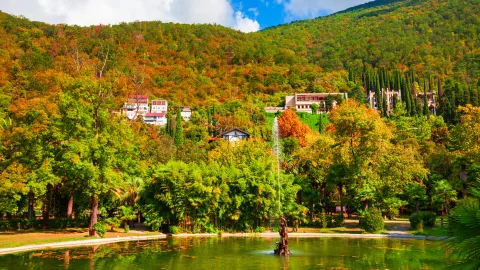
But Abkhazia in November isn't lifeless: mandarin season is in full swing, the mountains show autumn colors, khinkali houses and restaurants keep running, and for anyone coming for silence, food, and nature, it's a distinct season of its own, unconnected to the sea.
Is October Worth It?
It depends on what your vacation is for. If the beach and swimming are the main goal, and you're not prepared to accept +20°C water and unpredictable weather, choose September. It offers everything October does (quiet, fruit, low prices), but with a guaranteed warm sea.
If the sea is a nice bonus rather than the whole point, October is worth it. Empty beaches, persimmons and feijoa at the market, excursions without the heat, prices free of summer's markup — and the chance to swim in the first half of the month, if you get lucky with the weather.
Abkhazia in October isn't a summer resort winding down — it's an autumn coastal town with its own character and charm. And those who've tried it often return specifically in October — when the coastline finally belongs not to the crowds, but to those who value the quiet.