Antalya gets more rainfall per year than Moscow: 1,058 mm versus 700 mm. It sounds impossible for a city where not a drop falls all summer. But winter is when the Mediterranean settles its debt — from November through February, the coast gets hit with as much water as central Russia doesn't see in two years.
Antalya's climate is Mediterranean in its purest form: hot dry summers and mild rainy winters. Between them lie two transitional months where summer and autumn fight over every week. Those exact weeks determine whether you get velvet season or a soggy surprise.
Summer: When There's Simply No Rain
From June through August, Antalya is one of the driest places in the Mediterranean. Rain doesn't happen for weeks at a stretch, clouds are a rarity, and the sky stays a scorching blue.
Over the three summer months, cumulative rainfall totals 15–30 mm — less than Moscow gets in a single June day.
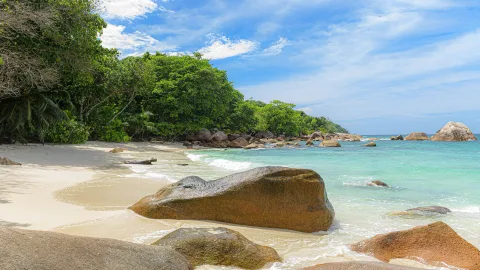
September continues this pattern: 10–20 mm for the month, roughly 25 sunny days out of 30. Water at +26–28°C, air at +28–30°C. For a beach vacation, September is one of the best months, and rain during this stretch is more of a novelty than an inconvenience.
October: The Turning Point
October is exactly when the dry summer starts losing ground. Based on long-term observations, the start of rainy season in Antalya is conventionally pegged to the first ten days of October. But "conventionally" is the key word: in some years, rain arrives in late September; in others, it holds off until November.
Average October rainfall runs 70 mm — five to six times more than September. Rain comes once or twice a week, usually brief and intense: a downpour hits, pours for half an hour, and clears again. Between the showers: clear, warm weather — air at +23–26°C, water at +24–25°C.
The first half of October is still full-fledged velvet season. The sea is warm, sunshine is plentiful, beaches are operating. This period offers one of the best weather-to-price ratios: tourist flow declines, hotels offer discounts, and the water is warmer than in June.
The second half is more of a gamble. You might get lucky with a clear week, or get drenched for days. Forecasting beyond three or four days becomes unreliable. Anyone willing to roll the dice will save money; anyone who isn't should stick to the first half.
November: When the Beach Is Already in Question
November is a month split in half.
The first half offers the last chances for a beach vacation. Air at +20–22°C, water at +21°C. Swimming is possible, but stepping out of the sea into the wind afterward is chilly. Sunbathing works on calm, sunny days. Rainfall by this point runs around 100 mm, with showers every three or four days.
The second half is when rainy season kicks into full force. Temperature drops to +16–18°C, nights fall to +10–12°C. Rains grow more frequent and prolonged. The sea cools to +19–20°C. Most beach cafés and bars close, loungers get stored away. Swimming is left to the most stubborn.
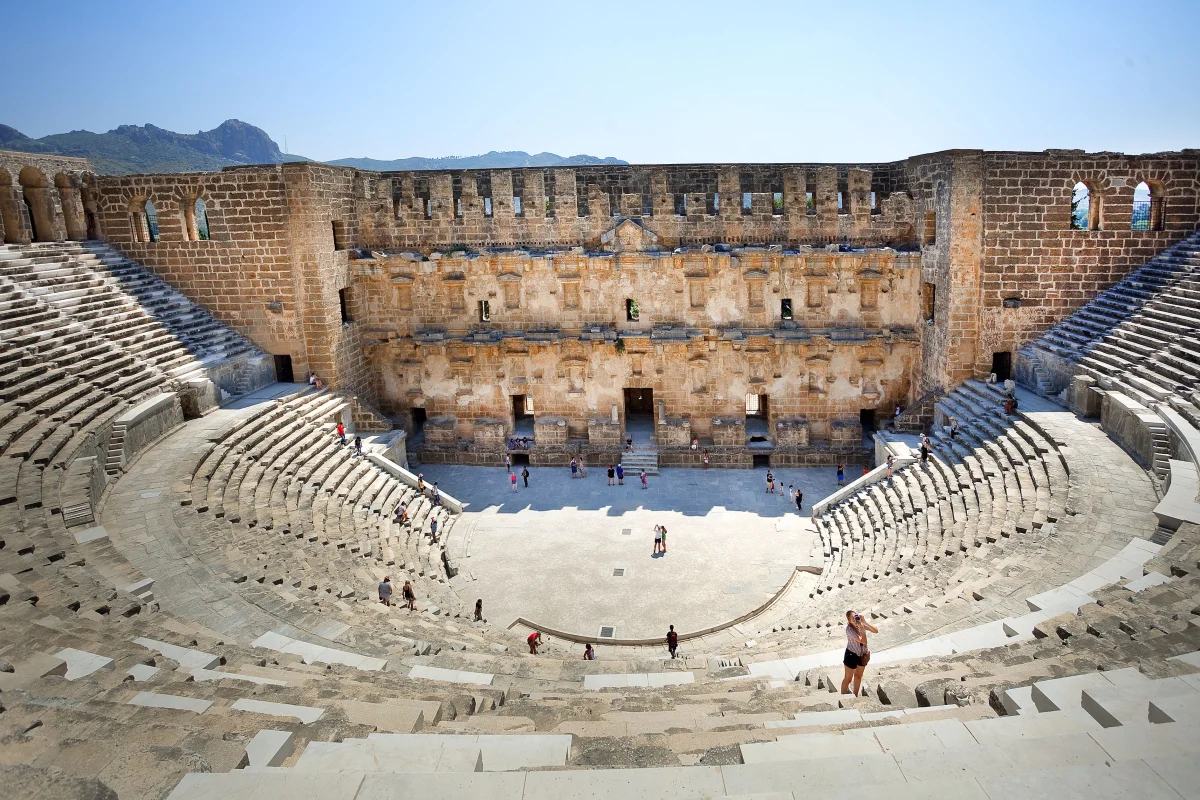
November in Antalya is a month for sightseeing and shopping, not the beach. Aspendos, Perge, Termessos, Antalya's Old Town — all comfortable to explore at +20°C. Traveling specifically for the sea, though, is a gamble.
December–February: Full Mediterranean Winter
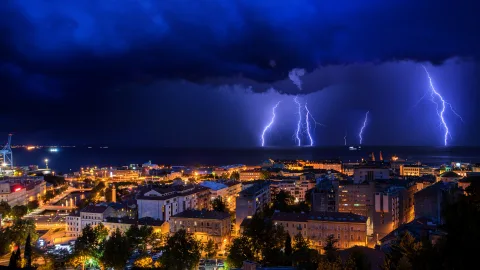
Three months when Antalya turns into a different city. The dry, radiant summer gives way to gray clouds, prolonged downpours, and wind off the sea.
Rainfall figures paint the picture clearly:
- December: 120–140 mm. Rain every two or three days, sometimes lasting all day.
- January: 200–230 mm — the wettest month of the year. Powerful, prolonged downpours.
- February: 100–120 mm. A bit drier, but spring is still far off.
Air temperature: +12–15°C during the day, +5–8°C at night. Water: +17–18°C — categorically too cold for swimming. Snow in Antalya itself is rare (once every two or three years), but the Taurus Mountains outside the city stay white all winter.
Many coastal hotels close from December through March. Those that stay open switch to a spa-and-excursions format. Prices hit their annual low, but the reasons to travel drop significantly too.
Why Antalya's Winter Downpours Are So Intense
In autumn and winter, the Mediterranean is warmer than the land: water at +17–20°C, air at +10–15°C. The warm water evaporates, moisture condenses into massive clouds, and winter cyclones moving in from the west wring colossal volumes of water out of them.
The Taurus Mountains, enclosing Antalya on three sides, act as a wall: moist air presses against the range, rises, and releases all its water over the coastline. It's the same mechanism seen in Sochi — orographic precipitation. That's exactly why winter Antalya is wetter than winter Moscow, even though summer Antalya is drier than any Russian city.
When the Rains End
The reverse transition is gradual. In March, rainfall is still 50–70 mm, but the gaps between showers widen. By April, it's 30–40 mm, sunny days exceed twenty, and temperature reaches +20–22°C. By the second half of April, it's nearly dry, and the water begins warming.
May is the finish line: rainfall drops to 10–15 mm, rain is virtually absent. The sea reaches +20°C, and swimming becomes possible from the second half of the month. Summer begins.
How It Maps Out Across the Year
Breaking Antalya's beach potential down by month:
- June–September: guaranteed beach, no rain.
- First half of October: velvet season, rain possible but rare.
- Second half of October: weather roulette, 50/50.
- First half of November: beach on the edge, rain increasing.
- Second half of November–February: rainy season, beach closed.
- March: rains ease, but too early for the beach.
- April–May: transition to summer, swimming from the second half of May.
Which Month to Choose at the Season's Edge
- Want velvet season without risk — September. No rain, the sea at its warmest, and prices below August's peak.
- Willing to gamble for discounts — the first half of October. Water still at +24–25°C, low probability of rain, prices 25–35% below peak.
- Want sightseeing rather than the beach — November or March. +18–22°C, comfortable for walking, Old Town and ruins without heat or crowds.
Definitely not worth it for the beach — mid-November through April. Cold sea, rainy, and infrastructure shut down.
And if you want to see the Antalya that never makes it into the brochures — come in January. The city under rain, empty promenades, snow-capped mountains on the horizon, and the realization that a resort welcoming 15 million tourists a year can be completely deserted. That's Antalya too. Just a different one.