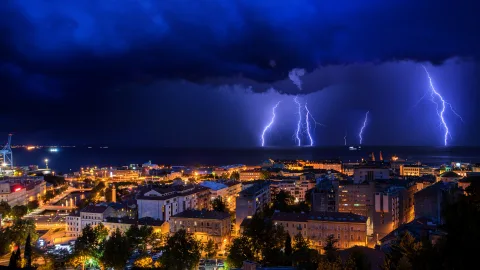
Gelendzhik and Novorossiysk are just 30 kilometers apart as the crow flies. But the difference in water temperature on the same day can reach 3–4 degrees: while Gelendzhik Bay is already at +22°C and people are swimming, Novorossiysk sits at +18°C with a storm and bora winds. It all comes down to the bay.
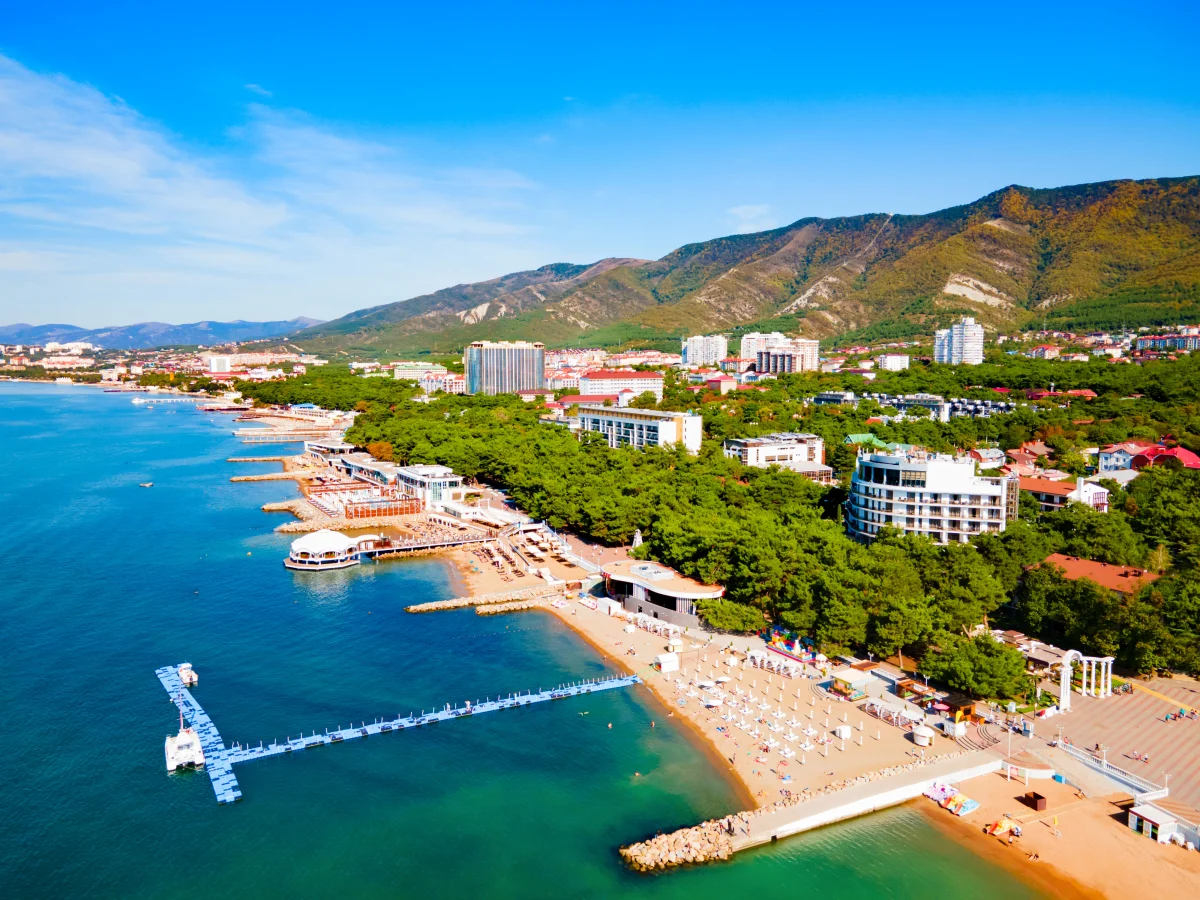
Gelendzhik is one of the most sheltered resorts on the Black Sea coast. The city sits inside a horseshoe-shaped bay, enclosed by two capes — Tonky and Tolsty — and backed to the north by the Markotkh Ridge. This natural bowl turns the water into a giant aquarium that heats up faster than the open sea and cools down more slowly.
Why the Bay Warms Up First
Three factors work simultaneously.
- Wind Protection
The Markotkh Ridge cuts off the northeastern winds — the very bora that descends on Novorossiysk in winter at speeds up to 60 m/s. Bora chills the water, whips up waves, and strips away the warm surface layer. In Gelendzhik, its effect is many times weaker: the mountains block the main flow.
The result: water in the bay accumulates spring warmth that Novorossiysk doesn't reach until two to three weeks later.
- An Enclosed Basin
Gelendzhik Bay is semi-enclosed. The narrow opening between the capes limits water exchange with the open sea. Warmed water isn't swept away by currents or mixed with cold masses. In Novorossiysk, Tsemes Bay opens more broadly to the sea, currents pass through freely, and warming proceeds more slowly.
- Shallow Water
Near the shores of Gelendzhik Bay, depth increases gradually. Shallow water heats up in the sun faster than deep water. In Novorossiysk, the bottom drops off more steeply, and the port and industrial zone add turbidity that reduces both transparency and warming.
When the Water Becomes Fit for Swimming
Gelendzhik is one of the first cities on the Black Sea coast to open its swimming season. Officially — in late May, when lifeguard posts are set up.
- May. Water +16–18°C. Only the hardiest swim. Air +20–23°C, sunny, but the sea still has a bite. Great for sunbathing and walks; too early for proper swimming.
- June. The turning point. By mid-month, bay water reaches +20–22°C. On the open coast beyond the capes, it's 2–3 degrees cooler. Air +24–28°C. Beach season starts in earnest. Tourist numbers are still low — school holidays don't begin until month's end.
- July. Peak warmth. Water +24–27°C, hitting +28°C on some days. Air +28–33°C. Rain is almost nonexistent. The sea breeze that kicks in after noon makes the heat tolerable. But the bay overheats at the height of the season: the water gets too warm and transparency drops.
- August. Temperature-wise, same as July — +24–27°C. Peak occupancy: beaches are packed, the promenade is overflowing, prices are at their ceiling. On the plus side, the weather is rock-solid: rain in August in Gelendzhik is an event.
- September. Velvet season. Water +22–24°C, air +24–27°C. Fewer tourists, lower prices, and the sea is still warm. For many, the best month of all.
- October. Water +18–20°C — swimming is still possible, but not every day. Rains pick up, evenings turn cool. By the second half of the month, the season effectively closes.
The total: five full months of swimming season — June through October. That's longer than Anapa and comparable to Sochi.
The Downside of a Sheltered Bay
Protection comes at a price. The same enclosure that helps the bay warm up hinders the water from refreshing itself. At peak season, when tens of thousands of people are on the shore and the water is heated to +27°C, the bay can experience algae bloom. The water turns green, transparency drops, and an odor appears. It doesn't happen every year, but in hot summers it's quite likely.
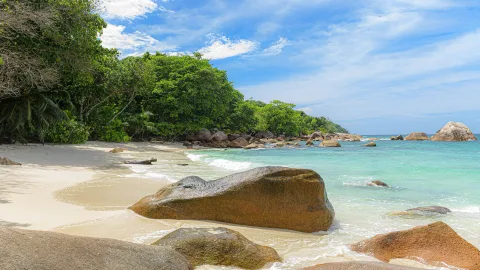
The solution: beaches outside the bay. Divnomorskoye, Dzhankot, Praskoveyevka — open sea, clean water, rocky shores. The water here is 1–2 degrees cooler, but the clarity is like an aquarium. Praskoveyevka, with its famous "Sail Rock," is one of the most beautiful wild beaches on the coast.
Where to Swim in Gelendzhik
- Central Beach. Sandy (imported), right in the middle of the bay. Gentle slope, warm water, lifeguards. The main drawback: overcrowded in July–August. A free lounger by noon is a rarity.
- Tonky Cape beaches. Pebbly, less crowded. Water is slightly cooler and cleaner than in the bay's center — there's better water exchange with the open sea. Windier, but a good choice for those who value space.
- Tolsty Cape beaches. Rocky, with small coves. Clear water, depth arrives faster. Less convenient for children, but more scenic.
- Kabardinka (10 km south). A village with its own bay — even more enclosed than Gelendzhik's. Water warms earlier and higher. For families with small children, one of the best options on the coast.
- Divnomorskoye (12 km south). Open sea, pebble beach, clean water. No bay means no stagnation and no bloom. The entry into the sea isn't as gradual as in central Gelendzhik.
Gelendzhik vs. Novorossiysk for Swimming
The comparison is short and one-sided. Novorossiysk is a major industrial port: cement factories, cargo terminals, shipping traffic. Beaches exist, but the water is murkier, the shore is less maintained, and waves are stronger due to the open bay. Bora in winter and the shoulder seasons makes the coast uncomfortable.
Novorossiysk is an interesting city for excursions: the Malaya Zemlya memorial, the museum cruiser Mikhail Kutuzov, wineries in the surrounding area. But for beach vacations, Gelendzhik wins on every count: warmer, cleaner, calmer, with infrastructure built for a resort.
Which Month to Choose
Want warm sea without crowds — June or September. Want the warmest possible water — July, but brace for packed beaches. Want clean water — choose beaches outside the bay: Divnomorskoye, Dzhankot, Praskoveyevka. Traveling with a small child — Kabardinka: shallow, warm, and peaceful.
And if you want to catch Gelendzhik at its absolute best — come in the second week of September: the sea at +23°C, an empty promenade, pine-scented air, and homemade wine and fresh figs at the market.