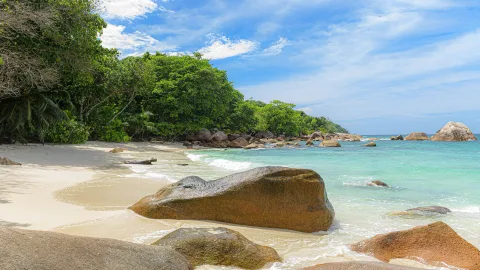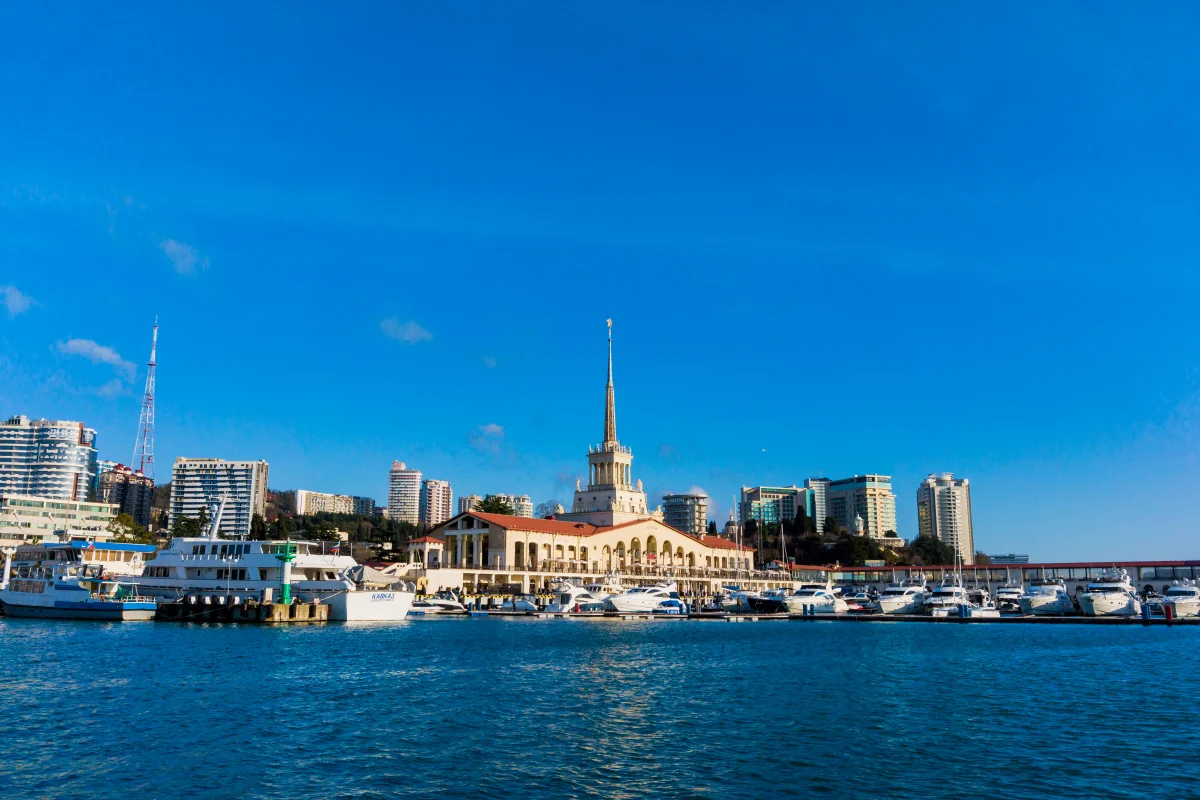
The sea in September: +23–25°C. In June: +19–22°C. A three-to-four-degree gap — and it doesn't favor early summer. The Black Sea stores heat all summer and releases it slowly, which means autumn water has been warmed by three months of heat, while June water is only just beginning to warm up after winter.
This fact surprises anyone who thinks of September as "the end of the season." In practice, Sochi's sea in September is warmer and more pleasant than in June, and swimming season doesn't end on September 1 — it wraps up somewhere between mid and late October, depending on the year.
Why Autumn Water Is Warmer Than Spring Water
The Black Sea is a massive heat reservoir. The sun starts warming it in April, but the sheer volume of water means reaching a comfortable +22°C takes over two months. By June, the surface layer still hasn't accumulated enough energy.
Peak warming falls in late July through early August: +26–28°C, occasionally reaching +29°C. That's the maximum the sea has stored up over spring and summer.
After that, cooling begins — but very slowly. Water loses heat much less quickly than air. In September, the air is already down to +23–25°C (versus summer's +30°C), while the water is still +23–25°C. The gap between water and air nearly vanishes, and swimming shifts from "escaping the heat" to a pleasure in its own right — the sea envelops you rather than burning your skin.
For comparison, the same picture in numbers:
- June: air +25–28°C, water +19–22°C. The sea lags behind the air by 5–6 degrees.
- September: air +23–25°C, water +23–25°C. The sea has caught up with the air — and even surpasses it by evening.
That's exactly why an evening swim in September feels warmer than a daytime one in June: the water holds at +24°C while the air drops to +20°C by sunset. You don't want to get out — the water is more comfortable than the shore.
When Swimming Season in Sochi Actually Ends
There's no official date — lifeguard posts follow the weather. But year-over-year patterns are consistent.
September is a full-fledged beach month. Water at +23–25°C, minimal rain (though downpours do occur — brief and powerful, with sunshine returning within half an hour). Beaches are less crowded than August: schoolchildren are back in class, the family wave has receded. In 2026, forecasters project the start of velvet season around September 7, continuing through mid-October.
The first half of October is right on the edge. Water at +20–22°C, air at +20°C. Swimming is still possible — especially in the first week, when September's warmth still lingers. But evenings turn cool, winds pick up, and the beach after 4 p.m. gets chilly.
The second half of October marks the formal end. Water at +16–18°C, rain becomes more frequent, waves build. Autumn storms on the Black Sea are powerful and prolonged. A few enthusiasts still go in, but calling it a swimming season would be a stretch.
November — +14–16°C. The season is unambiguously closed. Beach infrastructure winds down, loungers get stowed, and seaside cafés switch to winter mode.
The real swimming season in Sochi runs from mid-June through mid-October — roughly four months. But the best swimming isn't at the start of that window — it's in the final third: September and the first days of October.
What Makes Velvet Season Special
Velvet season isn't just "a warm September." It's a distinct vacation format, differing from summer in several ways.
The sun stops scorching. In summer, Sochi's open beaches between 11 a.m. and 4 p.m. bake under a maximum UV index — sunburn in half an hour.
In September, sunlight is gentler: you can sunbathe all day rather than in brief morning and evening windows. For anyone wanting an even tan without burns, it's the best time.
Humidity drops. Sochi is subtropical, and summer humidity hits 75–80%. At +30°C, that creates a steam-room sensation. In September, humidity falls to 60–65%, and breathing gets noticeably easier.
Evenings are warm but not stifling. A summer evening in Sochi runs +25°C with high humidity, and even the seaside promenade offers no relief from the mugginess. A September evening sits at +18–20°C with a fresh breeze, and dinner on an open terrace becomes a pleasure rather than an ordeal.
Fruit season hits the markets. Figs, persimmons, feijoa, Isabella grapes, homemade wine — all appear specifically in September–October. Summer brings watermelons and peaches. Autumn brings a culinary variety unavailable at other times.
Where to Swim During Velvet Season
All of Sochi's beaches operate in September. But some actually get better in autumn than in summer.
- Central beaches (Riviera, Mayak) — packed in summer, spacious in September. You can arrive at noon and claim a lounger without trouble. The pebbles are warm, the water calm and inviting.
- Khosta and Kudepsta beaches — south of the center, less crowded even in summer. In September, nearly empty. The water is the same as downtown; the crowds are a fraction of the size.
- "Lastochka" Beach (Lazarevskoye) — for anyone wanting the resort feeling without Sochi's bustle. During velvet season: silence, warm sea, pine trees.
- Imeretinskaya Embankment — the southernmost stretch of Greater Sochi, closer to Abkhazia. Pebble beach, Olympic venues in the backdrop, water a touch warmer than downtown.
When to Go Depends on Your Priorities
- Want a guaranteed warm sea and don't mind the heat — late July or August. Water at +26–28°C, but +30–35°C on shore, crowds, and peak prices.
- Want warm sea without the heat and crowds — September. Water at +23–25°C, air at +23–25°C, open beaches, fruit at the market.
- Want to gamble for total quiet — the first week of October. Water still +20–22°C, but the forecast no longer guarantees sunshine every day.
- Want to swim while saving money — the second half of September. Hotels start dropping prices, and the sea still holds its summer warmth. Discounts at Krasnaya Polyana hotels appear around this time too.
And if anyone tells you "it's already cold in September" — show them the water temperature. September's +24°C is warmer than June's +21°C. That's not a paradox — it's physics: the sea remembers summer longer than the air does.