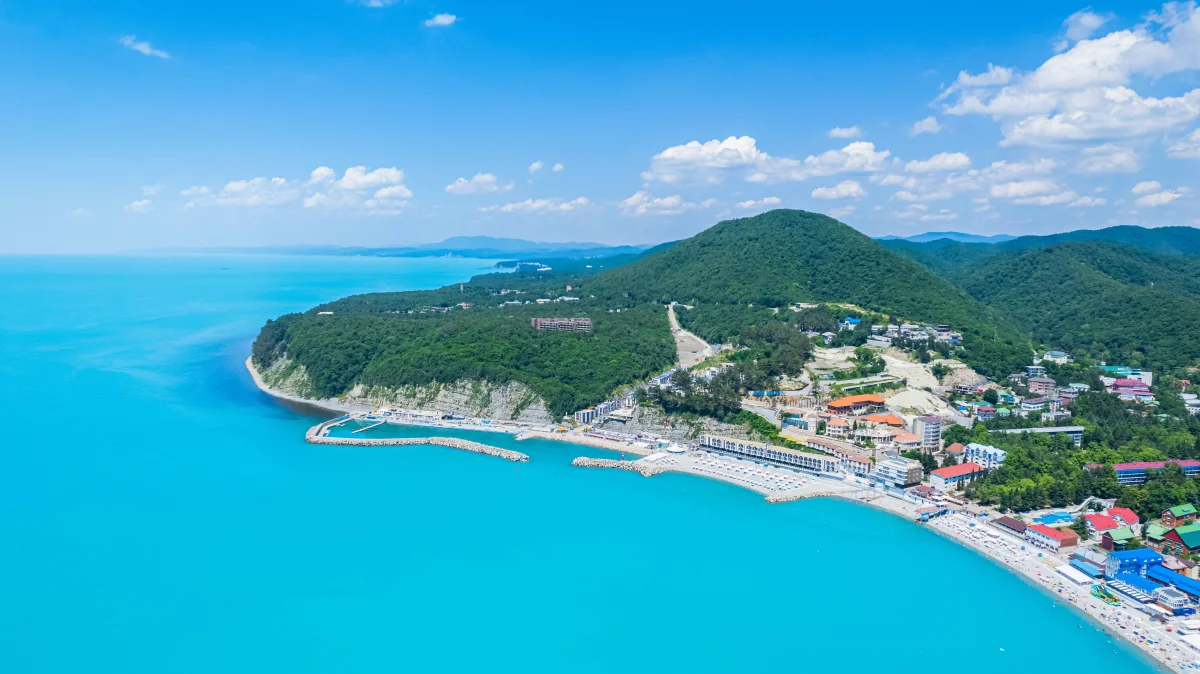
Swimming season in Sochi lasts nearly five months, but June isn't always the comfortable choice it seems. In September, the sea is warmer and steadier, tourists thin out, and the weather still allows full days on the beach.
At first glance, beach vacations seem straightforward: the closer to summer, the warmer both air and sea get. In practice, Sochi is a bit more complicated. In June, water temperature can unexpectedly drop several degrees due to upwelling, while September's sea retains the heat accumulated all summer and rarely delivers unpleasant surprises.
So when exactly does swimming season end, when is the water most comfortable, and is it worth visiting Sochi after summer officially ends? Let's break down when to plan your beach trip and what to expect from September and October.
When the Season Opens and Closes
Formally, swimming season in Sochi is one of the longest on the Russian Black Sea coast. It opens in late May, when water warms to +18–19°C. It closes in mid-October, when it drops back to those same values. That's nearly five months total.
But "formal" and "comfortable" are different things.
Mass swimming starts in mid-June, once the sea stabilizes around +22°C. Peak water temperature falls in late July and August: +25–27°C, occasionally hitting +29°C. The last genuinely warm swims for most people come in late September, when water still holds +23–24°C.
October is a gamble. Early in the month, you might get +20–21°C — quite tolerable, especially after morning coffee and a jog along the promenade. By month's end: +16–18°C, and only die-hard swimmers and photographers remain on the beaches. In November, water drops to +14–17°C, and beaches empty out entirely.
June's Main Catch: Upwelling
June in Sochi is beautiful, warm, and unpredictable for swimming. The culprit is upwelling — a phenomenon familiar to anyone who's ever hit a Sochi beach in early summer.
The mechanism is simple. A sustained northwesterly wind blows away the surface layer of water warmed over recent days. Cold water rises from the depths to replace it — sometimes an 8-degree swing within 24 hours. Yesterday it was +24; today, +16. Without warning. The beach thermometer says one thing; your body, stepping into the water, feels something else entirely.
Sochi's Hydrometeorological Center confirms: May–June is the most typical period for upwelling along this stretch of coast. It happens almost every year, sometimes more than once a month. It usually lasts 2–3 days before water gradually returns to normal levels. But if you're visiting for a week and catch one of these "windows," it's an unforgettable — if not the intended — experience.
In September, upwelling almost never occurs. By then, the sea is warmed to depth, wind patterns shift, and sharp temperature drops don't happen.
Why September Beats June on Water Temperature
The numbers look paradoxical: air is hotter in June than September, but the water is colder. For the sea, though, that's normal. Water heats and cools far more slowly than air.
In June, the Black Sea is just starting to gain heat after winter. Average water temperature is +22.7°C, but adjusted for upwelling, it can plunge to +16–18°C on any given day. In September, the sea releases heat accumulated over three summer months: the average is +24.7°C, and stable. Fluctuations stay within 1–2 degrees — no surprises.
For anyone prioritizing water temperature over air temperature, September objectively beats June.
What Else Makes September Better
- Beaches thin out
Starting September 1, students and schoolchildren head back to the cities. Tourist flow drops sharply: open loungers, no need to show up at 8 a.m. to claim a spot. Seaside cafés and restaurants don't require waiting for a table.
- Prices drop
Hotels run 20–30% cheaper than August's peak. Flights from Moscow and St. Petersburg drop 20–25%. Beach loungers, excursions, rentals — all cheaper.
- The sun stops scorching
In July–August, Sochi's UV is aggressive, humidity sits near 80%, breathing gets heavy, and sunburn can happen in 20 minutes. In September, the sun is gentler, tans develop more evenly, and a midday walk along the promenade becomes a pleasure rather than an ordeal.
- Fruit
September is peak harvest season at Sochi's markets. Figs (150–300 rubles/kg), local grape varieties (160–250 rubles/kg), the first persimmons, feijoa, watermelons at 20 rubles/kg. Hotels roll out autumn menus featuring local produce.
- Jellyfish leave
In August, Sochi occasionally sees rhizostome jellyfish — large, up to 30 cm across, with an unpleasant sting. In September, as the water cools, jellyfish numbers drop significantly.
- Mountain excursions
Krasnaya Polyana, the Agura Waterfalls, the Yew-Boxwood Grove, Eagle Rocks — all far more enjoyable at +24°C than +34°C. In September, mountain trails dry out after summer rains, tropical greenery is still vivid, and the first autumn colors add depth.
The Honest Downsides of September
It would be unfair not to mention them.
- Rainy days
Not many — 2–3 in the first half of the month, a bit more toward October. But when it rains in Sochi, it's not Moscow-style drizzle — it's a tropical downpour: powerful, fast, thunderous. Streets can flood within half an hour. After a downpour, the sea churns for 1–2 days, water turns cloudy, and swimming becomes uncomfortable.
Occasionally, September brings a sharp cool-down for a day or two — down to +18–20°C during the day. It warms back up just as quickly, but if you happen to catch it, it's a letdown.
- Shorter days
September's daylight runs 2–3 hours shorter than June's. It gets dark earlier, and morning beach time starts later. For anyone used to five hours of sunbathing, this is noticeable.
- Demand is rising
Velvet season has stopped being a secret — September Sochi's popularity grows every year. During the first week, while summer tourist "stragglers" linger, it can still get crowded.
When Exactly to Visit in September
The first half (September 1–15) — still summer-warm, water at +24–25°C, minimal rain. Crowds are noticeably thinner, but prices haven't fully dropped yet — the best price gap starts after the 15th.
The second half (September 16–30) — air a touch cooler, +22–25°C, water +23–24°C, but still completely swimmable. Prices drop further, crowds are at a minimum. Golden autumn begins in the parks. The best window for anyone who values quiet and soft light.
October: The Season's Close
October marks the official end of swimming season in Sochi. But the first week is often an exception: with good luck on weather, air holds at +22–24°C, water at +20–21°C, sun shining, and the beach operating in summer mode.
By the second half of October, water drops to +16–18°C, nights cool to +12–13°C, and weather turns unstable — sun one day, prolonged rain the next.
But by then, the first snow is settling in Krasnaya Polyana, and the city blooms with autumn. October Sochi isn't about the beach — it's about walks, restaurants, mountains, and open-air cinema. Also worth doing — just a different kind of trip.